IV483-752
The Byzantine Papacy
Popes under Constantinople's shadow: elected in Rome, confirmed by an emperor a thousand miles east.
Popes No. 48-91
For two hundred and seventy years the bishop of Rome was a subject of the emperor in Constantinople, and the relationship was the whole story. A pope-elect waited for imperial confirmation before he could be consecrated, sometimes for a year. His theology was contested at councils he did not attend, in a language most of his clergy no longer spoke. He could be summoned east, as John I was, and honored there; or seized at Mass and shipped east, as Vigilius was, and broken; or arrested, tried for treason, and left to starve in the Crimea, as Martin I was. Yet the same period produced Gregory the Great, the Formula that the East signed conceding that Rome had never erred, the mission that made England Roman, and the slow discovery, by a line of Greek and Syrian popes, that the city they governed could feed and defend itself without the emperor at all. By 752 a pope was telling a Frankish mayor that he might be king, and the Byzantine papacy was ending in a way no one in 483 could have imagined.
Schism and submission
The era opened in schism. Felix III excommunicated the patriarch Acacius in 484 for accepting the emperor Zeno's Henotikon, which bought peace with the Monophysites by silence about Chalcedon, and for thirty-five years the churches of Rome and Constantinople were out of communion. Gelasius, who had drafted Felix's sentence, defended it in the letter of 494 that told the emperor there were two powers in the world and that the priests' was the heavier. Anastasius II, who tried to compromise, died within two years and was remembered as a traitor. The schism ended in 519 only because a new emperor, Justin I, wanted the West: the patriarch and two hundred and fifty bishops signed Hormisdas's Formula, which declared that "in the apostolic see the Catholic religion has always been kept unblemished." Rome had won the argument by outlasting it, and it would quote the text at Vatican I.
Gothic Rome
The city itself belonged to a Gothic king. Theodoric, an Arian who ruled Italy from Ravenna, adjudicated the double election of 498 in favor of Symmachus, then watched Symmachus and the antipope Laurentius fight for the churches of Rome for four years; the synod that could not try the pope produced the rule that no one may judge the first see, and the forgers who defended it produced the precedents. Theodoric's tolerance ended with Justin's edict against Arians in 523. He sent John I to Constantinople to have it revoked, and when the pope came back with less than everything, imprisoned him at Ravenna, where he died. Theodoric named the next pope. His daughter's regency was gentler, and Felix IV, her choice, used it to settle the doctrine of grace for the West and to try, on his deathbed, to hand the papacy to his archdeacon; the senate forbade it, and the Roman clergy elected two men on the same day for the second time in a generation.
Justinian's Rome
Then the emperor came back. Belisarius took Rome in December 536, and the popes discovered what an orthodox emperor could do. Silverius, the Goths' nominee, was deposed on a forged letter at Theodora's wish and starved on an island by his successor. That successor, Vigilius, was the empress's man and Justinian's victim: seized at the altar of Santa Cecilia in 545, held in Constantinople for eight years, made to condemn the Three Chapters, then to withdraw the condemnation, then to submit, he died in Sicily on the way home and was refused burial in Saint Peter's. The council of 553 struck his name from the diptychs and Milan and Aquileia broke with Rome over what he had signed. Justinian's Pragmatic Sanction of 554 fixed the terms of the next two centuries: the pope was the emperor's subject, elected in Rome and consecrated only when Constantinople or the exarch at Ravenna said so. Pelagius I, the emperor's nominee, had to swear in Saint Peter's that he had not harmed Vigilius before Rome would accept him.
Gregory and the Lombards
The Lombards changed the calculation. From 568 they held the north, and Rome became a walled island fed by sea, its bishop waiting a year for a ship from Constantinople to confirm him while the enemy camped outside. Into that city, in the plague year 590, the clergy elected the former prefect Gregory, a monk against his will, and for fourteen years he governed it as no emperor's officer did. He fed Rome from the church's estates in Sicily, paid the Lombards to go away when the exarch would not fight them, negotiated with King Agilulf as one head of state with another, and complained to Constantinople that he had been made a bishop and found himself a paymaster. He also wrote the Pastoral Rule that every medieval bishop read, the Dialogues that made Benedict a saint, and eight hundred and fifty letters; he called himself servant of the servants of God while refusing the patriarch of Constantinople the title of ecumenical; and in 596 he sent forty monks to Kent. The English church that grew from that mission would send Boniface to Germany a century later, and the papacy's northern future began with it.
The Greek popes
For a hundred years after Gregory, Rome was governed by a church whose clergy were increasingly Greek and Syrian, refugees from the Persian and then the Arab conquests of the East, and the questions were Eastern too. The emperor Heraclius's theologians proposed that Christ had one will, to reconcile the Monophysites; Honorius I, asked his opinion, wrote two letters agreeing, and the Sixth Council anathematized him for it in 681, the only pope condemned by name at a general council. Martin I, elected in 649 and consecrated without waiting for the emperor's leave, held a council at the Lateran that condemned the doctrine and the imperial edict imposing it; he was arrested in 653, tried for treason in Constantinople, degraded in public, and exiled to Cherson, where he died two years later, the last pope venerated as a martyr. Agatho, a Sicilian, saw the doctrine condemned at the council of 681. Sergius I, a Syrian from Palermo, refused the canons of the Quinisext Council in 692, and when Justinian II sent an officer to arrest him the militia of Ravenna and the Pentapolis surrounded the Lateran and the officer hid under the pope's bed. Constantine, another Syrian, went to Constantinople in 710 and had the emperor kiss his feet; no pope would go again until 1967.
The turn north
The break came over pictures. In 726 Leo III began the destruction of images, and Gregory II, the first Roman pope after seven Greeks and Syrians, refused to obey; Italy refused the emperor's taxes, the exarch's plots against the pope failed, and the Lombard king Liutprand, who had his own ambitions, gave the papacy the town of Sutri in 728, the first territory it ever held. Gregory III condemned iconoclasm at a synod in 731 and was the last pope to ask the emperor to confirm him; in 739 he wrote to Charles Martel, victor of Tours, asking for protection against the Lombards, and the Frank politely declined. Zachary, the last Greek pope, kept Liutprand off Rome by walking out to meet him and watched the Lombards take Ravenna in 751, ending the exarchate that had governed Italy for the emperor since Justinian. That year Pepin, mayor of the Franks, sent to ask whether it was right that a man without power should be called king while the man with the power was not. Zachary said it was not. The Merovingians were deposed, Pepin was anointed, and the papacy had a new protector before it had finished losing the old one.
The world at the time
- 519
schismThe Acacian schism ends
The patriarch and 250 Eastern bishops sign the Formula of Hormisdas: in the apostolic see the Catholic religion has always been kept unblemished.
- 529
religiousBenedict writes his Rule
Monte Cassino's founder composes the rule that will quietly organize Western monasticism, and much of Europe, for a millennium.
- 536
politicalBelisarius takes Rome
Justinian's reconquest reaches the city; for two centuries the pope's Rome belongs to an emperor in Constantinople and his exarch in Ravenna.
- 553
councilSecond Council of Constantinople
Justinian's council condemns the Three Chapters; Vigilius, a prisoner in the city, refuses for a year and then submits.
- 568
politicalThe Lombards enter Italy
Alboin's Lombards cross the Alps; within a decade Rome is a besieged island in a Lombard peninsula, fed by sea from Sicily and Egypt.
- 597
religiousAugustine lands in Kent
Gregory's monk baptizes King Ethelbert at Canterbury; the English church is Rome's from birth, and will repay the debt in missionaries.
- 622
religiousThe Hijra
Muhammad's migration to Medina founds the Islamic era; within a century Syria, Egypt, Africa, and Spain are under Muslim rule.
- 681
councilThird Council of Constantinople
Monothelitism is condemned with Agatho's letter as its standard; the same council anathematizes a dead pope, Honorius, by name.
- 726
schismIconoclasm begins
Leo III orders the destruction of images; Gregory II refuses, and the cities of Italy refuse the emperor's taxes.
- 732
politicalBattle of Tours
Charles Martel halts the Umayyad advance into Francia, marking the Franks as the military power the papacy will soon court.
- 751
politicalPepin becomes king of the Franks
Pepin asks Zachary whether the man with the power should have the title; the pope says yes, and the Carolingians replace the Merovingians.
Popes of this era
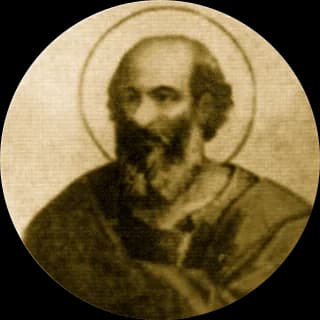 Felix IIINo. 48 · 483-492
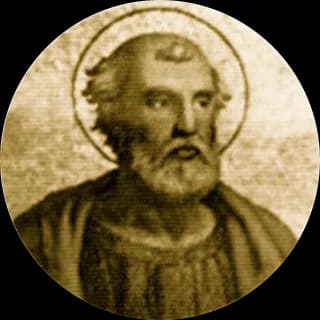 Gelasius INo. 49 · 492-496
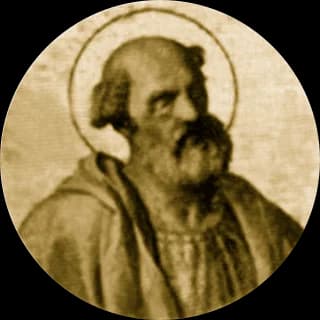 Anastasius IINo. 50 · 496-498
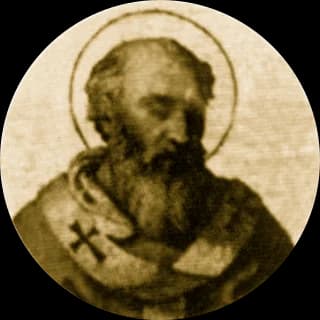 SymmachusNo. 51 · 498-514
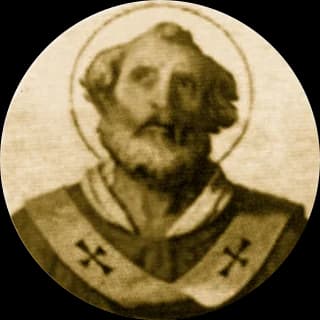 HormisdasNo. 52 · 514-523
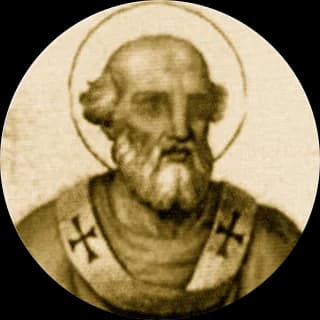 John INo. 53 · 523-526
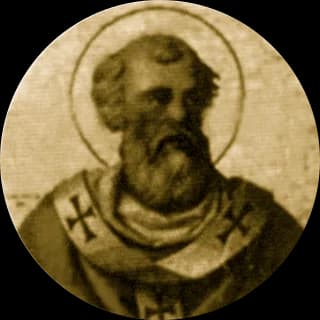 Felix IVNo. 54 · 526-530
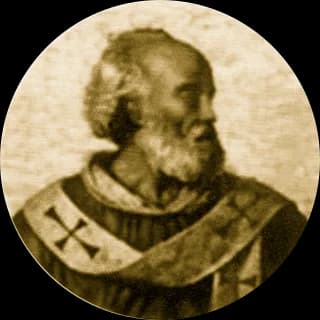 Boniface IINo. 55 · 530-532
 John IINo. 56 · 533-535
 Agapetus INo. 57 · 535-536
 SilveriusNo. 58 · 536-537
 VigiliusNo. 59 · 537-555
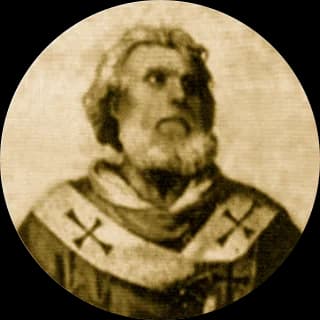 Pelagius INo. 60 · 556-561
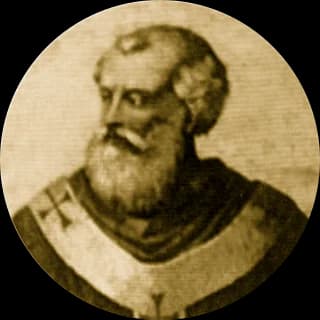 John IIINo. 61 · 561-574
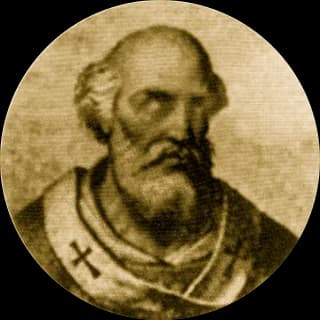 Benedict INo. 62 · 575-579
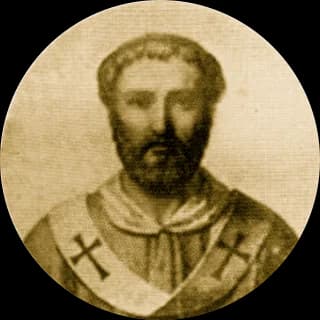 Pelagius IINo. 63 · 579-590
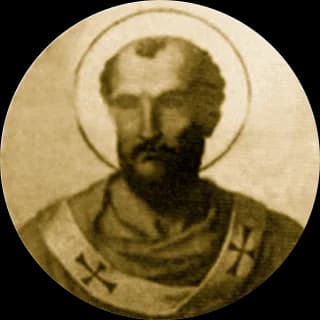 Gregory INo. 64 · 590-604
 SabinianNo. 65 · 604-606
 Boniface IIINo. 66 · 607
 Boniface IVNo. 67 · 608-615
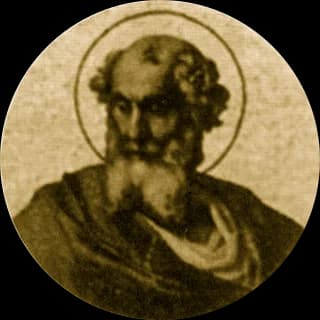 Adeodatus INo. 68 · 615-618
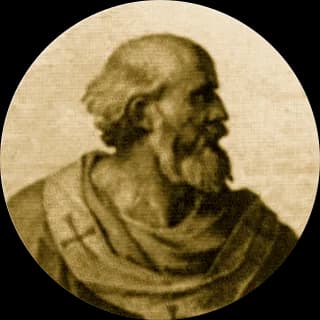 Boniface VNo. 69 · 619-625
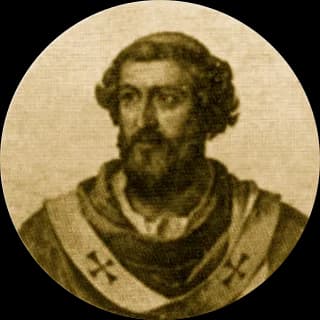 Honorius INo. 70 · 625-638
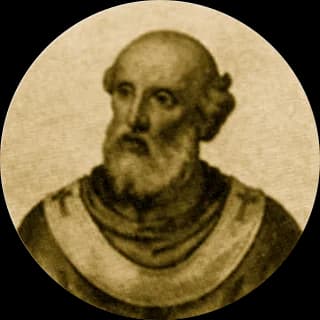 SeverinusNo. 71 · 640
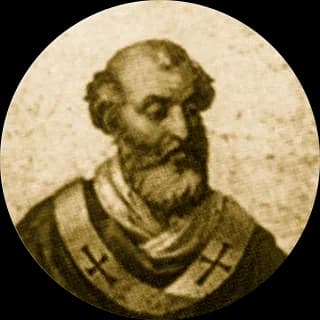 John IVNo. 72 · 640-642
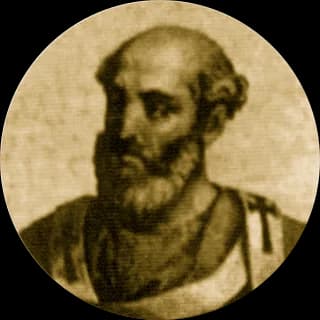 Theodore INo. 73 · 642-649
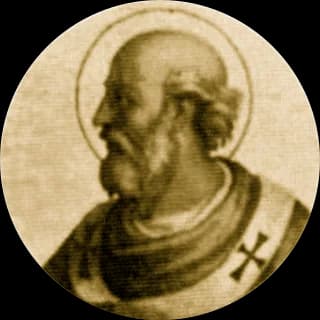 Martin INo. 74 · 649-655
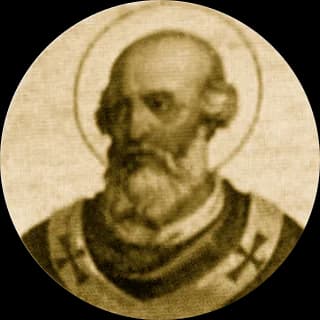 Eugene INo. 75 · 654-657
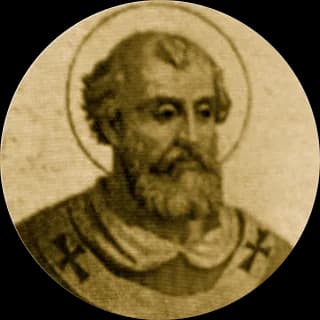 VitalianNo. 76 · 657-672
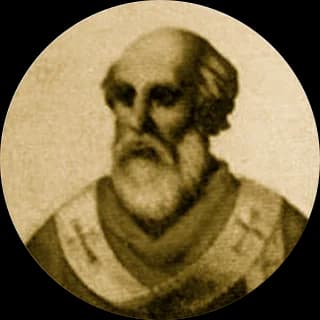 Adeodatus IINo. 77 · 672-676
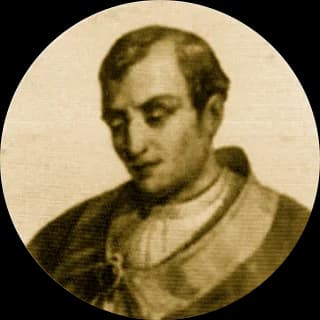 DonusNo. 78 · 676-678
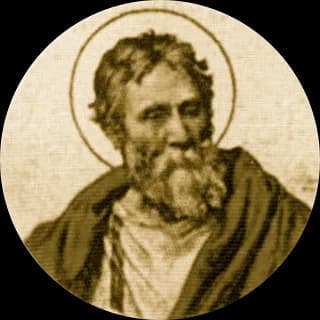 AgathoNo. 79 · 678-681
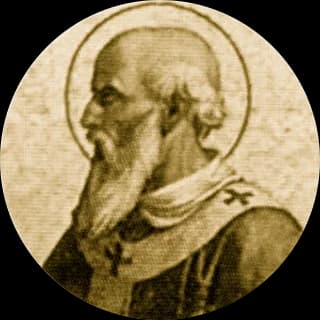 Leo IINo. 80 · 682-683
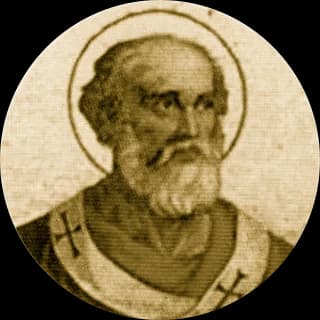 Benedict IINo. 81 · 684-685
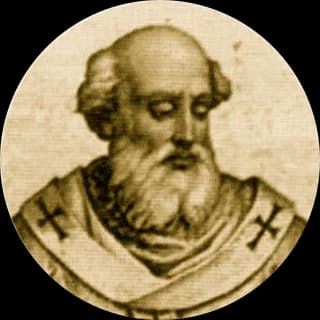 John VNo. 82 · 685-686
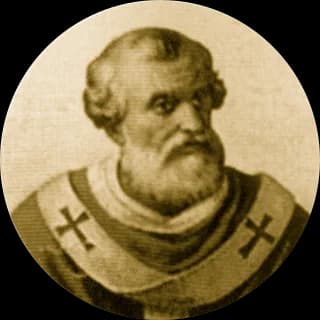 CononNo. 83 · 686-687
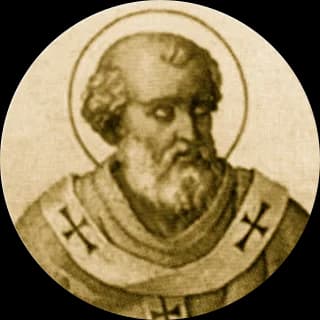 Sergius INo. 84 · 687-701
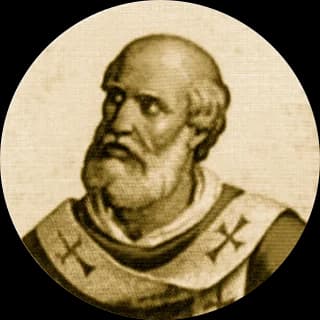 John VINo. 85 · 701-705
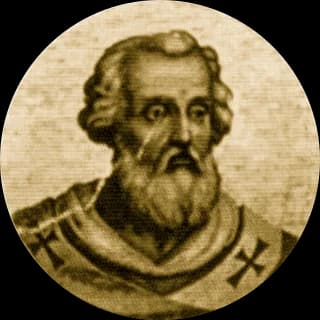 John VIINo. 86 · 705-707
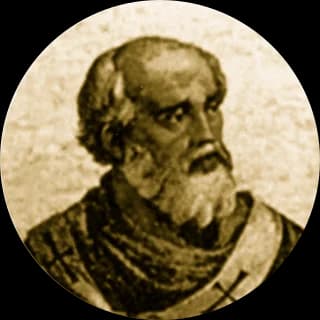 SisinniusNo. 87 · 708
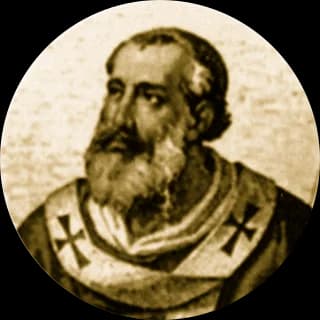 ConstantineNo. 88 · 708-715
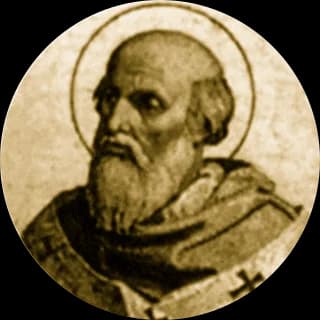 Gregory IINo. 89 · 715-731
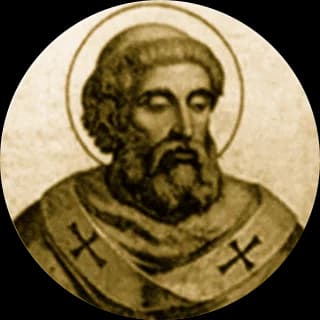 Gregory IIINo. 90 · 731-741
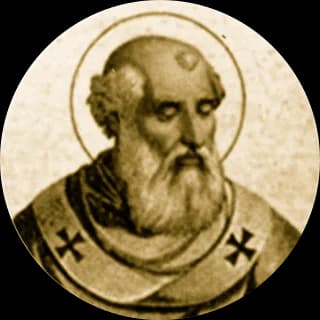 ZacharyNo. 91 · 741-752