The Byzantine Papacy483-752
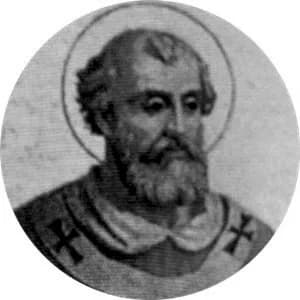
Saint Vitalian
Fifteen years of careful peace with an emperor who visited Rome and stripped its roofs; the pope who sent Theodore of Tarsus to Canterbury.
Pope no. 76657-672
Vitalian, from Segni in the hills south of Rome, was consecrated on 30 July 657 and chose, after Martin's martyrdom and Eugene's near-miss, to stop fighting the emperor about Christ's will. He sent Constans II the customary letter announcing his election, with gifts, and said nothing about the Typos; the emperor confirmed the Roman church's privileges and sent a Gospel book bound in gold. In July 663 Constans came to Rome himself, the first emperor to enter the city in nearly two centuries and the last for many more. Vitalian met him at the sixth milestone with the clergy, the emperor prayed at Saint Peter's and gave gifts, and then, over twelve days, his men stripped the gilded bronze tiles from the roof of the Pantheon and every bronze ornament they could carry and shipped them to Syracuse, where the Arabs would capture the lot a few years later.
Vitalian kept the peace anyway. When Constans was murdered in his bath at Syracuse in 668 and a usurper proclaimed, the pope backed the young Constantine IV, whose gratitude the Roman church would need. Constantinople's patriarch removed Vitalian's name from the diptychs regardless, and it stayed off until the council of 681.
Vitalian died on 27 January 672 and was buried in Saint Peter's; his feast is that day. A later tradition credited him with introducing the organ to the Roman liturgy, which nothing in his own century supports.
A full essay on this pope is in preparation. The facts and summary above are complete and sourced.