The Byzantine Papacy483-752
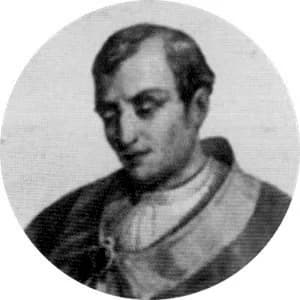
Donus
An elderly Roman who paved the atrium of Saint Peter's, dispersed a nest of Nestorian monks, and received Ravenna's submission.
Pope no. 78676-678
Donus, a Roman and the son of a man named Mauricius, was old when the clergy elected him in the summer of 676 and older by the time the exarch confirmed him; he was consecrated on 2 November. The Liber Pontificalis gives him a page, and most of it is building. He paved the great atrium in front of Saint Peter's, the open court the Romans called Paradise, with slabs of white marble; he restored the church of Saint Euphemia on the Appian Way and a church of the Apostles on the road to Ostia, both fallen into ruin in the Lombard years. Rome in the 670s was rebuilding what it could afford.
Two other acts show a pope still governing. A community of Syrian monks living at the monastery called Boetiana in Rome turned out to be Nestorians, holding the doctrine the Council of Ephesus had condemned two and a half centuries before; Donus dispersed them among the Roman monasteries and gave their house to Roman monks. And the archbishop of Ravenna, Reparatus, whose predecessor had obtained from the emperor Constans a grant of independence from the pope in 666, came to Rome and submitted, ending the schism between the exarchate's capital and the see it had been made to defy.
Donus was buried in Saint Peter's. His seventeen months are the quiet before the council, and the reign that ended Ravenna's rebellion and cleaned out a heretical monastery was, by the standards of the seventh century, an eventful one.
A full essay on this pope is in preparation. The facts and summary above are complete and sourced.
Sources
- J. N. D. Kelly and Michael Walsh, The Oxford Dictionary of Popes (2010)
- Jeffrey Richards, The Popes and the Papacy in the Early Middle Ages, 476-752 (1979)
- Raymond Davis (trans.), The Book of Pontiffs (Liber Pontificalis) (2000)
- Further reading: Wikipedia