The Byzantine Papacy483-752
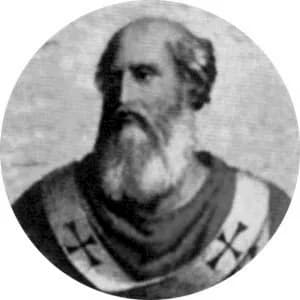
John II
Named after a pagan god, he became the first pope to change his name, elected after a simony scandal and remembered for bowing to Justinian.
Pope no. 56533-535
Mercurius was a priest of the church of Saint Clement, where inscriptions with his name still stand, and when he was elected on 2 January 533 after ten weeks of open bribery he judged that a pope could not be called after Mercury. He became John, and every pope since who has disliked his baptismal name has followed him. The election itself had been a scandal: candidates and their backers had sold church plate and even the property of the poor to buy votes, and the Gothic king Athalaric issued a decree against simony in papal elections and had it engraved in marble in the atrium of Saint Peter's.
The reign was dominated by Justinian. In 533 the emperor sent John a profession of faith that recognized Rome as "the head of all the holy churches" and asked him to approve the formula the Scythian monks had been pressing for a decade, that "one of the Trinity suffered in the flesh." Hormisdas had refused it as needless; the Sleepless monks of Constantinople now denounced it as heresy and appealed to Rome. John, in March 534, approved the emperor's formula and excommunicated the monks, and Justinian put the pope's letter into his Code as law.
He also deposed Contumeliosus of Riez for adultery and sent him to a monastery, overruling the Gallic bishops, and died on 8 May 535. He was buried in Saint Peter's.
A full essay on this pope is in preparation. The facts and summary above are complete and sourced.
Sources
- J. N. D. Kelly and Michael Walsh, The Oxford Dictionary of Popes (2010)
- Eamon Duffy, Saints and Sinners: A History of the Popes (2014)
- Raymond Davis (trans.), The Book of Pontiffs (Liber Pontificalis) (2000)
- Further reading: Wikipedia