The Byzantine Papacy483-752
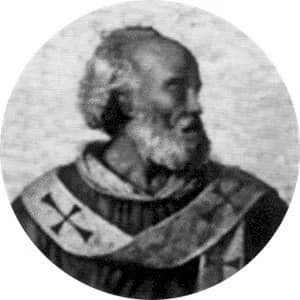
Boniface II
The first pope of Germanic blood, named by a dying predecessor against the majority's choice Dioscorus, and saved by his rival's death.
Pope no. 55530-532
Boniface was a Roman born, but his father's name, Sigibuld, was Gothic, and he was the first pope of Germanic descent. Felix IV had made him archdeacon and, dying, tried to make him pope, handing over the pallium in front of the clergy. The clergy declined the gift. On 22 September 530 Boniface was consecrated in the Lateran by his supporters, and the same day a larger party consecrated the deacon Dioscorus, an Alexandrian who had negotiated the end of the Acacian schism and had the confidence of the senate, in the basilica of the Lateran's rival, the church of Julius. Rome had two popes for the fourth time in forty years.
It had them for twenty-two days. Dioscorus died on 14 October, and his party, leaderless, came over to Boniface, who made sixty priests sign a document condemning their dead candidate as a schismatic and had it deposited in the archive. Agapetus burned it five years later. Having been made pope by nomination, Boniface then tried to do the same: a synod of 531 approved his designation of the deacon Vigilius as his successor. The clergy and senate objected, and a second synod forced him to burn the decree in Saint Peter's.
He died on 17 October 532 and was buried in Saint Peter's. The two months of bribery that followed his death, as candidates sold church plate to buy votes, produced the first royal law against simony in papal elections.
A full essay on this pope is in preparation. The facts and summary above are complete and sourced.
Sources
- J. N. D. Kelly and Michael Walsh, The Oxford Dictionary of Popes (2010)
- Jeffrey Richards, The Popes and the Papacy in the Early Middle Ages, 476-752 (1979)
- Raymond Davis (trans.), The Book of Pontiffs (Liber Pontificalis) (2000)
- Further reading: Wikipedia