The Byzantine Papacy483-752
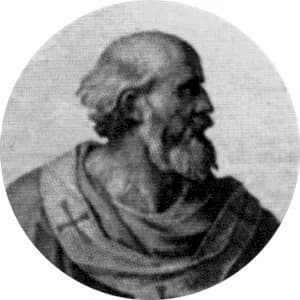
Boniface V
A Neapolitan who waited a year for a usurping exarch to die, then wrote to England: to Justus, and to a pagan king's Christian queen.
Pope no. 69619-625
Boniface, a Neapolitan, was elected in the winter of 618 and could not be consecrated for thirteen months, because the exarch Eleutherius, whose confirmation he needed, had proclaimed himself emperor at Ravenna and was marching on Rome to be crowned; the exarch's own soldiers killed him on the road, and Boniface took office on 23 December 619. The Liber Pontificalis calls him the mildest of men. It records two decrees, that anyone who fled to a church could not be dragged out of it, the Roman form of the right of sanctuary, and that subdeacons were not to handle the relics of the martyrs, which was the acolytes' work; and one building, the cemetery church of Saint Nicomedes on the Via Nomentana, which he finished.
The rest of what is known comes from Bede, because Boniface wrote to the English. He sent the pallium to Justus, bishop of Rochester, when Justus became archbishop of Canterbury in 624, with a letter that Bede copied; he wrote to Mellitus of London; and he wrote two letters to Northumbria, one to King Edwin, still a pagan, urging him to accept the faith and enclosing a shirt embroidered with gold and a cloak from Ancyra, and one to Edwin's Christian queen Ethelburga, sending her a silver mirror and an ivory comb and asking her to work on her husband. Edwin was baptized in 627, two years after the pope who wrote to him had died.
Boniface died on 25 October 625 and was buried in Saint Peter's.
A full essay on this pope is in preparation. The facts and summary above are complete and sourced.