The Byzantine Papacy483-752
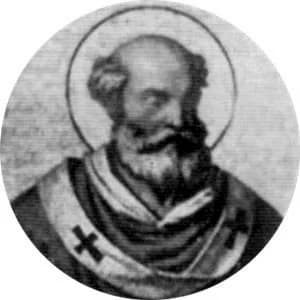
Saint Silverius
A pope's son forced on Rome by a Gothic king, deposed by Belisarius on a forged letter, and starved to death on an island by his successor.
Pope no. 58536-537
Silverius was the son of Pope Hormisdas, a subdeacon of no great standing when the Gothic king Theodahad, with Belisarius's army marching north, forced his election on 8 June 536 with threats and, the Liber Pontificalis says, bribes. The clergy acquiesced for fear of the sword. Six months later, on 9 December, Belisarius entered Rome by the Asinarian Gate as the Goths left by the Flaminian, and the pope who had been the Goths' man became the Byzantines' problem.
The empress Theodora wanted Anthimus restored to Constantinople and had a candidate for Rome who had promised to do it: the deacon Vigilius, then at her court. Silverius refused her letters. In March 537, with the Gothic king Witigis besieging the city, a letter surfaced in which Silverius offered to open a gate to the Goths. Belisarius, who probably knew it was forged, summoned him to the Pincian palace, where the general's wife Antonina presided from a couch; the pope was stripped of his pallium, dressed as a monk, and, on 11 March, declared deposed. Vigilius was consecrated on 29 March, and Silverius was shipped to Patara in Lycia.
He was venerated as a martyr from the eleventh century, and the island, now called Ponza, keeps his feast on 20 June. He is the only pope deposed by a general, and his successor is the only one who had a predecessor killed.
A full essay on this pope is in preparation. The facts and summary above are complete and sourced.
Sources
- J. N. D. Kelly and Michael Walsh, The Oxford Dictionary of Popes (2010)
- Eamon Duffy, Saints and Sinners: A History of the Popes (2014)
- Procopius of Caesarea, History of the Wars, Books V-VI (The Gothic War) (550)
- Raymond Davis (trans.), The Book of Pontiffs (Liber Pontificalis) (2000)
- Further reading: Wikipedia