The Byzantine Papacy483-752
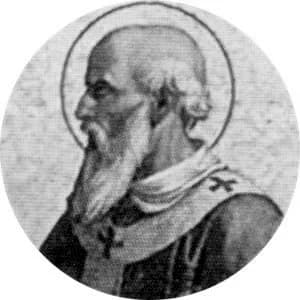
Saint Leo II
A Sicilian musician who waited eighteen months to be confirmed, then confirmed the council that condemned a pope and softened the sentence.
Pope no. 80682-683
Leo, a Sicilian, was elected in January 681 within days of Agatho's death, and then waited. The emperor would not confirm a new pope until the council had finished and its acts had been examined, and it was August 682, eighteen months later, before Leo was consecrated. The Liber Pontificalis calls him eloquent in Greek and Latin, learned, and "skilled in chanting and psalmody," a musician's pope, and his one great task was to make an Eastern council acceptable to the West.
He did it with care. He confirmed the Third Council of Constantinople in letters to the emperor, to the bishops of Spain, and to the Visigothic king, had its acts translated into Latin, and accepted its anathema on Honorius, but in words of his own: Honorius, he wrote to the emperor, was condemned because he had "not extinguished the flame of heretical teaching at its first beginning, as befitted the apostolic authority, but fostered it by his negligence"; to the Spanish bishops he wrote that Honorius had "allowed the immaculate faith to be stained." The pope was guilty, in Leo's version, of not doing his job rather than of heresy, and that reading has been Rome's ever since.
He died on 3 July 683, after less than eleven months, and was buried in Saint Peter's. His feast is 3 July. The see was then vacant for almost a year, waiting on Constantinople for the last time under the old rules.
A full essay on this pope is in preparation. The facts and summary above are complete and sourced.
Sources
- J. N. D. Kelly and Michael Walsh, The Oxford Dictionary of Popes (2010)
- Andrew J. Ekonomou, Byzantine Rome and the Greek Popes (2007)
- Raymond Davis (trans.), The Book of Pontiffs (Liber Pontificalis) (2000)
- Further reading: Wikipedia