The Byzantine Papacy483-752
Constantine
The Syrian who sailed to Constantinople and had an emperor kiss his feet, the last pope to visit the East until 1967.
Pope no. 88708-715
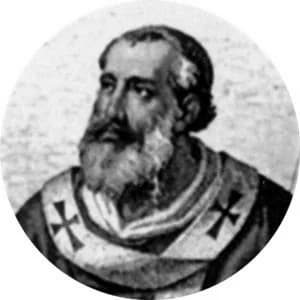
Constantine, a Syrian, was consecrated on 25 March 708, and in 710 the emperor Justinian II summoned him to Constantinople. No pope had gone east since Agapetus in 536, and none would again until Paul VI in 1967. Constantine sailed in October with a large suite, was received with imperial honors at every port, and met the emperor at Nicomedia, where Justinian, the Liber Pontificalis records, prostrated himself, kissed the pope's feet, and received communion from his hands. The two men then settled the quarrel over the Quinisext canons that had nearly cost Sergius his liberty: Constantine accepted those Rome could live with and the emperor let the rest lie. The pope came home in October 711 with the church's privileges renewed. Two months later Justinian was murdered.
The next emperor was a test Constantine passed. Philippicus Bardanes, an Armenian, was a Monothelite who repudiated the council of 681 and had its picture removed from the palace; when his portrait and his edict reached Rome the pope refused to set the one up in the churches, put the council's image in Saint Peter's instead, forbade the emperor's name on documents and coins, and let the Roman militia fight the imperial duke's men in the Via Sacra when the duke tried to enforce recognition. Philippicus was blinded and deposed in 713, and his orthodox successor sent Constantine a profession of faith.
He died on 9 April 715 and was buried in Saint Peter's. His successor was the first Roman in seven reigns, and the era in which popes sailed to emperors was over.
A full essay on this pope is in preparation. The facts and summary above are complete and sourced.
Sources
- J. N. D. Kelly and Michael Walsh, The Oxford Dictionary of Popes (2010)
- Eamon Duffy, Saints and Sinners: A History of the Popes (2014)
- Andrew J. Ekonomou, Byzantine Rome and the Greek Popes (2007)
- Raymond Davis (trans.), The Book of Pontiffs (Liber Pontificalis) (2000)
- Further reading: Wikipedia