The Byzantine Papacy483-752
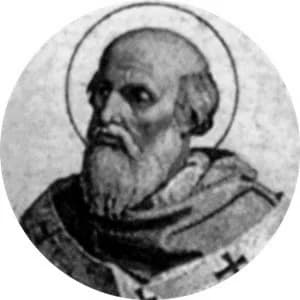
Saint Gregory II
He sent Boniface to Germany, refused the emperor's taxes and icon ban, and received Sutri, the first territory the papacy ever held.
Pope no. 89715-731
Gregory was the first Roman elected pope in forty years and seven reigns, and in sixteen years he turned the Byzantine papacy toward the North and toward itself. He sent an English monk named Wynfrith to the Germans with a new name, Boniface, and an oath of loyalty to the pope, and the church of Germany was Rome's from its founding. He refused to collect the emperor's new taxes and refused to obey the emperor's decree against images, and the cities of Italy, which had already shown they would fight for a pope, killed the exarch who tried to enforce either. And in 728 he persuaded the Lombard king to give the town of Sutri "to the blessed apostles Peter and Paul," the first piece of ground the papacy ever held as its own, and the seed of the state it would govern for eleven hundred years.
None of this was a plan. Gregory considered himself the emperor's subject to the end, restrained the Italians when they proposed to elect an emperor of their own, and wrote to Leo III as a bishop to a sovereign who had overstepped. But he had been a treasurer, and he could count. The empire could not defend Rome, would not stop taxing it, and now proposed to strip its churches; the Lombards could be bargained with, the Franks could be written to, and the Roman militia would obey the pope. Every pope after him drew the conclusion he had declined to draw.
The treasurer
He was born in Rome around 669, the son of a man named Marcellus, and raised in the Lateran from boyhood; Sergius I made him a subdeacon, and under Sergius, John VII, and Constantine he was successively treasurer, librarian, and deacon, the offices that ran the papal administration. In 710 he went with Constantine to Constantinople and, the Liber Pontificalis says, answered Justinian II's questions so well that the emperor was silenced. He was elected without opposition on Constantine's death and consecrated on 19 May 715, with the exarch's confirmation, the first pope in living memory who was neither Greek nor Syrian and who thought in Latin.
He began with walls and monks. The Aurelian walls were repaired at the church's expense, the aqueducts patched, the flooded Tiber's damage made good; and Monte Cassino, empty since the Lombards sacked it in 577, was refounded in 717 by a Brescian named Petronax whom Gregory sent with the Rule and his blessing.
Boniface
In the spring of 719 an English monk from Devon arrived in Rome with letters from his bishop and a wish to preach to the pagans of Germany. Gregory examined him, renamed him Boniface after the Roman martyr whose feast fell that week, and on 15 May gave him a written commission to preach "to the peoples in error" in the name of the apostolic see, the first papal commission of its kind. Three years later, having heard from Boniface how the work went, he summoned him back and on 30 November 722 consecrated him bishop for the Germans without a see, binding him with an oath modeled on the one the bishops around Rome swore.
I promise to you, blessed Peter, prince of the apostles, and to your vicar the blessed Pope Gregory and to his successors, that I will keep the faith and purity of holy catholic teaching, and that I will persist in the unity of that same faith, in which all Christian salvation rests.
Gregory then wrote to the Thuringians, to the "old Saxons," to the clergy and people of Hesse, and to Charles Martel, commending Boniface to their protection; the letters are in Boniface's collection. The mission that followed, thirty years of churches, monasteries, and dioceses from Hesse to Bavaria, was organized from Rome, reported to Rome, and swore to Rome, and the Frankish church that Boniface reformed in the 740s swore the same oath. The papacy's power north of the Alps, which the next era would rest on, began with a commission to an English monk.
The emperor's taxes
Leo III, the Isaurian soldier who had saved Constantinople from the Arab siege of 717, needed money and in the early 720s raised the taxes on Italy. Gregory refused to collect the increase from the church's estates or to let the Romans pay it. What followed is told by the Liber Pontificalis as a series of plots: the imperial duke Basil, the treasurer Jordanes, and a subdeacon named Lurion conspired to kill the pope, and the Romans caught them; the exarch Paul sent an officer to arrest him, and the militia of Rome and the Lombard dukes of Spoleto and Benevento together blocked the roads. Then the exarch's own army in Ravenna mutinied and killed him. The cities of the exarchate and the Pentapolis chose dukes of their own and proposed to elect an emperor and march on Constantinople.
Gregory stopped them. He was, he wrote, the emperor's subject, and he hoped Leo would repent; the Liber Pontificalis says he "restrained them from this plan." The refusal was as important as the resistance. The pope would not obey the emperor and would not replace him, and Italy, for the next twenty-five years, was governed in that gap.
Icons
In 726 Leo III began to preach against the veneration of images and had the great image of Christ over the palace gate taken down; in 730 he made the destruction of images law and deposed the patriarch who would not sign. Gregory refused the decree, and two letters to the emperor circulate under his name in which he explains, with some contempt, why: dogmas are the business of bishops and not of emperors, the emperor may threaten the pope but the pope has only to walk twenty-four miles into the Campagna to be beyond his reach, and the whole West venerates the images the emperor wants burned.
The exarch Eutychius, sent to replace the murdered Paul, tried bribery and then force, and got neither the pope's head nor the Romans' obedience. The Italians, Gregory wrote to Leo, "loved and cherished" the pope; the emperor had lost them by insulting what they prayed to.
Sutri
The Lombard king Liutprand watched all this from Pavia and took what he could. In 727 he seized the fortress of Sutri, on the road north of Rome, and the Romans could not get it back. Gregory asked for it. In 728, after months of letters and gifts, Liutprand "restored" Sutri, in the words of the Liber Pontificalis, "as a gift to the blessed apostles Peter and Paul," not to the emperor whose town it had been but to the church of Rome. It was a walled hill town of no great size, and it was the first territory the papacy held in its own name.
The next year Liutprand and the exarch Eutychius, briefly allied, marched on Rome together. Gregory went out to meet the king in his camp and, the Liber Pontificalis says, Liutprand laid his sword, his crown, and his cloak at the tomb of Saint Peter, made his peace, and went home. The emperor's officer got nothing. A pope who could talk a Lombard king out of a siege, feed a city, and refuse a tax was already governing a state; Sutri was the first admission that he owned one.
What he began
Gregory died on 11 February 731 and was buried in Saint Peter's, a saint of the Roman calendar on that day. His Syrian successor Gregory III excommunicated the iconoclasts formally and lost the church's Sicilian estates for it; the Greek Zachary talked three Lombard kings into retreat and told Pepin he might be king; and Stephen II, in 754, crossed the Alps to be the Franks' guest and came home with the exarchate the Lombards had taken from the emperor. Each of them was doing what Gregory II had done first: treating the emperor as a distant sovereign to be reasoned with, the Lombards as neighbors to be managed, the Franks as friends to be cultivated, and Rome as a city the pope was responsible for because no one else was. He had not meant to found the Papal States. He had refused to let the empire strip his churches, and the state followed.
Sources
- J. N. D. Kelly and Michael Walsh, The Oxford Dictionary of Popes (2010)
- Eamon Duffy, Saints and Sinners: A History of the Popes (2014)
- Thomas F. X. Noble, The Republic of St. Peter: The Birth of the Papal State, 680-825 (1984)
- Raymond Davis (trans.), The Lives of the Eighth-Century Popes (Liber Pontificalis) (1992)
- Ephraim Emerton (trans.), The Letters of Saint Boniface (2000)
- Further reading: Wikipedia