The Byzantine Papacy483-752
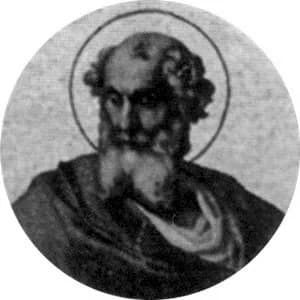
Saint Adeodatus I
An elderly priest who favored clergy over Gregory's monks, left the oldest papal lead seal, and is said to have kissed a leper well.
Pope no. 68615-618
Adeodatus, or Deusdedit, "given by God," was a Roman priest of long service, the son of a subdeacon, and old when the clergy chose him after Boniface IV's death; he was consecrated on 19 October 615, having waited five months for the exarch's leave. He belonged to the party that had never liked Gregory's monks. The Liber Pontificalis says pointedly that he "loved the clergy" and restored priests and other clerics to the positions from which monks had displaced them, and that he left each of them, when he died, a year's stipend as a legacy, the first such bequest recorded.
The reign was hard. In 616 the exarch John was murdered in Ravenna and the imperial treasurer killed at Naples; the new exarch Eleutherius put down the revolts and paid the army with money he did not have. In August 618 an earthquake shook Rome, and an epidemic of a scaly skin disease followed that the chronicler could only describe. Legend made the pope its healer: he met a leper in the street, kissed him, and the man was cured, a story the Liber Pontificalis tells in a sentence and later centuries expanded.
He died on 8 November 618 and was buried in Saint Peter's; his feast is on that day. Thirteen months passed before his successor could be consecrated, the exarch Eleutherius having declared himself emperor in the interval and been killed by his own soldiers on the road to Rome.
A full essay on this pope is in preparation. The facts and summary above are complete and sourced.
Sources
- J. N. D. Kelly and Michael Walsh, The Oxford Dictionary of Popes (2010)
- Jeffrey Richards, The Popes and the Papacy in the Early Middle Ages, 476-752 (1979)
- Raymond Davis (trans.), The Book of Pontiffs (Liber Pontificalis) (2000)
- Further reading: Wikipedia