III311-483
The Imperial Church
Constantine changes everything: the persecuted sect becomes the empire's church, and Rome's bishop becomes a public figure.
Popes No. 32-47
Constantine's conversion handed the bishops of Rome a situation no one had planned for. Within two years of the persecution's end, the pope was living in an imperial palace, sitting in judgment on African bishops at the emperor's request, and watching basilicas rise on a scale the city had not seen since Trajan. The gifts came with a giver. For the next century and a half the popes learned to work with emperors who summoned councils, exiled bishops, settled disputed elections, and, in Constantius II's case, broke a pope in exile until he signed. What the papacy built inside that relationship was a set of habits that outlasted the Western empire: it spoke for orthodoxy at councils it did not attend, it answered questions from Spain and Gaul with rulings that read like imperial rescripts, it made the martyrs' graves the sacred geography of the city, and it explained, in Leo's sermons, why Peter's successor could do all of this. When the last emperor was deposed in 476, the bishop of Rome was the institution left standing.
Constantine's gift
Miltiades, elected in 311 in a church still technically illegal, received the Lateran from Constantine in 313 and held a synod there on the Donatist appeal, the first council in an imperial palace and the first time a pope acted as an emperor's judge. Sylvester, who followed him for twenty-two years, watched the emperor found the Lateran basilica, Saint Peter's over the apostle's grave, Saint Paul's, and the cemetery churches, and endow them with estates from Sicily to Syria whose rents the Liber Pontificalis lists farm by farm. Sylvester attended neither Arles in 314 nor Nicaea in 325, sending presbyters instead, and no pope would attend an ecumenical council in person until the fifteenth century. Legend, unable to bear his silence, later had him baptize Constantine and receive the West from him in the Donation, the forgery on which medieval popes would rest their temporal claims.
The Arian century
Nicaea had defined the Son as of one being with the Father, and the East spent fifty years trying to undo it. The popes' part in the fight was to stand still. Julius sheltered the exiled Athanasius in 339, told the Eastern bishops that Rome should have been consulted first, and obtained from the Western council of Sardica in 343 a canon allowing deposed bishops to appeal to Rome. His successor Liberius paid for that firmness. Constantius II, the Arian-leaning emperor, exiled him in 355 for refusing to condemn Athanasius, installed the archdeacon Felix in his place, and released him in 358 only after he signed something; what he signed has been argued ever since, and the Western church never listed him among its saints. Rome's crowds settled the succession by driving Felix out with the chant "one God, one Christ, one bishop," but the memory of an intruded pope lingered long enough that the next two Felixes were numbered as if the antipope had counted.
Damasus and the making of Christian Rome
The election of 366 was decided by gangs. Damasus's supporters stormed the basilica held by the partisans of his rival Ursinus and left a hundred and thirty-seven dead; the pagan historian Ammianus, counting them, remarked that a bishopric that brought carriages, matrons' gifts, and dinners fit for kings was worth fighting for. Damasus spent the next eighteen years making it worth more. He cleared and lit the catacombs, set marble epigrams in Filocalus's lettering at the martyrs' tombs, and turned Rome into a city of shrines. He acquired from Theodosius the edict of 380 that named his faith the empire's, answered the council of 381's promotion of Constantinople by declaring that Rome's primacy came from Christ's words to Peter and not from any council, and began calling his chair the apostolic see in every letter. He also hired Jerome, who revised the Latin Gospels at his request and left the Vulgate as the pope's most durable commission.
The decretal papacy
Damasus's successor Siricius answered a Spanish bishop's questions in February 385 with the first surviving decretal: a formal ruling on baptism, penance, ordination, and the continence of clergy, issued "because the blessed apostle Peter bears the burdens of all in us" and sent on to Africa and Gaul. The form caught on. Innocent I, Anastasius's son, ruled for Rouen, Toulouse, and Gubbio that the Western churches were Peter's foundations and should keep Rome's customs, and in 417 endorsed the African condemnation of Pelagius in the letter that Augustine celebrated as ending the case. Zosimus, a Greek in a hurry, promptly acquitted Pelagius's disciple, reversed himself under African and imperial pressure, and then quoted the Sardican appeal canons to Carthage as if Nicaea had passed them; the Africans checked the Greek text and told him they had not. Boniface I, whose contested election of 418 the emperor Honorius settled in his favor, restored the tone. The pattern of the fifth century was set: Rome's rulings were increasingly asked for and increasingly obeyed, and every overreach was answered by a province with a library.
Councils and the Tome
The councils of the fifth century were about who Christ was, and Rome's position at each was the same: absent in person, present in letters, and on the winning side. Celestine condemned Nestorius of Constantinople at a Roman synod in 430 and delegated the execution to Cyril of Alexandria, whose council at Ephesus in 431 deposed the patriarch and proclaimed Mary the Mother of God before the papal legates arrived. Sixtus III built Santa Maria Maggiore on the Esquiline to celebrate the verdict. Leo, elected in 440, then produced the era's decisive document: the Tome, a letter to the patriarch Flavian setting out the two natures of Christ in one person, which the "robber council" of Ephesus refused to read in 449 and the council of Chalcedon acclaimed in 451 with the cry that Peter had spoken through Leo. The same council's canon 28 ranked Constantinople second to Rome as the new imperial city, and Leo refused it, insisting that precedence came from Peter, not from emperors. The argument between those two principles would run for the next fifteen hundred years.
The empire ends, the papacy does not
Rome had been sacked by Alaric in 410 while Innocent was in Ravenna, and Leo met the next two invaders in person: Attila on the Mincio in 452, who turned back for reasons historians still weigh, and Gaiseric in 455, who sacked the city for fourteen days but spared its people from fire and slaughter. Leo preached to a Rome that had begun to regard its bishop as its protector, and when he died in 461 he was buried in Saint Peter's, the first pope laid there since the apostle. His successors Hilarus and Simplicius governed a city the emperors had abandoned to Ravenna and to their generals. On 4 September 476 the Germanic officer Odoacer deposed the boy emperor Romulus Augustulus and sent the imperial regalia to Constantinople, and no one in Rome seems to have thought it the end of anything. Simplicius went on building churches. The next threat came from the East, where Zeno's Henotikon of 482 tried to paper over Chalcedon, and the schism it opened would occupy Simplicius's successor for a generation. The empire had made the papacy an institution of the state; the state's departure left the institution, and the claim.
The world at the time
- 313
religiousEdict of Milan
Constantine and Licinius grant freedom of worship; within the year Constantine lends Miltiades the Lateran palace to sit in judgment on the Donatists.
- 325
councilCouncil of Nicaea
The first ecumenical council defines Christ's divinity; Sylvester stays in Rome and sends two presbyters, a pattern the popes keep for a thousand years.
- 330
politicalFoundation of Constantinople
Constantine dedicates a new Rome on the Bosporus, the city whose bishop will contest Rome's precedence at every later council.
- 380
religiousEdict of Thessalonica
Theodosius makes the faith which the apostle Peter delivered to the Romans, and which Damasus now professes, the religion of the empire.
- 382
culturalJerome begins the Vulgate
Damasus asks his secretary Jerome to revise the Latin Bible against the Greek; the result becomes the West's scripture for eleven centuries.
- 410
politicalAlaric sacks Rome
The Goths hold the city for three days, the first time in eight centuries; Innocent I is away in Ravenna, and Augustine begins The City of God.
- 431
councilCouncil of Ephesus
Celestine's legates and Cyril of Alexandria depose Nestorius and proclaim Mary Theotokos; Sixtus III answers with Santa Maria Maggiore.
- 451
councilCouncil of Chalcedon
The bishops acclaim Leo's Tome, Peter has spoken through Leo, then rank Constantinople second in canon 28, which Leo refuses to accept.
- 476
politicalFall of the Western Empire
Odoacer deposes the boy Romulus Augustulus and sends the regalia to Constantinople; the bishop of Rome is now the city's most permanent authority.
Popes of this era
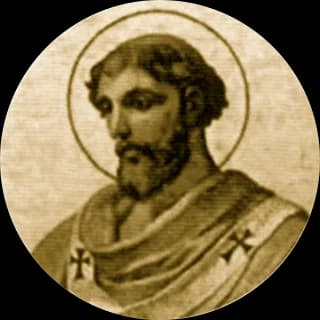 MiltiadesNo. 32 · 311-314
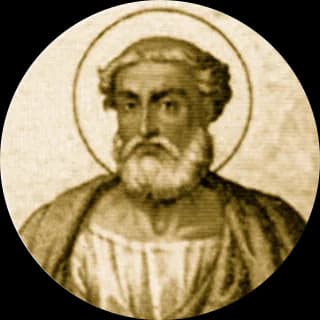 Sylvester INo. 33 · 314-335
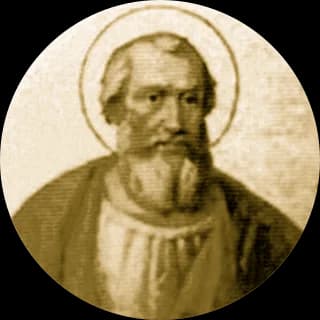 MarkNo. 34 · 336
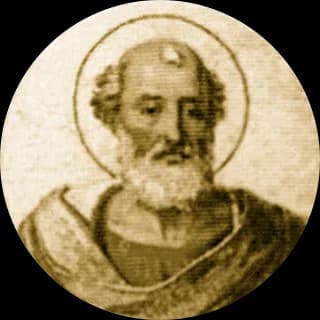 Julius INo. 35 · 337-352
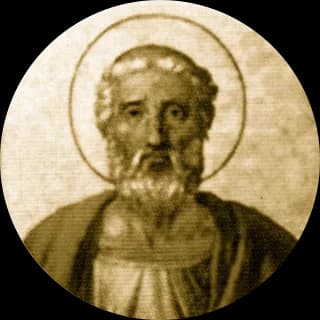 LiberiusNo. 36 · 352-366
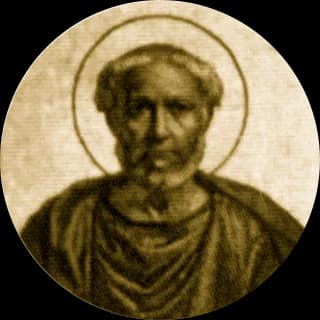 Damasus INo. 37 · 366-384
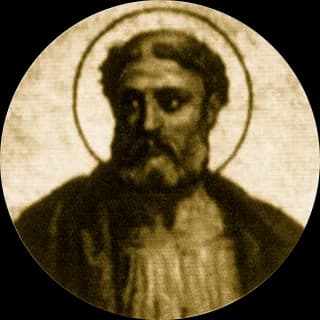 SiriciusNo. 38 · 384-399
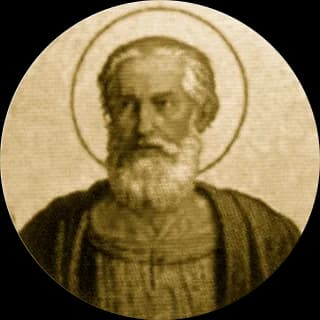 Anastasius INo. 39 · 399-401
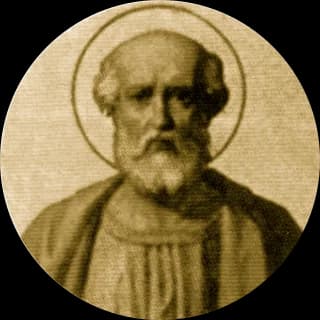 Innocent INo. 40 · 401-417
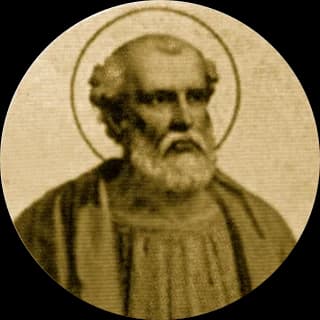 ZosimusNo. 41 · 417-418
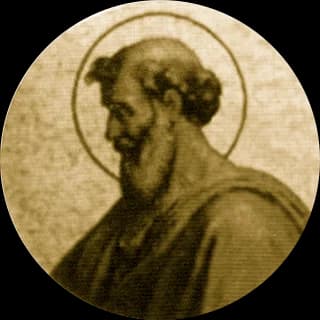 Boniface INo. 42 · 418-422
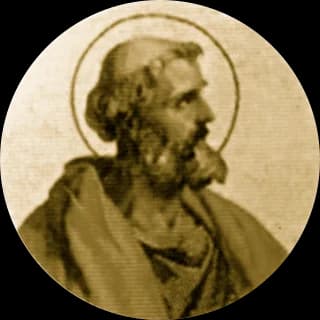 Celestine INo. 43 · 422-432
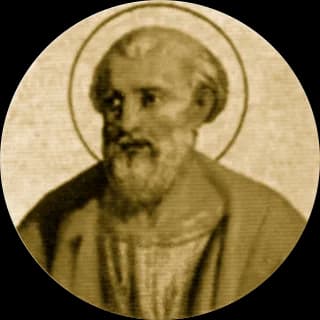 Sixtus IIINo. 44 · 432-440
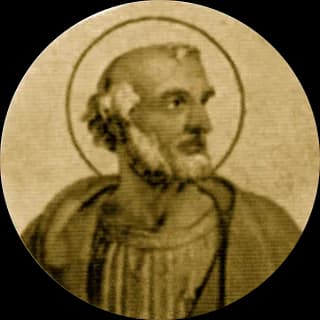 Leo INo. 45 · 440-461
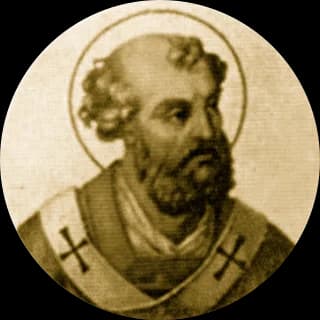 HilariusNo. 46 · 461-468
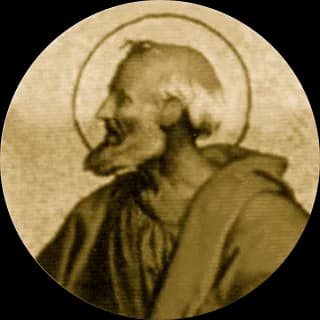 SimpliciusNo. 47 · 468-483