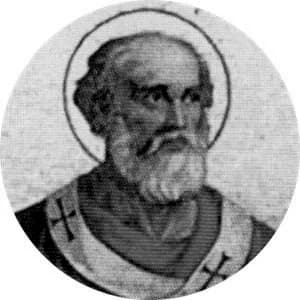
The Byzantine Papacy483-752
Saint Benedict II
A Roman chanter who waited a year for the emperor's leave and then obtained the decree that no pope after him would have to.
Pope no. 81684-685
Benedict, a Roman who had served in the church since boyhood as a singer and then as a priest, was elected in the summer of 683 and consecrated on 26 June 684, after eleven months of waiting for Constantinople. The delay had become the papacy's chronic complaint, and Benedict's reign is remembered because it ended. Constantine IV, grateful to Rome for the council and anxious about the Arabs, issued a decree that future popes might be consecrated as soon as they were elected, the imperial confirmation to be given afterward by the exarch at Ravenna rather than the emperor in person. The next pope, John V, was consecrated within days of his election. The exarch's leave would still be sought for another sixty years; the year-long vacancies were over.
The emperor added a gesture. He sent Benedict locks of hair from his two sons, Justinian and Heraclius, the Byzantine form of adoption, making the pope the princes' spiritual father; the Liber Pontificalis records the clergy and army of Rome receiving the relics of an imperial haircut with due ceremony.
He died on 8 May 685, after ten and a half months, and was buried in Saint Peter's. His feast is 7 May.
A full essay on this pope is in preparation. The facts and summary above are complete and sourced.
Sources
- J. N. D. Kelly and Michael Walsh, The Oxford Dictionary of Popes (2010)
- Jeffrey Richards, The Popes and the Papacy in the Early Middle Ages, 476-752 (1979)
- Raymond Davis (trans.), The Book of Pontiffs (Liber Pontificalis) (2000)
- Further reading: Wikipedia