V752-903
The Carolingian Papacy
The Frankish bargain: popes crown emperors, emperors defend popes, and the Papal States are born.
Popes No. 92-117
In 752 the pope was a subject of the emperor in Constantinople who could not defend him; in 903 he was the sovereign of a state in central Italy, the maker of emperors, and the prisoner of whichever Italian magnate held the roads to Rome. Between those dates lie the popes who made the bargain with the Franks and the popes who paid for it. Stephen II crossed the Alps to ask Pepin for an army and came home with the exarchate; Leo III set a crown on Charlemagne's head and gave the West an emperor; Nicholas I told kings, archbishops, and the patriarch of Constantinople that the see of Peter judged all and was judged by none, and was believed. Then the empire that had guaranteed all this broke apart, the Saracens landed at the mouth of the Tiber, a pope was murdered in his palace, and the Roman clergy put a dead pope on trial. The Carolingian papacy was the papacy's first experiment in being a state, and it ended in the discovery that a state needs a defender, and that a defender has a price.
The Frankish bargain
The bargain was struck in a winter. Aistulf, king of the Lombards, took Ravenna in 751 and demanded Rome; the emperor sent letters; and Stephen II, in October 753, rode north over the Great Saint Bernard to Pepin, whom Zachary had allowed to make himself king two years before. At Ponthion in January 754 Pepin promised to restore the exarchate to Saint Peter; at Saint-Denis in July the pope anointed him, his queen, and his sons, and gave them the title of patrician of the Romans; and after two campaigns Pepin's abbot laid the keys of twenty-two cities on Peter's tomb. The Byzantine envoys who asked for the cities back were told that the king had fought for the apostle and not for them. Paul I held the gains by letter. Stephen III, elected after a duke had made his lay brother pope by force and a Lombard priest had produced another, legislated at the synod of 769 to keep laymen out of papal elections and wrote to Pepin's sons that the Lombards were a leprous race. Charlemagne married a Lombard princess anyway, repudiated her, and in 774, at Adrian I's appeal, took Pavia and the Lombard crown. That Easter he came to Rome and renewed his father's promise on the tomb of Saint Peter.
The Republic of Saint Peter
Adrian I reigned twenty-three years and made the new thing look like an old one. From 781 he dated his documents by his own regnal years instead of the emperor's, struck coins in his own name, rebuilt the walls, the aqueducts, and the roof of Saint Peter's, and planted farms in the Campagna to feed a city that no longer drew grain from Sicily. He called what he governed the republic of the Romans and its people the people of Saint Peter, and he argued for years, in letters that survive, about the difference between what Charlemagne had promised and what he delivered. Somewhere in the Lateran in these decades someone composed the Donation of Constantine, the forged charter in which the first Christian emperor gave the pope Rome and the West; no pope of the period cites it, and it would wait two centuries for its career. The Frankish king and the Roman bishop were friends, and Charlemagne wept at Adrian's death and sent his epitaph. But Charlemagne's theologians rejected the council of Nicaea that Adrian's legates had signed, the Franks added a word to the Creed that Rome would not sing, and the friendship rested on the king's willingness to let the pope have his way in the things the king did not care about.
Christmas 800
The Roman nobility did not accept a pope of no family whom the Franks protected, and on 25 April 799 they tried to blind Leo III in the street. He fled to Charlemagne at Paderborn, came back with a Frankish escort, and on 23 December 800 swore an oath in Saint Peter's, since no one could judge the pope, that the charges against him were false. On Christmas Day, as the king rose from prayer at the confessio, Leo crowned him and the Romans acclaimed him emperor. Charlemagne's biographer said he had not wanted it; what he did not want, most likely, was a crown from a pope's hands, and when he crowned his own son he did it at Aachen without one. The consequences came in Louis the Pious's reign. Stephen IV went to Reims in 816 to anoint the new emperor and swear the Romans to him; Paschal I got in return the Pactum Ludovicianum of 817, which confirmed the papal territories and free elections; and then Paschal's household blinded and beheaded two pro-Frankish officials in the Lateran, and in 824 Lothair's Constitutio Romana put an imperial commissioner in Rome, an oath of loyalty on every Roman, and the emperor's approval before any pope could be consecrated. Gregory IV waited five months for it in 828, and was then taken over the Alps in 833 to serve as Lothair's decoy at the Field of Lies. When the empire was divided at Verdun in 843, the popes lost the one thing the bargain of 754 had given them, a single protector.
The Saracens at the gates
The Aghlabids of Tunisia landed in Sicily in 827 and took Palermo in 831, and by the 840s their ships were off Italy. In August 846 a fleet landed at Ostia and sacked Saint Peter's and Saint Paul's, both outside the walls, stripping the altar and the confessio of the apostle. Leo IV answered in the only way that lasted: between 848 and 852 he walled the Vatican hill, the basilica, and the Borgo in a circuit with forty-four towers, the Leonine City, and in 849 he blessed the ships of Naples, Gaeta, and Amalfi at Ostia before they and a storm broke the next raiding fleet. It was not enough. The emirs of Bari and the Saracen camps on the Garigliano raided the Campagna for the rest of the century, and John VIII spent his ten years fighting them with a papal fleet, excommunications for the Italian cities that made terms with them, and, when nothing else worked, tribute. He walled Saint Paul's too, and called the result Johannipolis. The papacy had become a state, and a state on a frontier.
Nicholas and the East
The strongest pope of the century was Nicholas I, who reigned from 858 to 867 and treated the world as if the Donation and the decretals were literally true. He deposed two archbishops for annulling the marriage of Lothair II, refused the king a divorce, and made him take his wife back. He restored a bishop of Soissons whom Hincmar of Reims had deposed, on the strength of the pseudo-Isidorian decretals that had just arrived from Francia, forged canons that made every bishop's case appealable to Rome. He declared the patriarch Photius of Constantinople deposed, and Photius's council declared Nicholas deposed in return, and the Photian schism rehearsed every argument of 1054. He answered a hundred and six questions from the newly baptized khan of Bulgaria with a letter that is one of the most humane documents of the age. His successor Adrian II lost Bulgaria to Constantinople at the council of 870 and gained the Slavs: Cyril died in Rome in 869 and was buried in San Clemente, and Adrian consecrated his brother Methodius archbishop and allowed the liturgy in Slavonic, which John VIII confirmed in 880 and Stephen V banned in 885. The mission the popes could not keep went to Bulgaria and became the church of the Slavs.
The empire dissolves
John VIII crowned Charles the Bald emperor in 875 and Charles the Fat in 881, and neither could hold Italy; in 878 the duke of Spoleto besieged the pope in Saint Peter's for a month, and John went to Francia to look for a protector and came back without one. In December 882 he was murdered in the Lateran, the first pope killed by his own people. Charles the Fat's deposition in 887 ended the Carolingian Empire, and the popes now crowned whoever held Italy: Stephen V crowned Guy of Spoleto in 891, Formosus crowned his son Lambert in 892 and then, having invited Arnulf of Germany to drive the Spoletans out, crowned Arnulf in 896. Formosus died that April. In January 897 Stephen VI, Lambert's man, had his corpse exhumed, dressed in vestments, set on a throne, tried, condemned, stripped of the fingers that had blessed, and thrown into the Tiber. Stephen was strangled within the year, Theodore II reburied Formosus with honor, John IX burned the acts of the synod, and Benedict IV crowned an emperor from Provence whom a king of Italy chased out within months. Six popes reigned in the seven years after Formosus. The next era would be worse.
The world at the time
- 754
politicalPepin's promise at Quierzy
Pepin swears at Ponthion and Quierzy to restore the exarchate to Saint Peter, and Stephen II anoints him and his sons at Saint-Denis.
- 774
politicalCharlemagne takes Pavia
The Lombard kingdom falls after a winter siege; Charlemagne becomes king of the Lombards and, at Easter in Rome, renews his father's promise to Adrian I.
- 782
culturalAlcuin joins Charlemagne's court
The schoolmaster of York takes charge of the palace school, and the Carolingian revival of letters, scripts, and corrected texts begins.
- 787
councilSecond Council of Nicaea
The empress Irene's council restores the veneration of images with Adrian I's legates present; Charlemagne's theologians reject it on a bad translation.
- 800
politicalCoronation of Charlemagne
On Christmas Day, Leo III crowns Charlemagne emperor in St. Peter's, binding papacy and empire for seven centuries.
- 843
politicalTreaty of Verdun
The sons of Louis the Pious divide the empire into three kingdoms; the popes will never again have a single Frankish protector to deal with.
- 846
politicalSaracens sack Saint Peter's
A fleet from Muslim Sicily lands at Ostia and strips Saint Peter's and Saint Paul's, both outside the walls; Leo IV answers with the Leonine City.
- 863
schismThe Photian Schism
Rome and Constantinople excommunicate over the see of Constantinople, rehearsing the arguments of the final rupture of 1054.
- 863
religiousCyril and Methodius reach Moravia
Two brothers from Thessalonica bring a Slavonic alphabet and liturgy to Moravia; Rome will bless the liturgy, ban it, and bless it again.
- 888
politicalThe Carolingian Empire dissolves
Charles the Fat dies deposed, and the empire breaks into kingdoms under kings who are not Carolingians; the popes must crown whoever holds Italy.
- 897
councilThe Cadaver Synod
Stephen VI has the corpse of Formosus exhumed, robed, tried, and condemned; the body goes into the Tiber and Stephen is strangled within the year.
Popes of this era
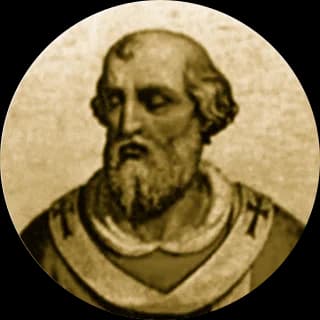 Stephen IINo. 92 · 752-757
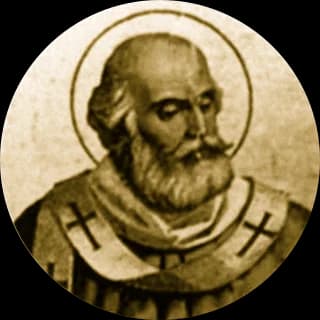 Paul INo. 93 · 757-767
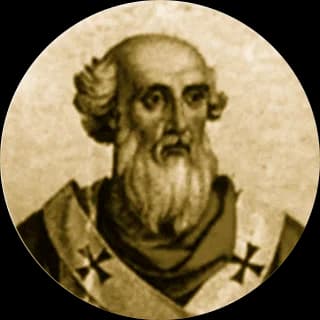 Stephen IIINo. 94 · 768-772
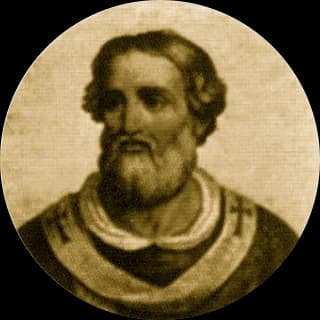 Adrian INo. 95 · 772-795
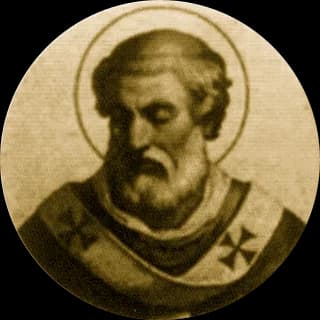 Leo IIINo. 96 · 795-816
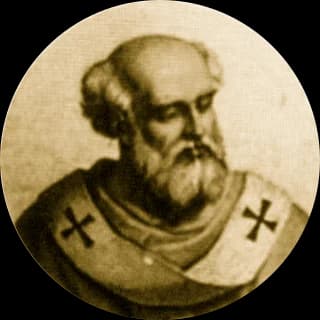 Stephen IVNo. 97 · 816-817
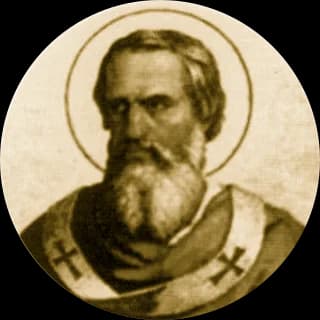 Paschal INo. 98 · 817-824
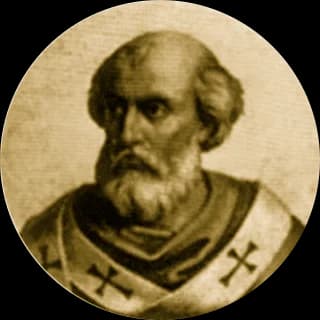 Eugene IINo. 99 · 824-827
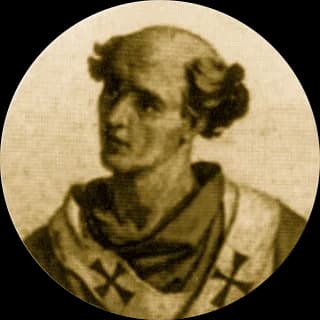 ValentineNo. 100 · 827
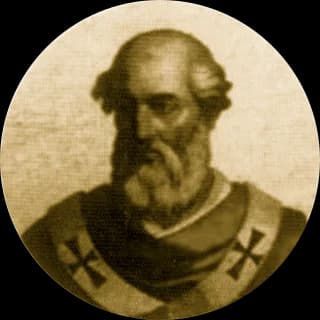 Gregory IVNo. 101 · 827-844
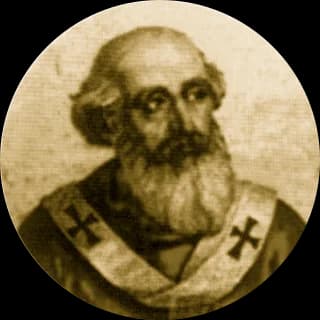 Sergius IINo. 102 · 844-847
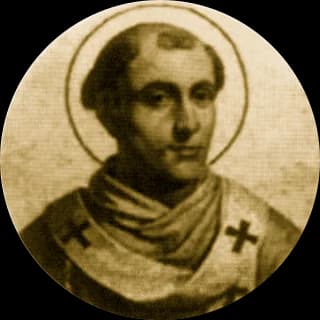 Leo IVNo. 103 · 847-855
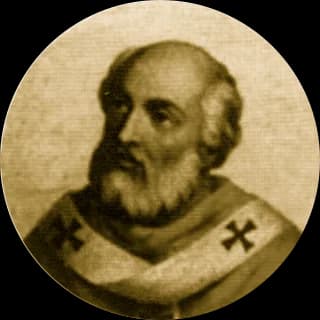 Benedict IIINo. 104 · 855-858
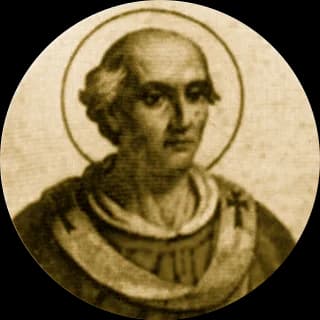 Nicholas INo. 105 · 858-867
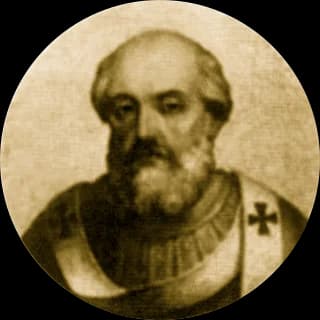 Adrian IINo. 106 · 867-872
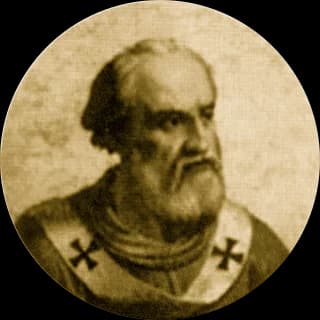 John VIIINo. 107 · 872-882
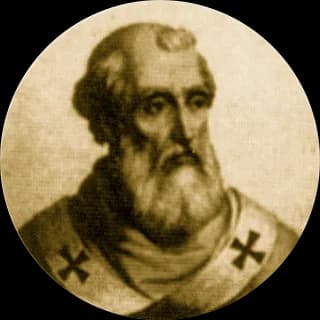 Marinus INo. 108 · 882-884
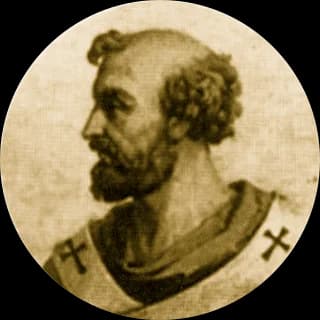 Adrian IIINo. 109 · 884-885
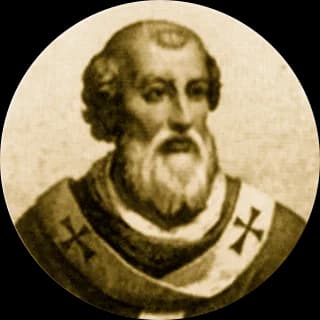 Stephen VNo. 110 · 885-891
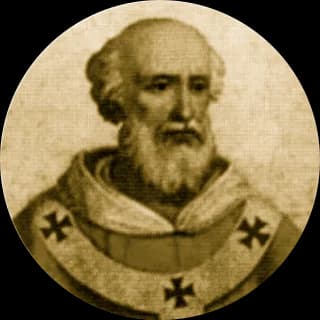 FormosusNo. 111 · 891-896
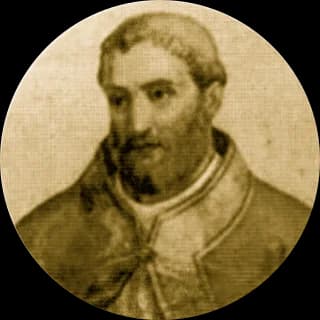 Boniface VINo. 112 · 896
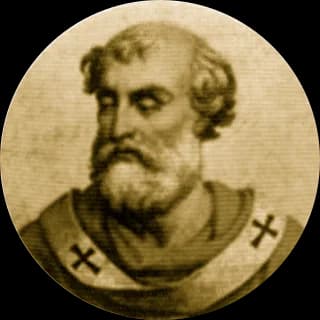 Stephen VINo. 113 · 896-897
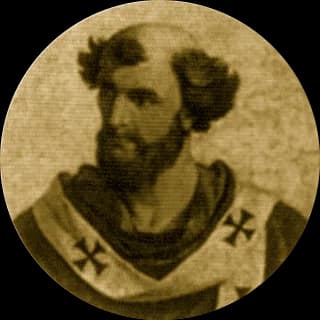 RomanusNo. 114 · 897
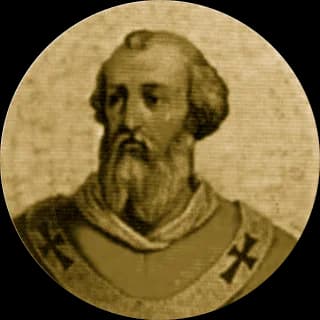 Theodore IINo. 115 · 897
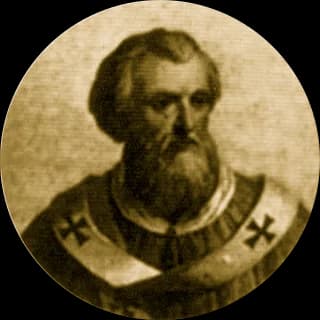 John IXNo. 116 · 898-900
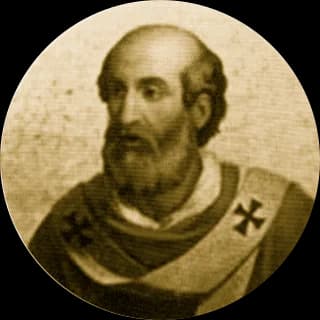 Benedict IVNo. 117 · 900-903