The Byzantine Papacy483-752
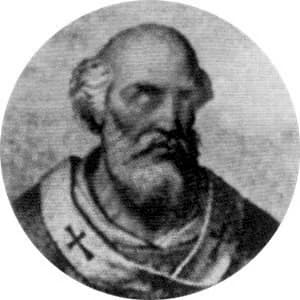
Benedict I
Elected after eleven months' wait for the emperor's leave, he fed a besieged city on Egyptian grain and died with the Lombards at the walls.
Pope no. 62575-579
John III died in July 574, and for nearly eleven months Rome had no bishop, because the clergy had elected Benedict, the son of a Roman named Boniface, and could not consecrate him until the emperor in Constantinople had confirmed the choice and the confirmation had found a ship through Lombard-held waters. He was consecrated on 2 June 575. The wait was the new normal: from the Pragmatic Sanction of 554 to the eighth century, every pope-elect stood idle until the emperor or his exarch said yes.
What Benedict did in his four years is known from two sentences. The Liber Pontificalis says that the Lombards ravaged Italy and that famine followed, and that the emperor Justin II sent grain ships from Egypt to relieve the city; the Lombard duke Faroald had taken Spoleto and the roads south, and the Lombards were now within a day's march. Gregory of Tours adds that Rome sent gold to the Franks to buy an attack on the Lombards' rear, without much effect. Benedict's one recorded appointment was to make a monk named Gregory, the former prefect of the city who had turned his family house on the Caelian into a monastery, one of the seven deacons of Rome, the office from which Gregory would be elected pope in 590.
Rome under Benedict was what it would remain for two centuries: a walled island in a Lombard peninsula, fed by sea and governed by a bishop whose master lived a month's sailing away.
A full essay on this pope is in preparation. The facts and summary above are complete and sourced.
Sources
- J. N. D. Kelly and Michael Walsh, The Oxford Dictionary of Popes (2010)
- Jeffrey Richards, The Popes and the Papacy in the Early Middle Ages, 476-752 (1979)
- Raymond Davis (trans.), The Book of Pontiffs (Liber Pontificalis) (2000)
- Further reading: Wikipedia