II99-311
The Age of Persecution
Two centuries underground: bishops of Rome elected to an office that could be a death sentence.
Popes No. 5-31
For most of these two centuries the bishop of Rome was, legally speaking, the head of a criminal association. Persecution came in waves rather than as a constant fire, and between the waves the Roman Christians did what Romans did well: they organized, gave money away, buried their dead in order, and kept lists. By the time Galerius signed the edict that ended the persecutions in 311, the church that had begun as a handful of Greek-speaking house congregations had a bishop the whole Mediterranean knew by name, a cemetery that held nine of his predecessors, a treasury that supported fifteen hundred widows and poor, and a settled habit of telling other churches what it thought. It had also produced its first antipopes, its first abdication, and the first argument about whether the bishop of Rome's word was final. Nothing was decided. Everything that would be decided later was first put on the table here.
What a bishop of Rome was
The Rome of 150 was the largest city on earth, and its Christians were a small minority scattered through the tenements and warehouses of Trastevere, the Aventine, and the roads out of town. They met in houses, spoke and prayed mostly in Greek, and were led by a body of presbyters among whom one presided. Justin, who taught above a bathhouse in those years, describes the Sunday assembly without naming its president; Hermas, whose brother Pius was that president, speaks only of "the elders." When the office became a single bishop's, and when that bishop began to be obeyed rather than consulted, cannot be dated. What can be dated is the list. Around 180 Irenaeus wrote down the succession from Linus to Eleutherius, twelve names, as proof that Rome's teaching had come down publicly from the apostles, and from then on the Roman church had a spine: a line of men, each answerable for what he had received.
Wealth came with the list. Dionysius of Corinth thanked Pope Soter around 170 for money and for continuing Rome's ancient custom of relieving churches "in every city" and Christians condemned to the mines. The bishop of the imperial capital could afford to be generous, and generosity bought a hearing. So did organization: under Zephyrinus and his deacon Callixtus the community acquired a cemetery of its own on the Appian Way, the first church property in Rome.
An empire that rarely looked
The persecutions were real and intermittent. Trajan's answer to Pliny in 112 set the terms: Christians were not to be hunted, anonymous accusations were to be ignored, but anyone denounced and unwilling to sacrifice was to die. For a century the bishop of Rome lived under that sentence without, as far as the record shows, being prosecuted under it. Irenaeus names one early pope, Telesphorus, as a martyr; every other second-century bishop seems to have died in his bed, whatever the Liber Pontificalis later claimed. The martyrs of the period were teachers like Justin, beheaded around 165 with six companions, or provincials like the Christians of Lyon in 177 and Perpetua of Carthage in 203, victims of local governors rather than imperial design.
That changed in 250. The emperor Decius, facing invasions and plague, ordered every inhabitant of the empire to sacrifice to the gods and obtain a certificate. It caught the bishops first: Fabian of Rome died in January, and the see stayed empty for fourteen months because electing a successor was too dangerous. Valerian in 257 went further and targeted the clergy directly; in August 258 Sixtus II was arrested while preaching in the catacomb and beheaded on the spot with four deacons, and Cyprian of Carthage followed in September. Then the pressure lifted for forty years, until Diocletian, in 303, ordered the churches demolished and the scriptures burned, the only persecution that tried to destroy the institution rather than punish individuals. It failed, and Galerius admitted as much on his deathbed in 311. The popes of this era had learned to govern in the intervals.
Drawing the lines
Between the persecutions the Roman church spent its energy deciding who belonged to it. The first exclusions were doctrinal. Marcion, who taught that the God of the Jews was not the Father of Jesus, was put out in July 144 and his large donation returned; Valentinus and his Gnostic school drifted away; the tanner Theodotus, who said Jesus was merely a man, was excommunicated by Victor around 195. Each time, the Roman church defined what it held by naming what it rejected, and its list of rejections became, over the century, the outline of a creed.
Then came the arguments about practice, which proved harder. The churches of Asia ended the Easter fast on the fourteenth of the Jewish month Nisan; Rome kept the following Sunday. Polycarp and Anicetus had agreed to differ around 155 and shared the Eucharist before parting. Victor, an African with less patience, ordered the Asian churches to conform in 190 and moved to excommunicate them when they refused. Irenaeus, who agreed with him about the date, wrote to say that "the disagreement in the fast confirms our agreement in the faith" and that no previous bishop of Rome had thought a custom worth a schism. It was the first time a pope was rebuked by his own side for overreach, and the pattern would recur.
Inside Rome the argument was about sinners. Callixtus, a former slave elected in 217, admitted adulterers to penance and recognized marriages Roman law would not; the rigorist Hippolytus refused to accept him and had himself elected bishop of a rival congregation, the first antipope. Callixtus's policy prevailed: the church of the penitent, not the church of the pure, would be the Roman way.
Decius and the lapsed
The Decian persecution turned that question from a theory into an emergency. Thousands of Christians had sacrificed or bought certificates saying they had, and when the storm passed they wanted to come back. In Rome, the presbyter Novatian, the ablest theologian in the city, held that the lapsed could never be readmitted; the new pope, Cornelius, elected in March 251, held that they could after penance. Novatian had himself consecrated bishop by three provincial colleagues, and Rome had its second antipope in thirty-five years. The decisive voice was Cyprian's in Carthage, who backed Cornelius, wrote his treatise on the unity of the church around the idea that there could be only one bishop in a city, and sent Rome the first sustained argument for what the chair of Peter meant. Cornelius, for his part, wrote the letter that survives in Eusebius listing his church's strength: forty-six presbyters, seven deacons, seven subdeacons, forty-two acolytes, fifty-two exorcists, readers, and doorkeepers, and more than fifteen hundred widows and needy "all fed by the grace and love of the Master." No other church in the world could have written it.
Stephen and the limits of the word
Cyprian's alliance with Rome did not survive the next pope. Stephen, elected in 254, took Cornelius's leniency to its conclusion: baptism given by heretics and schismatics was valid, and converts from them needed only the laying on of hands, "for nothing is to be innovated beyond what has been handed down." Cyprian and the African bishops held that outside the church there was no baptism, and three Carthaginian councils said so. Stephen refused to receive their envoys, called Cyprian a false Christ, and, according to the furious letter of Firmilian of Cappadocia that Cyprian preserved, claimed the authority of Peter's chair for his ruling, the first time a bishop of Rome is known to have cited "on this rock" against other bishops. The quarrel was ended by Valerian, who killed both men within a year of each other. In the long run the church accepted Stephen's ruling and rejected his manner, which is roughly what would happen with most papal claims for the next thousand years.
Toward 311
Rome's last pagan emperors handled the church as a fact. Gallienus in 260 restored the confiscated cemeteries; Aurelian in 272, asked to settle a dispute over the church building at Antioch, gave it to whichever bishop the bishops of Italy and Rome recognized, a pagan's acknowledgment of where Christian authority sat. The popes of the second half of the century, Dionysius, Felix, Eutychian, Caius, ruled long and quietly.
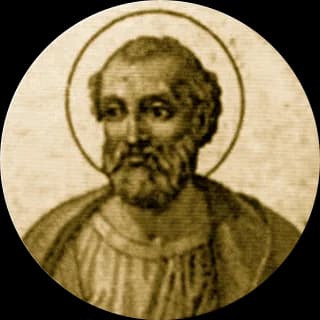
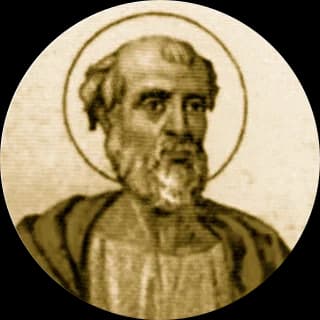
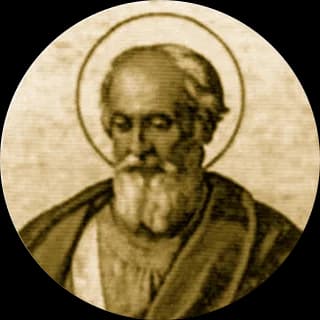
Then Diocletian. Marcellinus, pope since 296, may have surrendered the scriptures when the edict came in 303; the Roman church never quite cleared his name, and for four years after his death in 304 it could not agree on a successor. Marcellus, elected in 308, tried to impose penance on those who had lapsed, was driven out by riots, and was banished by the emperor Maxentius; Eusebius, who followed him, was banished within months for the same reason and died in Sicily. The church that emerged into legality in 311 was still fighting, as it had been since Callixtus, over what to do with the fallen. Its next bishop, Miltiades, would be summoned by a Christian emperor to judge the same question for the churches of Africa, and the age of persecution would end with the age of the Christian state beginning, on the same unresolved argument.
The world at the time
- 112
politicalPliny writes to Trajan about the Christians
A provincial governor asks what to do with people denounced as Christians; the emperor's reply, do not seek them out, sets imperial policy for a century.
- 144
schismMarcion expelled from the Roman church
The shipowner who rejected the God of the Old Testament is put out of the church and his money returned; his rival church outlives the pope who expelled him.
- 190
schismThe Easter controversy
Victor I orders the churches of Asia to keep Easter on Sunday and moves to cut them off; Irenaeus and other bishops tell him that custom is no ground for schism.
- 202
politicalPersecution under Septimius Severus
An edict against conversion brings arrests from Alexandria to Carthage, where Perpetua and Felicity die in the arena; Rome's Christians keep their heads down.
- 250
politicalDecian persecution
The first empire-wide persecution requires every subject to sacrifice to the Roman gods; Pope Fabian is among the first to die, and thousands lapse.
- 258
politicalValerian's persecution
Clergy are ordered to sacrifice on pain of death. Sixtus II is beheaded in the catacomb with four deacons; Lawrence dies four days later; Cyprian in September.
- 272
politicalAurelian rules on the church of Antioch
Asked who owns Antioch's church building, the pagan emperor awards it to whichever bishop the bishops of Italy and Rome recognize: the first imperial nod to Roman precedence.
- 303
politicalDiocletianic persecution
The last and fiercest general persecution burns churches and scriptures across the empire; Rome's bishop Marcellinus is accused of handing over the books.
- 311
politicalEdict of Galerius
A dying emperor admits the persecution has failed and grants Christians the right to exist; the next pope takes office in a church that is, for the first time, legal.
Popes of this era
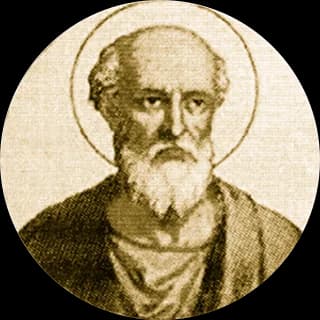 EvaristusNo. 5 · c. 99-c. 107
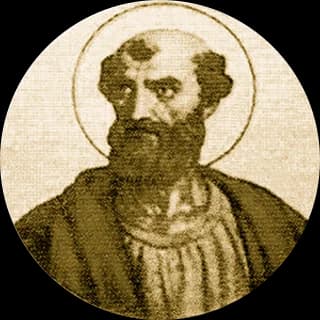 Alexander INo. 6 · c. 107-c. 115
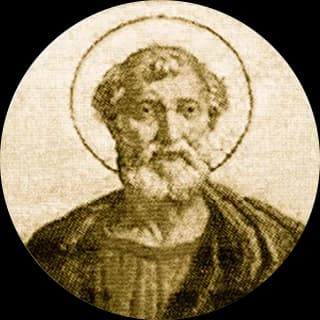 Sixtus INo. 7 · c. 115-c. 125
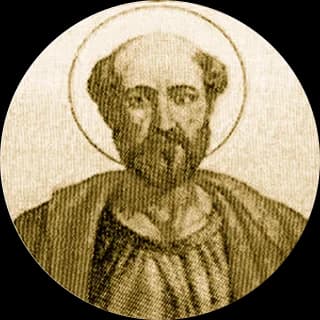 TelesphorusNo. 8 · c. 125-c. 136
 HyginusNo. 9 · c. 136-c. 140
 Pius INo. 10 · c. 140-c. 155
 AnicetusNo. 11 · c. 155-c. 166
 SoterNo. 12 · c. 166-c. 175
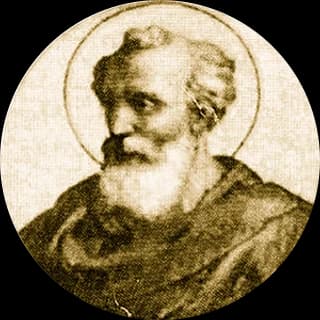 EleutheriusNo. 13 · c. 175-c. 189
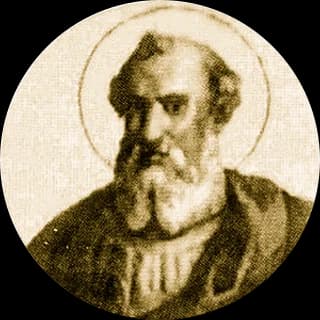 Victor INo. 14 · c. 189-c. 199
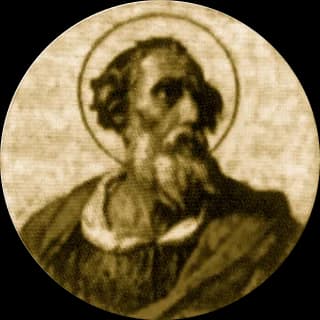 ZephyrinusNo. 15 · c. 199-c. 217
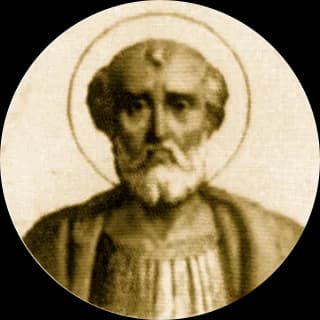 Callixtus INo. 16 · c. 217-c. 222
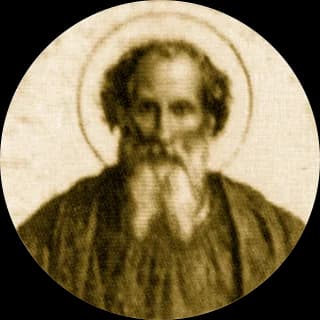 Urban INo. 17 · c. 222-c. 230
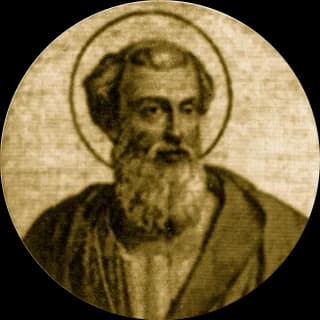 PontianNo. 18 · 230-235
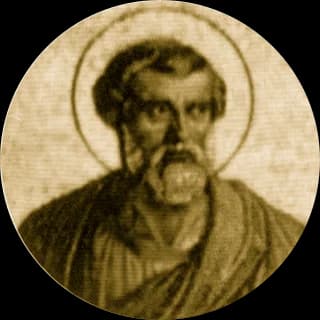 AnterusNo. 19 · 235-236
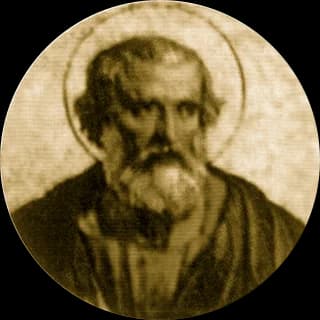 FabianNo. 20 · 236-250
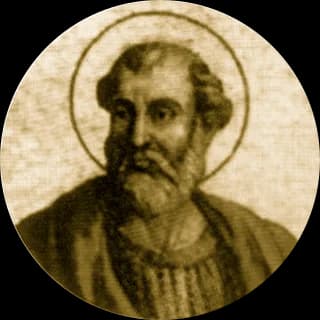 CorneliusNo. 21 · 251-253
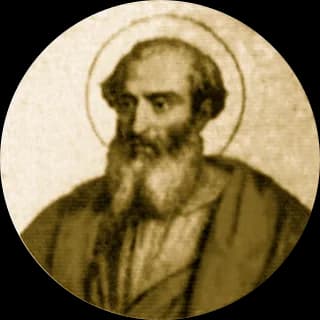 Lucius INo. 22 · 253-254
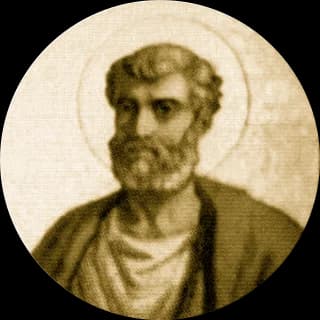 Stephen INo. 23 · 254-257
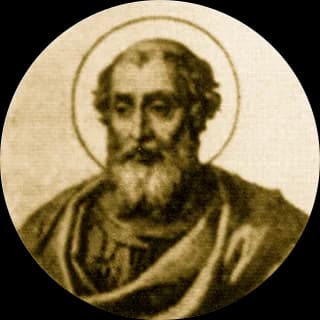 Sixtus IINo. 24 · 257-258
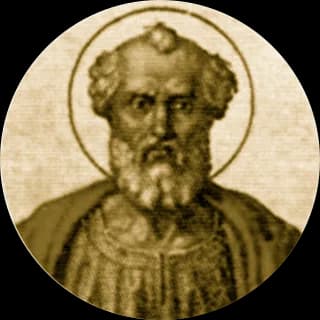 DionysiusNo. 25 · 259-268
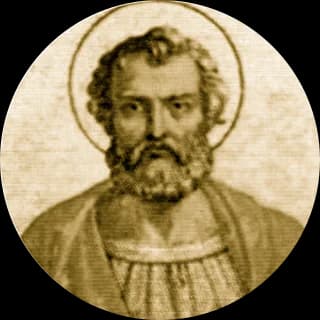 Felix INo. 26 · 269-274
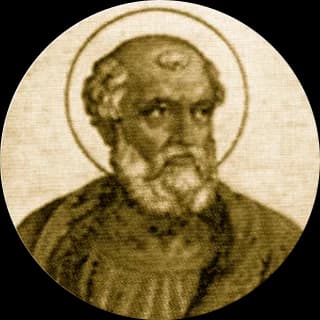 EutychianNo. 27 · 275-283
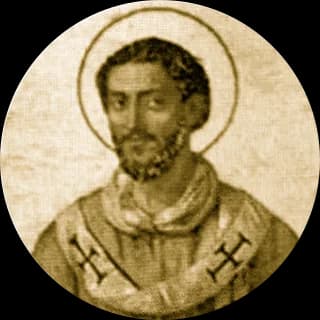 CaiusNo. 28 · 283-296
 MarcellinusNo. 29 · 296-304
 Marcellus INo. 30 · 308-309
 EusebiusNo. 31 · 309