The Age of Persecution99-311
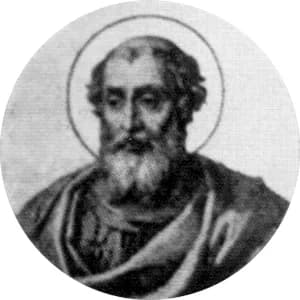
Saint Sixtus II
A peacemaker who healed the breach with Africa, then was seized while preaching in the catacomb and beheaded with four deacons.
Pope no. 24257-258
Sixtus took office on 30 August 257, a month after Valerian's first edict had ordered the clergy to sacrifice, and his first act was to end the war his predecessor had started. Stephen had broken with Carthage and threatened Asia over the rebaptism of heretics; Sixtus, a Greek and, the Liber Pontificalis says, a former philosopher, restored communion without conceding the point. Pontius, Cyprian's biographer, called him "a good and peaceable priest," and Dionysius of Alexandria wrote to him at length and with evident relief.
He had less than a year. On 6 August 258, under Valerian's second edict, which condemned bishops, priests, and deacons to immediate execution, Sixtus was surprised while presiding at the liturgy in the cemetery of Praetextatus on the Appian Way and beheaded on the spot with four of his deacons, Januarius, Vincentius, Magnus, and Stephen. Two more deacons, Felicissimus and Agapitus, died the same day; the seventh, Lawrence, followed on 10 August, and the legend of his gridiron would in time eclipse them all. Cyprian, who had a month to live, reported the news to the African bishops in the last letter he wrote: "Xystus was executed in the cemetery on the sixth of August, and with him four deacons."
Sixtus is one of the seven early popes named in the Roman Canon of the Mass, between Clement and Cornelius, and his death is the reason the era's world events call Valerian's persecution the one that reached the top.
A full essay on this pope is in preparation. The facts and summary above are complete and sourced.