The Age of Persecution99-311
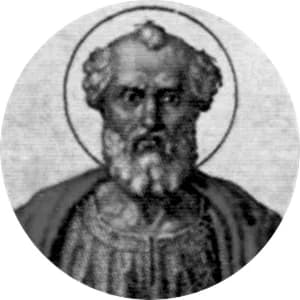
Saint Dionysius
Elected after a year's vacancy, he rebuilt what Valerian had broken, corrected Alexandria on the Trinity, and ransomed Cappadocian captives.
Pope no. 25259-268
For almost a year after Sixtus's death the Roman church had no bishop, and when it elected Dionysius on 22 July 259 the emperor who had killed his predecessor was on his way to captivity in Persia. Gallienus, Valerian's son, called off the persecution in 260 and, in an edict addressed to the bishops themselves, restored the confiscated churches and cemeteries: the first imperial document to treat the church as an owner of property. Dionysius spent the peace rebuilding. The Liber Pontificalis says he reorganized the parishes of the city and the cemeteries outside it, and gave the churches of the countryside their own bishops.
He is best remembered for a letter. Dionysius of Alexandria, arguing against Sabellius, had described the Son in terms that sounded, to some Egyptian critics, like a creature separate from the Father; they appealed to Rome, and the pope wrote back condemning both the Sabellians, who "blasphemously say that the Son is the Father," and those who "divide the sacred unity into three separate powers." The Alexandrian answered with a defense, and Athanasius, sixty years later, quoted the Roman letter as a standard of orthodoxy before Nicaea. It is the earliest surviving papal statement on the Trinity, and the earliest known appeal from one great see to another over doctrine.
Where he came from nobody recorded; the Liber Pontificalis confesses it could not discover his origins. He died on 26 December 268 and was buried in the catacomb of Callixtus. The Roman calendar lists him among the bishops, not the martyrs.
A full essay on this pope is in preparation. The facts and summary above are complete and sourced.