The Age of Persecution99-311
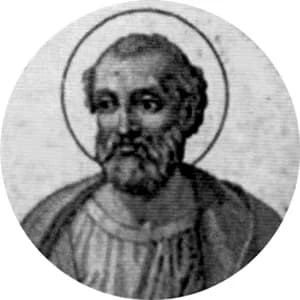
Saint Marcellinus
The pope of the Great Persecution, accused of handing over the scriptures and offering incense, and quietly left off the church's own lists.
Pope no. 29296-304
Marcellinus, a Roman elected on 30 June 296, had seven untroubled years before Diocletian's first edict of 23 February 303 ordered every church demolished, every copy of the scriptures surrendered, and every Christian of rank stripped of office. What the bishop of Rome did when the officers came is the one question anyone has asked about him, and the answer has been contested ever since. He died in 304, in October according to one tradition, and for the next four years the Roman church could not or would not elect a successor.
Whatever he did, he did not do it alone. The Roman church that emerged from the persecution was divided between those who had stood firm and those who had lapsed, and the fight over readmitting the fallen would drive his next two successors into exile. He was buried in the cemetery of Priscilla, not in the papal crypt of Callixtus, and his feast on 26 April left the general calendar in 1969.
A full essay on this pope is in preparation. The facts and summary above are complete and sourced.
Sources
- J. N. D. Kelly and Michael Walsh, The Oxford Dictionary of Popes (2010)
- Eamon Duffy, Saints and Sinners: A History of the Popes (2014)
- Raymond Davis (trans.), The Book of Pontiffs (Liber Pontificalis) (2000)
- Further reading: Wikipedia