The Age of Persecution99-311
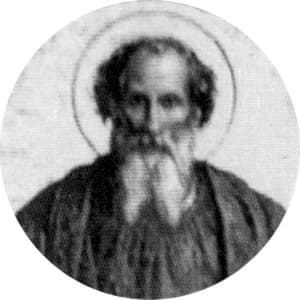
Saint Urban I
Eight quiet years under a tolerant emperor, remembered mainly through a legend about Saint Cecilia and a rival bishop who would not go away.
Pope no. 17c. 222-c. 230
Urban had the good fortune to reign under Alexander Severus, an emperor whose mother corresponded with Origen and who was said to keep an image of Christ in his private chapel beside Orpheus and Abraham. For eight years no Christian in Rome was prosecuted for the name, and the church used the calm to consolidate what Callixtus had built: a common cemetery, a treasury, a bishop recognized by the rest of the world. Eusebius records only the length of the reign. The Liber Pontificalis calls Urban a Roman, the son of Pontianus, and says he had the church's liturgical vessels made of silver, twenty-five patens among them, which, if true, is a measure of how far the community had come from the rented rooms of Pius's day.
The calm did not extend to the church's own house. Hippolytus, who had refused to accept Callixtus in 217, still led his own congregation as a rival bishop, and would go on doing so through Urban's reign and into the next. Urban's handling of the schism, like everything else he did, is unrecorded.
His feast, 25 May, was for centuries the day on which vintners in the Rhine valley asked his protection for the grapes.
A full essay on this pope is in preparation. The facts and summary above are complete and sourced.