The Age of Persecution99-311
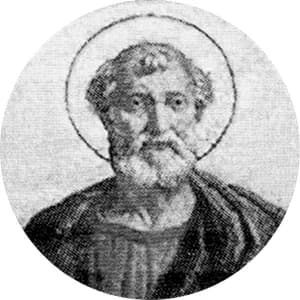
Saint Sixtus I
Xystus of Rome, whose Greek name became a Latin pun and a papal dynasty: five popes and a chapel would carry it after him.
Pope no. 7c. 115-c. 125
His name was Xystus, Greek for polished or smooth, and it is the last clear trace of the Greek-speaking immigrant church that had produced most of Rome's early leaders. Latin scribes wrote it Sixtus, heard in it the number six, and noticed that he was the sixth bishop after Peter; the coincidence gave the name a papal future that ran through Sixtus IV's chapel and Sixtus V's obelisks. Of the man himself Eusebius records only that he followed Alexander in the third year of Hadrian and held the office for ten years.
The Liber Pontificalis adds a Roman birth, a father named Pastor, and three decrees. Only ministers were to touch the sacred vessels; bishops summoned to Rome were not to be received back by their churches without a letter from the apostolic see; and the people were to sing the Sanctus at the start of the eucharistic prayer. The first two describe the disciplines of a church with a chancery, which Rome did not have for another two centuries; the third is a liturgical origin story of the kind the compiler attached to nearly every early name.
He was, so far as anyone can tell, the bishop of a quiet decade: the years in which the Roman congregations, still a handful of house churches, were learning to speak of themselves in the singular.
A full essay on this pope is in preparation. The facts and summary above are complete and sourced.