The Age of Persecution99-311
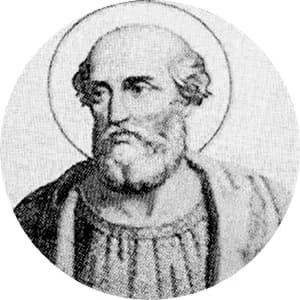
Saint Hyginus
An Athenian philosopher, by tradition, whose short reign saw the Gnostic teachers Valentinus and Cerdo arrive in Rome and stay.
Pope no. 9c. 136-c. 140
Hyginus reigned for four years, according to Eusebius, at the start of the long peace of Antoninus Pius, and the only contemporary fact attached to him concerns other men. Irenaeus records that Cerdo, a teacher from Syria who held that the God of the law and the God of the gospel were two different beings, "came to Rome under Hyginus," and that Valentinus, the most brilliant of the Gnostic masters, arrived in the same years and flourished under Pius. Cerdo, Irenaeus adds, repeatedly confessed his errors in the assembly, taught them again in private, and was eventually excluded. The pope of the day did not throw him out at once.
That detail is more revealing than any decree. The Roman church of the 130s was not yet an institution that expelled; it was a loose federation of congregations in which a persuasive teacher could rent a hall, gather a school, and remain in communion for years while the presbyters argued about him. Marcion, Cerdo's pupil, would test that tolerance to breaking point under Hyginus's successor.
He was buried near Peter, the tradition says, and his feast is kept on 11 January.
A full essay on this pope is in preparation. The facts and summary above are complete and sourced.