VI903-1046
The Iron Century
The papacy's darkest stretch: Roman clans install, depose, and occasionally murder the popes they own.
Popes No. 118-150
The name is a historian's. Cesare Baronio, writing in 1602, called the tenth century the iron age of the papacy, and the label has stuck to the hundred and forty years between the murder of Leo V and the synod of Sutri. In those years the bishop of Rome was appointed by whoever held the city's fortresses, and that was, in turn, a family of Roman nobles, a prince who was that family's grandson, a German emperor, a second Roman family, and a third whose pope tried to sell the office. Two popes were strangled in Castel Sant'Angelo and one smothered in the Lateran; one was about eighteen when elected and one about twenty; one reigned three times and several for a month. Yet the same years produced the league of the Garigliano, the revival of the empire, the first German and the first French popes, the scholar who brought Arabic arithmetic to the West, the archbishoprics of Magdeburg, Gniezno, and Esztergom, and the monastic reform at Cluny that would, when the century was over, supply the men who took the papacy away from Rome's families for good. The Iron Century is the papacy at its weakest as an institution, and the reason the reform that followed it was so severe.
The house of Theophylact
Sergius III came back from exile in January 904 behind the soldiers of Theophylact, master of the militia and keeper of the papal treasury, and for the next thirty years Theophylact's family chose the popes. He and his wife Theodora, who styled herself senatrix, installed Anastasius III and Lando, men of no record, and then reached outside the city for the archbishop of Ravenna, who became John X in 914 and was the one pope of theirs worth the name. John assembled the Byzantines, the Lombard princes, Spoleto, and the king of Italy against the Saracen colony on the Garigliano that had raided Latium for a generation, rode with the army himself, and destroyed the colony in August 915; he crowned Berengar emperor for it, ended the schism at Constantinople over the emperor's fourth marriage, and governed for fourteen years. Then Theophylact and Theodora died, and their daughter Marozia, married to Guy of Tuscany, took their place. In May 928 her men killed John's brother in the Lateran in front of him and put the pope in the prison where he died. She installed Leo VI and Stephen VII to hold the see while her son came of age, and in 931 the son, aged about twenty, became John XI. Liudprand of Cremona, who wrote it all down a generation later for a German court, made Theodora John X's mistress and Sergius III John XI's father; the second charge the Roman record confirms, the first no one can.
Alberic's Rome
Marozia overreached. In 932 she married Hugh of Provence, king of Italy, in Castel Sant'Angelo, with her son the pope officiating, and her other son Alberic, about eighteen, humiliated at the wedding feast, raised the city against them. Hugh escaped over the wall, Marozia went to prison for life, and Alberic ruled Rome for twenty-two years as prince and senator of all the Romans, the first man since the exarchs to hold the city as a sovereign. He kept his half-brother John XI in the Lateran under guard and, after him, made four popes, Leo VII, Stephen VIII, Marinus II, and Agapetus II, who did nothing without his authority and, within that limit, did some good: they brought Odo of Cluny to Rome, reformed the monasteries of the city and of Subiaco and Farfa, sent legates to Germany and France, and saved a king of France his crown by threat of excommunication. Alberic kept Hugh out of Rome and, in 951, Otto of Germany, who had come to Italy for the imperial crown and was told the gates were shut. On his deathbed in 954 he made the Roman nobility and clergy swear that his son Octavian would be the next pope, and in December 955 he was.
Otto and John
Octavian became John XII at about eighteen and ruled as a prince who happened to be pope, and when Berengar II threatened the papal lands in 960 he did what popes had done since Stephen II and sent for a protector. Otto I, who had destroyed the Magyars on the Lechfeld in 955, came to Rome and was crowned emperor on 2 February 962, the first in thirty-eight years, and sealed the Privilegium Ottonianum, which confirmed the Papal States and bound the pope-elect to swear to the emperor before his consecration. Within a year John was conspiring with Berengar's son and the Magyars against him. Otto returned in November 963, John fled to Tivoli with the treasury, and a synod in Saint Peter's, the emperor presiding and Liudprand interpreting, deposed the pope on charges from sacrilege to incest and elected a layman, Leo VIII. The Romans rose, John came back, mutilated his accusers, and died in May 964; the Romans elected Benedict V, and Otto starved the city until it gave him up and took Leo back. John XIII, Otto's next pope, was expelled by a Roman rising within two months and restored by a German army with hangings, and he crowned Otto II and married him to a Byzantine princess. The emperor now confirmed every pope, and the Romans had learned that he could enforce it whenever he was in Italy.
The Crescentii
Whenever he was not, Rome had a new family. The Crescentii, descendants of Theophylact through another line, strangled Benedict VI in Castel Sant'Angelo in 974 within a year of Otto I's death and set up their own pope, Boniface VII, who fled to Constantinople with the treasury when the imperial envoy arrived, came back after Otto II's death in 983, and starved John XIV in the same fortress. John XV reigned eleven years as Crescentius II's pope and performed the first solemn canonization, of Ulrich of Augsburg, in 993. Then the young Otto III came south, and the century's two most remarkable popes followed each other: his cousin Bruno, the first German pope, as Gregory V in 996, expelled by Crescentius within months and restored in 998 when Otto blinded the antipope John XVI and beheaded Crescentius on the ramparts; and Gerbert of Aurillac, the first French pope, as Sylvester II in 999, the greatest scholar of the age, who had brought the abacus and the astrolabe from Catalonia to the schools of Reims and now shared with Otto a dream of a renewed Roman empire governed from a palace on the Aventine. Together they gave Poland and Hungary their archbishops in the year 1000. Rome rose against them in 1001, Otto died at twenty-one the next year, and Sylvester came back to a city ruled by Crescentius's son, who chose the next three popes.
The Tusculans
In 1012 the counts of Tusculum, the other branch of Theophylact's descendants, took the city from the Crescentii and made one of themselves pope. Benedict VIII was a layman, and he was the best pope Rome had produced since John X: he crowned Henry II in 1014, at a Mass in which, for the first time in Rome, the Creed was sung with the Filioque; he beat the Saracens who had taken Luni and fought the Byzantines in Apulia with the first Norman mercenaries in Italy; he went to Bamberg to consecrate the emperor's cathedral and held a synod with him at Pavia against clerical marriage and simony. His brother Romanus succeeded him as John XIX, layman to pope in a day, crowned Conrad II with Canute of England looking on, and received Guido of Arezzo and his notation. Their nephew Theophylact followed in 1032, at about twenty, as Benedict IX, and reigned twelve years in a manner that made the Romans forget John XII; in 1044 they drove him out.
Sutri
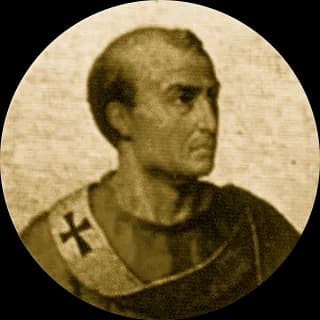
What followed was the reduction to absurdity. The Romans elected Sylvester III, the bishop of Sabina, in January 1045; Benedict's brothers threw him out in March; in May Benedict, wanting to marry, sold the papacy to his godfather John Gratian, a man of good reputation who paid in silver and became Gregory VI, and the reformers, Peter Damian among them, welcomed him. By 1046 there were three men with a claim, and Henry III, coming for his imperial crown, would accept none of them. At Sutri on 20 December 1046 he had Sylvester III sentenced and Gregory VI confess to simony and resign; at Rome on Christmas Eve Benedict IX was deposed in his absence; and on Christmas Day the bishop of Bamberg, a Saxon, was consecrated Clement II and crowned the emperor. Gregory went into exile at Cologne with his chaplain, a young Roman named Hildebrand, who would come back. Benedict returned once more when Clement died and was driven out for good in 1048. The families had lost the papacy to the emperor, and the emperor, within a generation, would lose it to the reformers whom Sutri had put in the Lateran.
The world at the time
- 910
religiousCluny founded
A Burgundian abbey answerable only to Rome begins the monastic reform movement that will eventually rescue the papacy itself.
- 915
politicalThe league of the Garigliano
John X rides with Byzantines, Spoletans, and Campanians against the Saracen colony at the river mouth; after thirty-five years it is burned out.
- 955
politicalOtto I defeats the Magyars
The German king destroys the Magyar army near Augsburg; the raids end, and the strongest ruler in the West begins to look toward Rome.
- 962
politicalOtto I crowned emperor
The German king revives the empire and claims a veto over papal elections, trading one master in Rome for another.
- 987
politicalThe Capetians take France
The last Carolingian king of the West Franks dies and Hugh Capet is elected; the quarrel over Reims that follows will make Gerbert a pope.
- 988
religiousVladimir of Kiev is baptized
The prince of the Rus takes baptism from Constantinople and a Byzantine bride; the largest of the Slav peoples goes to the Greek church.
- 1000
politicalGniezno and Esztergom
Otto III kneels at Adalbert's tomb in Gniezno and Stephen of Hungary is crowned; Poland and Hungary enter Latin Europe with archbishops of their own.
- 1014
religiousThe Filioque sung in Saint Peter's
At Henry II's coronation the Creed is sung in Rome with the words Leo III had refused two centuries before; Constantinople takes note.
- 1025
culturalGuido of Arezzo writes music on lines
A Benedictine shows John XIX an antiphoner with notes set on a staff; Western music can now be read by singers who have never heard it.
- 1030
politicalThe Normans get Aversa
The duke of Naples grants Rainulf Drengot the county of Aversa, the first Norman lordship in Italy; within a century they will hold the south.
- 1046
councilThe Synod of Sutri
Henry III deposes Sylvester III and Gregory VI at Sutri and Benedict IX at Rome, names a German bishop Clement II, and the reform papacy begins.
Popes of this era
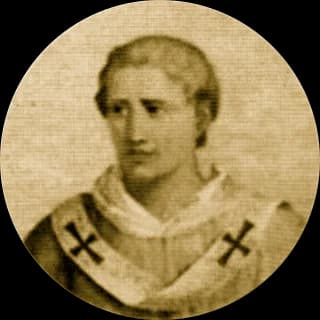 Leo VNo. 118 · 903
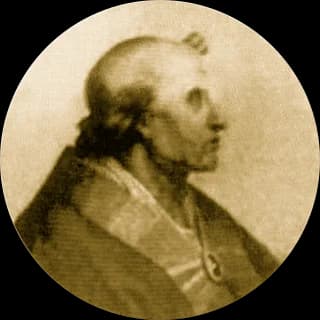 Sergius IIINo. 119 · 904-911
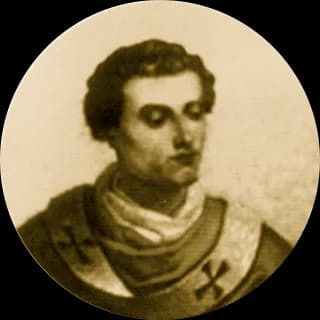 Anastasius IIINo. 120 · 911-913
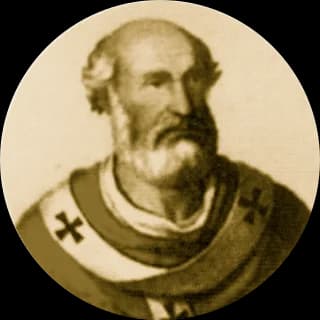 LandoNo. 121 · 913-914
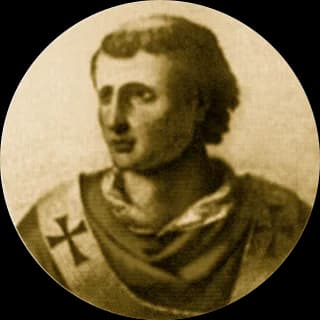 John XNo. 122 · 914-928
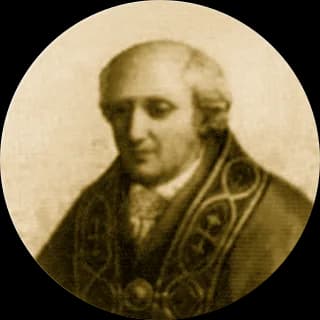 Leo VINo. 123 · 928
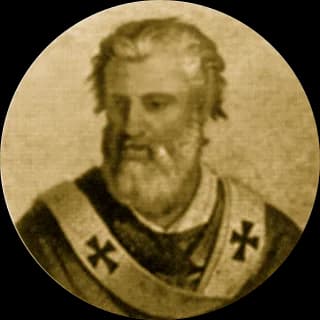 Stephen VIINo. 124 · 928-931
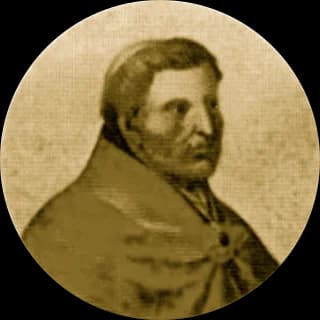 John XINo. 125 · 931-935
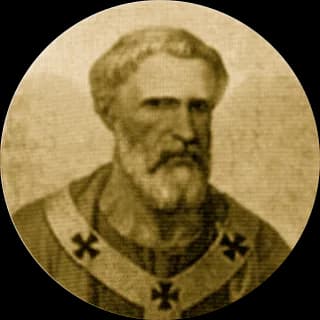 Leo VIINo. 126 · 936-939
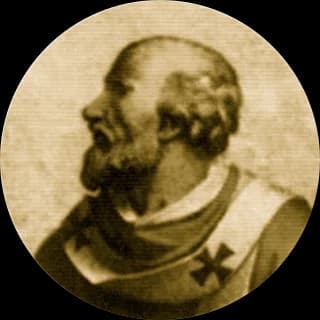 Stephen VIIINo. 127 · 939-942
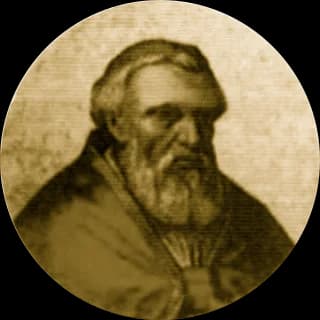 Marinus IINo. 128 · 942-946
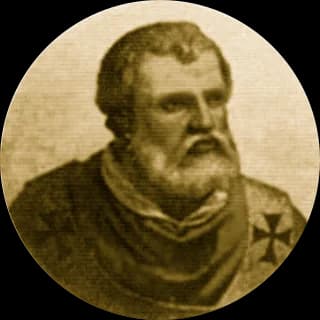 Agapetus IINo. 129 · 946-955
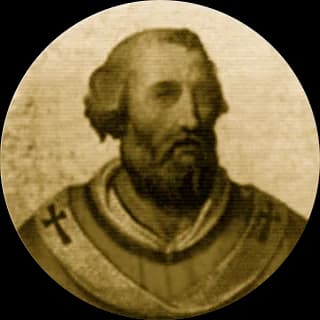 John XIINo. 130 · 955-964
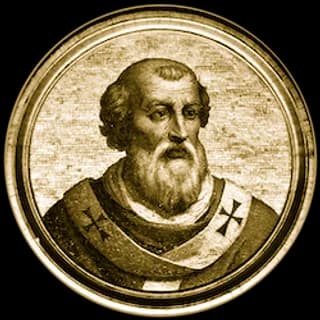 Leo VIIINo. 131 · 963-965
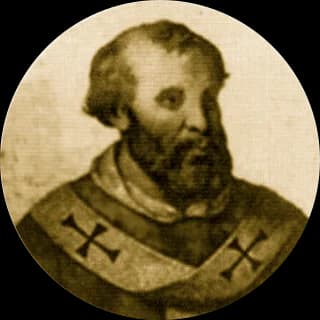 Benedict VNo. 132 · 964
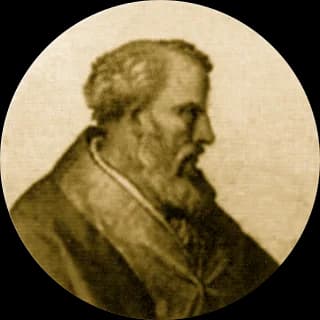 John XIIINo. 133 · 965-972
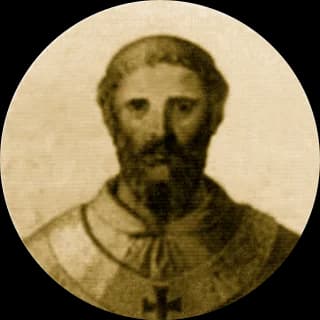 Benedict VINo. 134 · 973-974
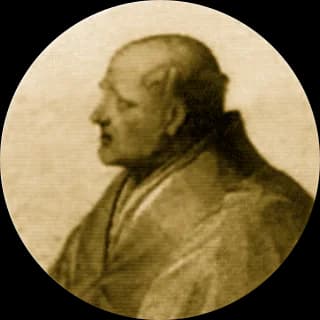 Benedict VIINo. 135 · 974-983
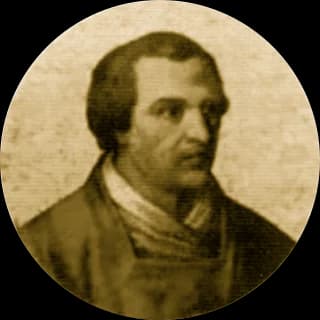 John XIVNo. 136 · 983-984
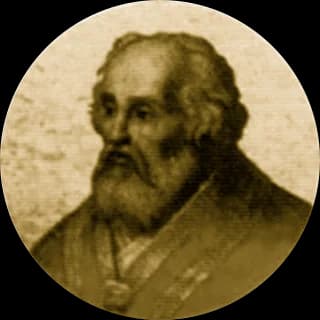 John XVNo. 137 · 985-996
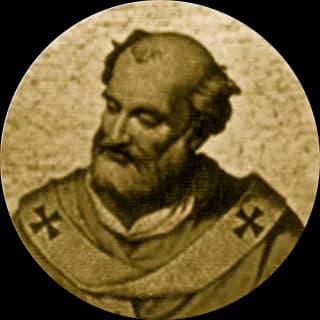 Gregory VNo. 138 · 996-999
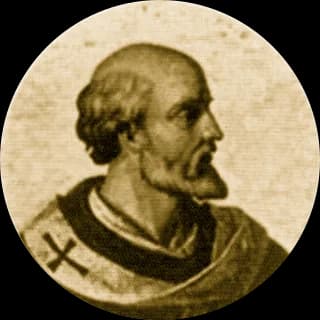 Sylvester IINo. 139 · 999-1003
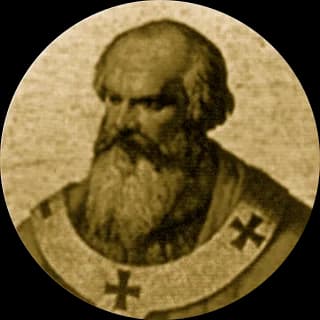 John XVIINo. 140 · 1003
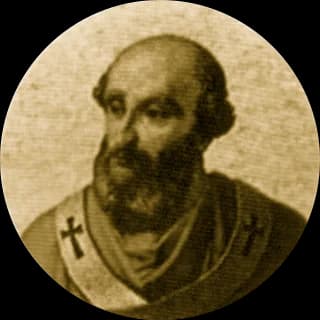 John XVIIINo. 141 · 1003-1009
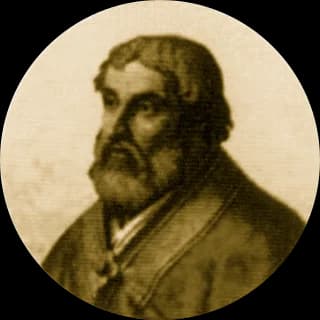 Sergius IVNo. 142 · 1009-1012
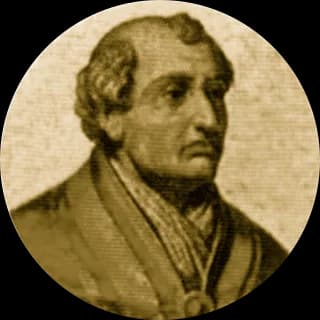 Benedict VIIINo. 143 · 1012-1024
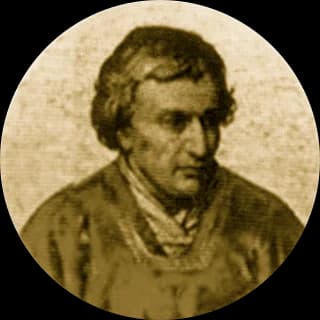 John XIXNo. 144 · 1024-1032
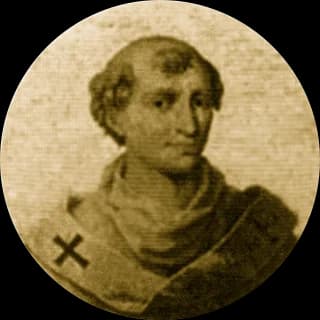 Benedict IXNo. 145 · 1032-1044, 1045, 1047-1048
 Sylvester IIINo. 146 · 1045
 Gregory VINo. 148 · 1045-1046