The Iron Century903-1046
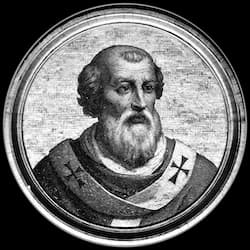
Leo VIII
The layman Otto's synod made pope in a week, rejected by Rome, restored by siege, and counted legitimate by a list that never decided.
Pope no. 131963-965
Leo was a Roman layman, head of the papal chancery, when Otto I's synod in Saint Peter's deposed John XII on 4 December 963 and elected him in the pope's place. He was put through the clerical orders in a single day and consecrated on 6 December, an irregularity the next century's reformers held against him. The Romans swore never to elect a pope without the emperor's consent, and in January 964 they rose against the German garrison. Otto put the rising down and left in February, and John XII came back the day he was gone. Leo fled to the emperor's camp. John's synod of 26 February degraded him; John's death in May left the Romans free to elect Benedict V; and Otto besieged the city through June until it surrendered Benedict and took Leo back. He reigned, unloved, for another nine months and died on 1 March 965.
Later imperialist writers credited Leo with decrees granting the emperor the right to name popes and invest bishops; they are eleventh-century forgeries. What he actually left was a precedent: an emperor had deposed a pope by synod and made another, and the Romans had not been able to stop him. Buried in Saint Peter's, he is the first pope of the Ottonian system and its least convincing.
A full essay on this pope is in preparation. The facts and summary above are complete and sourced.
Sources
- J. N. D. Kelly and Michael Walsh, The Oxford Dictionary of Popes (2010)
- Eamon Duffy, Saints and Sinners: A History of the Popes (2014)
- Paolo Squatriti (trans.), The Complete Works of Liudprand of Cremona (2007)
- Philippe Levillain (ed.), The Papacy: An Encyclopedia (2002)
- Further reading: Wikipedia