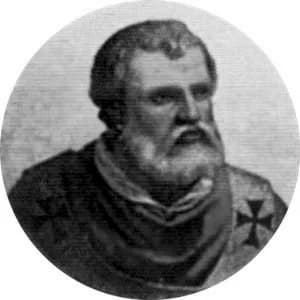
The Iron Century903-1046
Agapetus II
Alberic's last pope, who opened Germany's eastern missions to Otto and was made to swear that the prince's son would succeed him.
Pope no. 129946-955
Agapetus was a Roman, consecrated on 10 May 946 as the fourth pope of Alberic's principate, and the first of them with a policy of his own. He looked to Germany. Otto I, king since 936, wanted the church behind his eastern conquests, and Agapetus gave it: he authorized the sees of Brandenburg and Havelberg among the Slavs in 948, empowered the archbishop of Hamburg to consecrate bishops for the Danes, and later approved the plan that became the archbishopric of Magdeburg. At Ingelheim in June 948 his legate Marinus presided with Otto and Louis IV over the synod that settled the long war for the see of Reims in Artold's favor and excommunicated the count of Vermandois, the first time a papal legate had directed a great Frankish synod since the ninth century. The pope and the German king were finding each other useful.
Alberic saw where that led. When Otto came to Italy in 951, married Adelaide, and sent to ask for an imperial coronation, the prince refused him entry to Rome, and Agapetus, who would have crowned him, had to decline. Inside the city the pope did what Alberic's popes did: reformed Roman monasteries with Odo's successors, restored Monte Cassino under the abbot Aligern, and settled disputes among the bishops of the north.
He was buried in the Lateran. Agapetus II is the hinge between Alberic's Rome and Otto's, the pope who invited the empire back in principle and was prevented, by the man who had appointed him, from doing it in fact.
A full essay on this pope is in preparation. The facts and summary above are complete and sourced.
Sources
- J. N. D. Kelly and Michael Walsh, The Oxford Dictionary of Popes (2010)
- Eamon Duffy, Saints and Sinners: A History of the Popes (2014)
- Chris Wickham, Medieval Rome: Stability and Crisis of a City, 900-1150 (2015)
- Philippe Levillain (ed.), The Papacy: An Encyclopedia (2002)
- Further reading: Wikipedia