The Iron Century903-1046
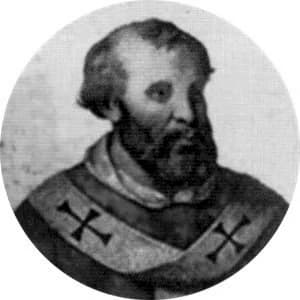
Benedict V
The Grammarian, elected by Rome in defiance of Otto, surrendered after a siege, broken of his staff, and exiled to Hamburg, where he died.
Pope no. 132964
Benedict was a Roman deacon known as Grammaticus for his learning, and when John XII died on 14 May 964 the Romans, who had sworn to Otto that they would elect no pope without his consent, elected Benedict on 22 May and consecrated him at once. Otto, with his own pope Leo VIII in his camp, besieged the city through June until famine did his work; on 23 June the Romans opened the gates and handed Benedict over. In a synod at the Lateran, Otto present and Leo presiding, Benedict was charged with perjury and usurpation. He confessed, asked pardon, and was stripped of his vestments; Leo broke the papal staff over his head, and he was reduced to deacon, a rank the emperor let him keep. Otto took him to Germany and gave him to the archbishop of Hamburg, Adaldag, to hold.
His pontificate lasted a month and two days, and its legitimacy is the mirror of Leo VIII's: if the synod of 963 could not depose John XII, Benedict was the lawful pope and Leo the intruder. The conventional list numbers both and refuses to decide. What is not in doubt is the meaning of the siege. The Romans had tried to elect their own pope against the emperor, and the emperor had starved them into giving him up. For the next eighty years no pope would be made in Rome without a German, or a Roman faction strong enough to defy one.
A full essay on this pope is in preparation. The facts and summary above are complete and sourced.
Sources
- J. N. D. Kelly and Michael Walsh, The Oxford Dictionary of Popes (2010)
- Eamon Duffy, Saints and Sinners: A History of the Popes (2014)
- Paolo Squatriti (trans.), The Complete Works of Liudprand of Cremona (2007)
- Philippe Levillain (ed.), The Papacy: An Encyclopedia (2002)
- Further reading: Wikipedia