The Imperial Church311-483
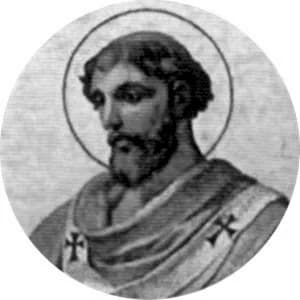
Saint Miltiades
The African elected in an illegal church who, within two years, was judging bishops in the emperor's own palace.
Pope no. 32311-314
Miltiades was elected on 2 July 311, a few weeks after Galerius's edict had let Christians exist again, and in the thirty months that followed the world turned over. Maxentius, who still ruled Rome, gave back the church's confiscated property; the pope sent two deacons to the prefect to collect it. On 28 October 312 Constantine killed Maxentius at the Milvian Bridge and entered the city under a Christian sign. Within a year he had handed Miltiades the palace of the Lateran, once the house of his wife's family, as a residence, and the bishop of Rome, who had never owned a building, was living where emperors' relatives had.
Constantine also handed him a problem. The church of Africa had split over whether a bishop consecrated by a man who had surrendered scriptures in the persecution was a bishop at all, and the rigorist party, soon called Donatists, appealed to the emperor. Constantine asked Miltiades and three bishops from Gaul to judge the case. Miltiades added fifteen Italian bishops, sat in the Lateran on 2 October 313, heard both sides for three days, and found for Caecilian of Carthage. It was the first church council held in an imperial palace and the first time a pope acted as an emperor's judge. The Donatists appealed again; Constantine convened a larger council at Arles, and Miltiades died on 10 January 314 before it met.
He was buried in the catacomb of Callixtus, the last pope laid there before the basilicas made catacombs unnecessary.
A full essay on this pope is in preparation. The facts and summary above are complete and sourced.