The Imperial Church311-483
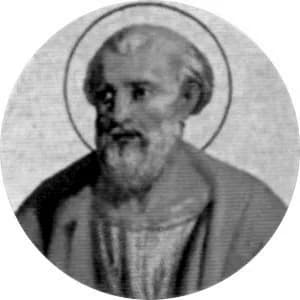
Saint Sixtus III
The builder of Santa Maria Maggiore, who turned the verdict of Ephesus into mosaic and made peace between Antioch and Alexandria.
Pope no. 44432-440
Sixtus had been a leading Roman presbyter for twenty years before his election on 31 July 432, and not always a safe one: in 418 he was thought sympathetic to Pelagius, and Augustine wrote congratulating him when he came round. As pope he was firm. When Julian of Eclanum, the deposed Pelagian bishop, asked to be restored, Sixtus refused, with his deacon Leo at his elbow; and when John of Antioch and Cyril of Alexandria, whose parties had deposed each other at Ephesus, signed a formula of reunion in 433, Sixtus welcomed it and told both sides that the apostolic see had wanted nothing else. He also held the line against Constantinople over the churches of Illyricum, which the patriarch Proclus was trying to absorb.
His reign is remembered in stone. On the Esquiline he rebuilt Liberius's basilica as Santa Maria Maggiore and had its triumphal arch covered in mosaics of the infancy of Christ, the first great monument to the title the council had given Mary, with his own name across the top: "Xystus, bishop, to the people of God." He rebuilt the Lateran baptistery with its eight porphyry columns, enlarged the basilica of Saint Lawrence, and founded Saint Peter in Chains for the chains the empress Eudoxia sent from Jerusalem. Galla Placidia and Valentinian III paid for much of it; the Liber Pontificalis lists their gifts by the pound of silver.
He died on 19 August 440 and was buried in the basilica of Saint Lawrence he had enlarged. His deacon Leo, who was in Gaul when the news came, was elected in his absence.
A full essay on this pope is in preparation. The facts and summary above are complete and sourced.
Sources
- J. N. D. Kelly and Michael Walsh, The Oxford Dictionary of Popes (2010)
- Eamon Duffy, Saints and Sinners: A History of the Popes (2014)
- Raymond Davis (trans.), The Book of Pontiffs (Liber Pontificalis) (2000)
- Further reading: Wikipedia