The Imperial Church311-483
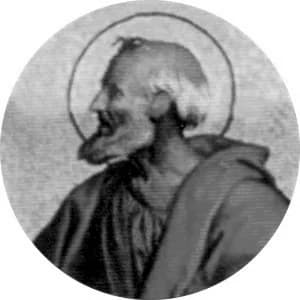
Saint Simplicius
He watched the last Western emperor deposed without comment, protested to Constantinople about heretics, and built Santo Stefano Rotondo.
Pope no. 47468-483
Simplicius, from Tivoli, was elected on 3 March 468 and held the see for fifteen years in which the Western empire ended. Five emperors came and went during his reign: Anthemius, murdered when Ricimer stormed the city in 472; Olybrius, Glycerius, Julius Nepos; and the boy Romulus Augustulus, whom Odoacer deposed on 4 September 476 before sending the regalia to Constantinople and ruling Italy as king. No letter of Simplicius mentions any of it. The church had learned to outlast governments, and the pope who lived through the fall of Rome treated it as a change of landlord.
His correspondence went east. In 475 the usurper Basiliscus restored the Monophysite Timothy the Cat to Alexandria and issued an encyclical condemning Chalcedon; Simplicius protested to Basiliscus and to the patriarch Acacius, and the restored emperor Zeno reversed it. But Zeno's own solution, the Henotikon of 482, a formula of union that passed over Chalcedon in silence, and Acacius's communion with the Monophysite Peter Mongus, drew protests that Simplicius was still writing when he died. His successor would excommunicate Acacius, and the schism that followed lasted thirty-five years.
He died on 10 March 483 and was buried in Saint Peter's. During the vacancy Odoacer's prefect produced a decree in the dead pope's name forbidding the church to sell its property and requiring the king's consent to the election: the first attempt by a lay ruler to regulate how popes were chosen, and not the last.
A full essay on this pope is in preparation. The facts and summary above are complete and sourced.
Sources
- J. N. D. Kelly and Michael Walsh, The Oxford Dictionary of Popes (2010)
- Eamon Duffy, Saints and Sinners: A History of the Popes (2014)
- Raymond Davis (trans.), The Book of Pontiffs (Liber Pontificalis) (2000)
- Further reading: Wikipedia