The Imperial Church311-483
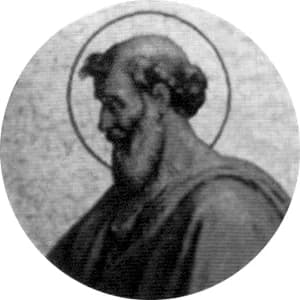
Saint Boniface I
Elected against the archdeacon Eulalius and confirmed by an emperor: the first papal election a Roman court had to settle.
Pope no. 42418-422
The day after Zosimus was buried, the deacons of Rome and a few presbyters shut themselves in the Lateran and elected the archdeacon Eulalius. The next day the majority of the presbyters, meeting in the church of Saint Marcellus, elected Boniface, an elderly priest and the son of a priest, and on 29 December 418 he was consecrated. The prefect Symmachus backed Eulalius and told the emperor so; Honorius, in Ravenna, confirmed Eulalius, then heard Boniface's side, summoned both to a synod that could not decide, and ordered them out of Rome until a second synod in June. Eulalius came back for Easter and seized the Lateran. That settled it. Honorius expelled him on 3 April 419 and recognized Boniface, who entered the city a week later. It was the first papal election decided by an emperor, and Boniface asked Honorius to make a rule for the next one; the emperor obliged with a law that if two men were elected neither should stand, which no one ever applied.
The reign itself was short and clear-voiced. When Theodosius II in 421 transferred the churches of Illyricum from Rome's jurisdiction to Constantinople's, Boniface had Honorius persuade his nephew to withdraw the law, and wrote to the bishops of Thessalonica that no one had ever "raised his hands against the apostolic supremacy" and that the Roman church stood to all others as the head to the members. He supported Augustine against the Pelagians, who dedicated a treatise to him, and kept up the Apiarius correspondence with an Africa that was politely declining to be governed.
A full essay on this pope is in preparation. The facts and summary above are complete and sourced.
Sources
- J. N. D. Kelly and Michael Walsh, The Oxford Dictionary of Popes (2010)
- Eamon Duffy, Saints and Sinners: A History of the Popes (2014)
- Raymond Davis (trans.), The Book of Pontiffs (Liber Pontificalis) (2000)
- Further reading: Wikipedia