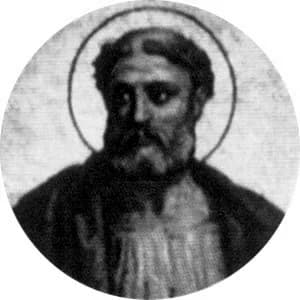
The Imperial Church311-483
Saint Siricius
The first surviving decretal: rules on baptism, penance, and clerical continence, asked for by one Spanish bishop and sent to all the West.
Pope no. 38384-399
Siricius had been a deacon under Liberius and Damasus, and when Damasus died in December 384 the Roman clergy chose him quickly and, according to the emperor Valentinian II's confirming letter, unanimously. Jerome, who had hoped for the chair and despised the winner, left Rome the next summer calling Siricius's circle "the senate of the Pharisees." Biographers have tended to take Jerome's side; the record does not.
Within two months of his election Siricius answered a set of questions that Himerius, bishop of Tarragona, had sent to Damasus. The reply, dated 10 February 385, is the oldest surviving papal decretal: a formal ruling, in the style of an imperial rescript, on baptism (at Easter and Pentecost only), on penance for apostates, on the ages and stages of ordination, and on the requirement that priests and deacons live in continence with their wives. It ends by ordering the decisions circulated to the bishops of Spain, Africa, and Gaul. "We bear the burdens of all who are burdened," Siricius wrote, "or rather the blessed apostle Peter bears them in us." The letter is the first document in which the papacy legislates for the West in Peter's name, and every later collection of canon law opens with it.
The rest of the reign kept the tone. A Roman synod of 386 sent the African bishops rules on ordination; another in 393 condemned the monk Jovinian, who denied that virginity outranked marriage, and Ambrose concurred from Milan. When the usurper Maximus executed the heretic Priscillian at Trier, Siricius refused communion to the bishops who had prosecuted a churchman in a secular court.
A full essay on this pope is in preparation. The facts and summary above are complete and sourced.