The Imperial Church311-483
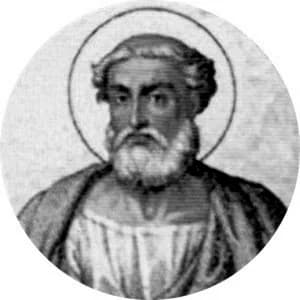
Saint Sylvester I
Twenty-two years as Constantine built the basilicas, absent from Nicaea, and the subject of the most consequential forgery in papal history.
Pope no. 33314-335
Sylvester's pontificate is the longest of the fourth century and the emptiest of record. He was elected on 31 January 314, a Roman according to the Liber Pontificalis, and for twenty-two years he presided over a church that Constantine was transforming with money: the Lateran basilica, the great church over Peter's grave on the Vatican, Saint Paul's on the Ostian Way, the Sessorian basilica for the relics of the cross, and the cemetery churches outside the walls, all founded by the emperor while Sylvester watched. The list of Constantine's gifts, farm by farm, fills pages of the Liber Pontificalis and is the best evidence of what the papacy owned by his death.
What Sylvester did is harder to find. He did not attend the Council of Arles in 314, which wrote to him afterward, or Nicaea in 325, sending two presbyters, Vitus and Vincentius, who signed after the bishop of Córdoba who presided. No pope would attend an ecumenical council in person for a thousand years. When Constantine drifted toward the Arian bishops in his last years and exiled Athanasius in 335, Rome said nothing that survives.
Sylvester died on 31 December 335 and was buried in a church he had built over the cemetery of Priscilla. His feast on the last day of the year is why much of Europe calls New Year's Eve after him.
A full essay on this pope is in preparation. The facts and summary above are complete and sourced.
Sources
- J. N. D. Kelly and Michael Walsh, The Oxford Dictionary of Popes (2010)
- Eamon Duffy, Saints and Sinners: A History of the Popes (2014)
- Raymond Davis (trans.), The Book of Pontiffs (Liber Pontificalis) (2000)
- Further reading: Wikipedia