The Carolingian Papacy752-903
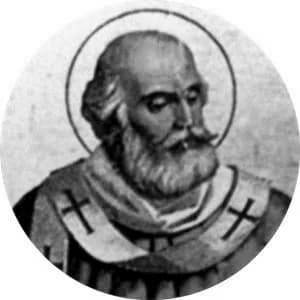
Saint Paul I
Stephen II's brother, who kept the Frankish alliance alive by letter, feared a Greek fleet, and moved the martyrs out of the catacombs.
Pope no. 93757-767
Paul was Stephen II's younger brother, raised with him in the Lateran and ordained deacon by Zachary. When Stephen died in April 757 a party of the nobility put forward the archdeacon Theophylact, but Paul had the votes, and he was consecrated on 29 May, the first pope to succeed his own brother. He kept Stephen's alliance, and kept it by post. His letters in the Codex Carolinus are anxious: Desiderius, the Lombard king Stephen had helped to the throne, held back most of the cities he had promised and marched through the duchy of Rome; Constantine V was negotiating with Lombards and Franks alike for the return of the exarchate; and a Greek fleet was rumoured, more than once. Paul begged Pepin to hold to his oath, sent him books, a night clock, and news of every Lombard move, and stood godfather by proxy to Pepin's daughter Gisela. Pepin sent envoys and did not come.
Inside Rome he built differently. Aistulf's army had dug up the catacombs in 756, and Paul answered by moving the martyrs into the city, the bones carried in procession to churches inside the walls, the beginning of the end of the catacombs as places of pilgrimage. He turned his family house into the monastery of San Silvestro in Capite, filled it with Greek monks fleeing the iconoclast emperor, and gave it the relics of Sylvester. He died on 28 June 767 at Saint Paul's Outside the Walls, where he had gone to escape the heat, and was later moved to Saint Peter's. His feast is that day.
A full essay on this pope is in preparation. The facts and summary above are complete and sourced.
Sources
- J. N. D. Kelly and Michael Walsh, The Oxford Dictionary of Popes (2010)
- Eamon Duffy, Saints and Sinners: A History of the Popes (2014)
- Thomas F. X. Noble, The Republic of St. Peter: The Birth of the Papal State, 680-825 (1984)
- Raymond Davis (trans.), The Lives of the Eighth-Century Popes (Liber Pontificalis) (1992)
- Further reading: Wikipedia