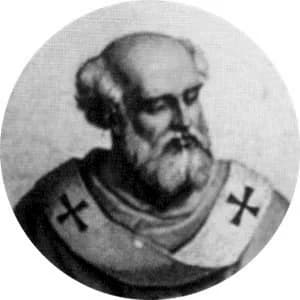
The Carolingian Papacy752-903
Stephen IV
Seven months as pope, most of them on the road to Reims to anoint Louis the Pious with a crown said to have been Constantine's.
Pope no. 97816-817
Stephen was a Roman of noble family, brought up in the Lateran from boyhood under Adrian I and made deacon by Leo III, and he was elected and consecrated within ten days of Leo's death, on 22 June 816, without waiting for the emperor's leave. He spent the first weeks making up for it. He had the Romans swear an oath of fidelity to Louis the Pious, sent envoys to explain the haste, and in August set out over the Alps himself. He met Louis at Reims in October, and in the cathedral there he anointed and crowned the emperor and his wife Ermengarde, using a crown he had brought from Rome and which, the Frankish annalists say, had belonged to Constantine.
The visit produced a settlement as well as a ceremony. Louis granted an amnesty for the Romans exiled after the troubles of Leo's last years, whom Stephen brought home with him, and the written confirmation of the papal territories and of free papal elections that followed in 817 was issued to his successor. Stephen was back in Rome by the end of the year and died on 24 January 817, after a pontificate of seven months. He was buried in Saint Peter's. His reign is a footnote between two long ones, and what it records is the price of the coronation of 800: a new pope now needed the emperor's goodwill, and went in person to get it.
A full essay on this pope is in preparation. The facts and summary above are complete and sourced.
Sources
- J. N. D. Kelly and Michael Walsh, The Oxford Dictionary of Popes (2010)
- Eamon Duffy, Saints and Sinners: A History of the Popes (2014)
- Thomas F. X. Noble, The Republic of St. Peter: The Birth of the Papal State, 680-825 (1984)
- Raymond Davis (trans.), The Lives of the Eighth-Century Popes (Liber Pontificalis) (1992)
- Further reading: Wikipedia