The Carolingian Papacy752-903
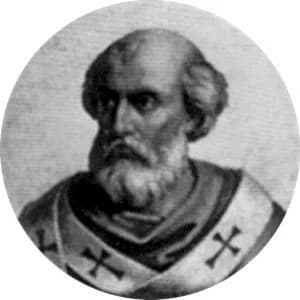
Eugene II
The pope who accepted the Constitutio Romana, putting Rome under an imperial oath, and then wrote the reform canons of 826.
Pope no. 99824-827
Eugene was a Roman, the son of Boemund, and archpriest of Santa Sabina when Paschal I died in February 824 leaving a city divided between a clergy with a candidate of its own and a nobility that wanted the Frankish alliance kept. The nobles had Eugene; the emperor's envoy Wala of Corbie backed him; and after a contested vacancy he was consecrated in the spring. What the Franks wanted in return arrived in November, when Lothair came to Rome and issued the Constitutio Romana. Every Roman was to swear loyalty to the emperor; two commissioners, one imperial and one papal, were to sit in Rome and report yearly on justice; a pope-elect was to take an oath before imperial envoys before he was consecrated; and Romans might choose to live under Roman or Frankish law. The murders of 823 had convinced Louis and Lothair that free elections in Rome meant faction and blood, and the charter of 817 was quietly overruled. Eugene accepted it.
He was not a cipher. In November 826 he held a synod of sixty-two bishops at Rome whose thirty-eight canons attacked simony, absentee bishops, and unlettered clergy, and required every cathedral and, where possible, every parish to keep a school, a program the Frankish reformers had preached for a generation and Rome now made its own. He took a middle course on images between the iconoclast emperor Michael II and the Paris synod of 825, and the Liber Pontificalis remembers him chiefly for feeding the poor. He died in August 827 and was buried in Saint Peter's.
A full essay on this pope is in preparation. The facts and summary above are complete and sourced.
Sources
- J. N. D. Kelly and Michael Walsh, The Oxford Dictionary of Popes (2010)
- Eamon Duffy, Saints and Sinners: A History of the Popes (2014)
- Thomas F. X. Noble, The Republic of St. Peter: The Birth of the Papal State, 680-825 (1984)
- Raymond Davis (trans.), The Lives of the Ninth-Century Popes (Liber Pontificalis) (1995)
- Further reading: Wikipedia