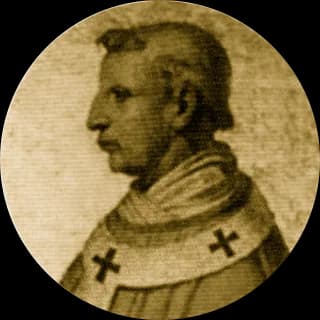
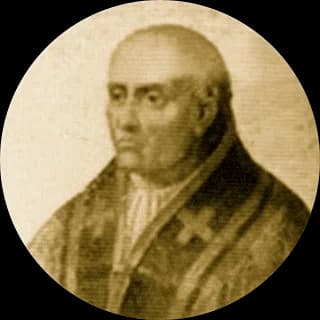
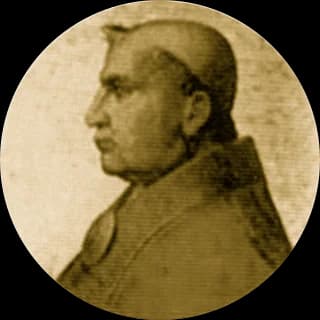
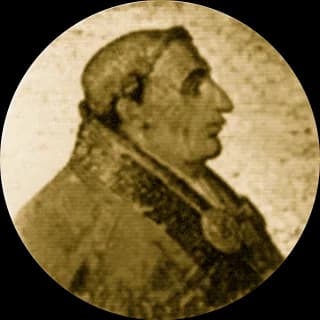
XI1447-1513
The Renaissance Papacy
Patrons, princes, and Borgias: the papacy rebuilds Rome in splendor while its spiritual credit runs down.
Popes No. 208-216
The popes who took office after 1447 had inherited a shrunken thing. Forty years of schism and thirty of quarrels with councils had left the papacy's authority in doubt, its city half-ruined and half-empty, and its income a fraction of what it had been at Avignon. Nicholas V's answer, adopted by every successor for the next sixty-six years, was magnificence: if Rome looked like the capital of Christendom, it would be believed as one. The results are the reason tourists still come, the Vatican Library, the Sistine Chapel, the Stanze of Raphael, the new Saint Peter's. The cost was paid in a currency no ledger recorded. By 1513 the papacy had become the most glittering court in Europe and the most mistrusted institution in it, and the two facts were the same fact.
Magnificence as a policy
Nicholas V, a physician's son who had tutored bankers' children to pay for his books, closed the last schism in 1449 by persuading the antipope Felix V to resign, then spent his treasury on manuscripts, translators, and architects. His plan for a new Saint Peter's went unbuilt, but his library did not, and his conviction that ordinary believers needed grandeur they could see became the era's governing idea. The fall of Constantinople in 1453 supplied the other theme. Callixtus III, an elderly Spanish lawyer, melted down the plate to pay for galleys and ordered every bell in Christendom rung at noon; Pius II, the humanist poet who had written an erotic novel before he took orders, summoned Europe's princes to a congress at Mantua in 1459, watched them fail to arrive, and died at Ancona in 1464 trying to lead the crusade himself. Nobody followed. The princes had discovered that the pope could be ignored, and the popes, in turn, began to behave like princes.
The prince-popes
Paul II fought the humanists and lost the war of reputation to the historian he had jailed. Sixtus IV, a Franciscan theologian of genuine learning, made the papacy a family firm: six nephews in the college of cardinals, a lay nephew installed as lord of Imola and Forlì, a share in the conspiracy that killed Giuliano de' Medici at Mass in 1478, and a war against Florence to follow it. He sold offices to pay for it all and, in the same year, gave Ferdinand and Isabella the right to appoint their own inquisitors, the charter of the Spanish Inquisition. He also formally founded the Vatican Library, built the Ponte Sisto and the Sistine Chapel, and canonized Bonaventure. The pattern would hold for two generations: the popes' worst and best decisions were made by the same men in the same years, and the money for the marble came from the sale of the sacred.
The Borgia decade
Innocent VIII, an amiable Genoese with acknowledged children, let his kingmaker Giuliano della Rovere govern, took an Ottoman pension to keep the sultan's brother prisoner in the Vatican, and lent the papacy's name to a bull against witchcraft that the witch-hunters printed at the front of their manual. He was a prelude. In August 1492 Rodrigo Borgia bought the conclave and became Alexander VI: a superb administrator, a devoted father, and the man whose name became shorthand for everything that was wrong. His son Cesare, released from the cardinalate to conquer, carved a duchy out of the Romagna with the church's money and his own ruthlessness; his daughter Lucrezia was married three times to suit her father's diplomacy; his son Juan was pulled from the Tiber with nine stab wounds. Savonarola, who denounced all of it from a Florentine pulpit, was excommunicated and burned. The same pope drew the line down the Atlantic in 1493 that gave the Americas to Spain and Portugal, and fixed the ritual of the Holy Door for the Jubilee of 1500. When he died in 1503 his body blackened so fast that Rome was certain he had been poisoned, and the twenty-six-day reign of the upright Pius III barely interrupted the succession from one nephew-pope to another.
The warrior and the stone
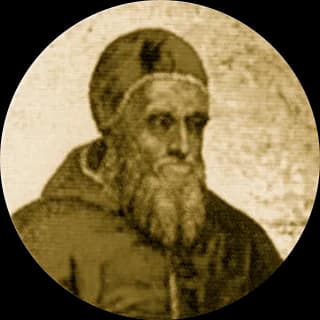
Giuliano della Rovere, Sixtus IV's nephew, had waited thirty-two years and took the throne as Julius II in 1503 in a conclave that lasted hours. He then outlawed the simony that had elected him and turned to war. He rode in armor to retake Perugia and Bologna, joined a league to dismember Venice, reversed course to drive the French out of Italy, and grew a beard as a vow until they left. The Papal States reached their greatest extent. Julius also founded the Swiss Guard, answered a French-sponsored council at Pisa with a Lateran Council of his own, and on 18 April 1506 laid the foundation stone of the new Saint Peter's, demolishing the basilica Constantine had built to do it. He hired Bramante to design the church, Raphael to paint his apartments, and Michelangelo, against the artist's will, to paint the ceiling of his uncle's chapel. In four years the ceiling was done, and Western art had changed.
The bill
The Renaissance popes did not invent the sale of indulgences, offices, or dispensations, but they industrialized it, because magnificence had to be paid for and the princes of Europe would no longer pay. Every cardinal's hat, every curial post, every pardon had a price, and the buyers expected a return. The ordinary Catholic saw a papacy that preached crusade and took Turkish pensions, condemned simony and lived on it, excommunicated a friar for saying what everyone in Rome already knew. The intellectual defenses were eroding too: the printing press Paul II had admitted to Rome was multiplying scripture and satire alike, and Erasmus's Julius Excluded, in which Saint Peter bars the warrior pope from heaven, circulated within a year of Julius's death in 1513. The conclave that followed elected a Medici, Leo X, who inherited the unfinished basilica and the machinery for financing it. The indulgence preached to complete Saint Peter's reached Saxony in 1517. Nothing in the era's record suggested that a friar in a small German town could bring the whole structure down, and that, precisely, was the problem.
The world at the time
- 1453
politicalFall of Constantinople
The Ottomans take the second Rome; refugee scholars and a crusading anxiety reshape the papal agenda.
- 1455
culturalThe Gutenberg Bible
Print arrives; the same press that spreads indulgences will soon spread Luther faster than Rome can answer.
- 1478
religiousThe Spanish Inquisition
Sixtus IV authorizes Ferdinand and Isabella's tribunal, a royal instrument in ecclesiastical dress that will outlive every pope of the era.
- 1492
politicalColumbus reaches the Americas
A new world enters history; within a year Alexander VI is drawing the line dividing it between Spain and Portugal.
- 1494
politicalThe Italian Wars begin
Charles VIII marches through Italy to Naples; for sixty years the peninsula is the battlefield of France, Spain, and the Empire, with the papacy both player and prize.
- 1508
culturalMichelangelo begins the Sistine ceiling
Four years on a scaffold for Julius II produce the image of God that the West still carries in its head.