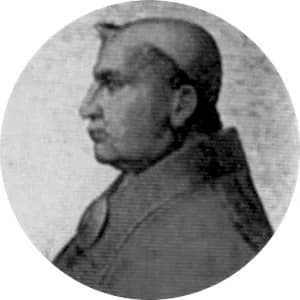
The Renaissance Papacy1447-1513
Pius II
The humanist who wrote an erotic novel, became pope, told Europe to reject Aeneas and accept Pius, and died leading a crusade nobody joined.
Pope no. 2101458-1464
Enea Silvio Piccolomini was the most gifted writer ever to become pope, and he had used the gift freely. A Sienese nobleman without money, he made his career as a secretary at the Council of Basel, served the antipope Felix V, wrote an erotic novella, The Tale of Two Lovers, that Europe read for a century, fathered two children, and was crowned poet laureate by the emperor Frederick III in 1442. Then he turned. Ordained in 1446, he was bishop of Trieste within a year, of Siena by 1450, a cardinal in 1456, and on 19 August 1458 pope, at fifty-two, in a conclave he later described, ballot by ballot, in his memoirs.
In 1463 he published a bull, In minoribus agentes, retracting his youthful writings with a line that became proverbial: reject Aeneas, accept Pius. The Commentaries he wrote at night through the reign are the only autobiography by a pope, and the frankest account of Renaissance politics from the inside. His policy was the crusade. He summoned the princes of Europe to a Congress at Mantua in 1459 and waited eight months for them to arrive and then to go home without committing an army; he wrote Mehmed II an extraordinary letter offering him the imperial crown if he would convert, and probably never sent it. The bull Execrabilis (January 1460), forbidding any appeal from the pope to a general council, buried the conciliar movement he had once served. He canonized Catherine of Siena in 1461, persuaded Louis XI to revoke the Pragmatic Sanction that had shackled the French church, and rebuilt his birthplace as Pienza, the first planned town of the Renaissance.
In June 1464, gouty and dying, he took the cross himself and went to Ancona to lead the crusade in person. Few came. He died there on 14 August 1464, as the Venetian galleys finally appeared in the harbor.
A full essay on this pope is in preparation. The facts and summary above are complete and sourced.
Sources
- J. N. D. Kelly and Michael Walsh, The Oxford Dictionary of Popes (2010)
- Eamon Duffy, Saints and Sinners: A History of the Popes (2014)
- Pius II (Aeneas Silvius Piccolomini), ed. Margaret Meserve and Marcello Simonetta, Commentaries (2003)
- Further reading: Wikipedia