The Renaissance Papacy1447-1513
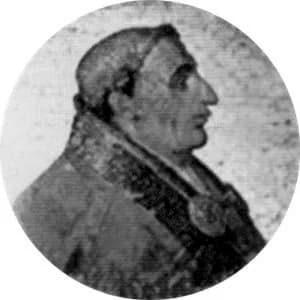
Paul II
The Venetian who fired Rome's humanists, jailed their historian, and paid for it with the worst press of any pope of his century.
Pope no. 2111464-1471
Pietro Barbo was a Venetian merchant's son whose uncle became Eugene IV and made him a cardinal at twenty-three, and he was elected on 30 August 1464, on the first ballot, after signing a capitulation that would have bound the pope to the cardinals' consent on appointments, taxation, and war. He repudiated it within days, and the college never forgave him.
The quarrel that defined his reputation began in 1466 when he abolished the college of abbreviators, the papal drafting office that Pius II had packed with humanist scholars who had paid for their posts. One of them, Bartolomeo Platina, protested and threatened a council; Paul had him jailed, and in 1468 arrested Platina again along with the members of Pomponio Leto's Roman Academy, whom he suspected of paganism and conspiracy. Platina took his revenge in the Lives of the Popes he wrote for Paul's successor, painting a gluttonous, ignorant tyrant, and the portrait stuck for four centuries.
The record is mixed rather than black. He shortened the interval between Jubilees to twenty-five years so that every generation might see one, built the Palazzo Venezia, revived the Roman carnival with races down the Via Lata, and allowed Sweynheym and Pannartz to set up Rome's first printing press in 1467, a decision that outweighs all his quarrels with scholars. He excommunicated the Hussite king of Bohemia in 1466 and watched, helpless, as the Turks took Negroponte from Venice in 1470. He died of a stroke on 26 July 1471, and the cardinals he had defied elected a Franciscan who would make nepotism a system.
A full essay on this pope is in preparation. The facts and summary above are complete and sourced.
Sources
- J. N. D. Kelly and Michael Walsh, The Oxford Dictionary of Popes (2010)
- Eamon Duffy, Saints and Sinners: A History of the Popes (2014)
- Charles L. Stinger, The Renaissance in Rome (1985)
- Further reading: Wikipedia