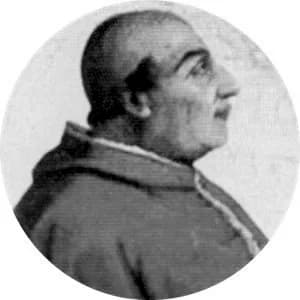
The Renaissance Papacy1447-1513
Alexander VI
The Borgia pope: an able administrator whose children, bribes, and murders made his name a byword for everything the Reformation attacked.
Pope no. 2141492-1503
Rodrigo Borgia was made a cardinal at twenty-five by his uncle Callixtus III and vice-chancellor of the church at twenty-six, and he held that post, the most lucrative in Christendom, for thirty-five years under four popes, growing immensely rich, fathering at least four children by the Roman noblewoman Vannozza dei Cattanei. On 11 August 1492 he bought the papacy outright, the price to Cardinal Sforza alone being the vice-chancellorship and four mule-loads of silver. He was sixty-one, vigorous, charming, and an administrator of genuine ability;
His pontificate is remembered for the family. He made Cesare a cardinal at eighteen, then released him from the priesthood in 1498 to marry a French princess and conquer the Romagna; he married Lucrezia three times, annulling the first union and looking away when Cesare's men murdered the second husband; his son Juan, Duke of Gandía, was found in the Tiber with nine stab wounds in June 1497, a crime never solved that briefly moved the pope to talk of reform. He filled the Vatican with Spaniards and the Borgia Apartments with Pinturicchio's frescoes. He excommunicated Savonarola for preaching against him and let Florence burn the friar in 1498. When Charles VIII of France marched through Rome in 1494 on his way to Naples, Alexander neither fled nor yielded, and outlasted him.
The one act with global consequences came early. The bull Inter caetera of 4 May 1493 drew a line down the Atlantic and gave Spain everything west of it, the basis of the Treaty of Tordesillas and of four centuries of Iberian empire. He also proclaimed the Jubilee of 1500. He died on 18 August 1503, probably of malaria, after a dinner that Rome immediately declared poisoned. Protestant Europe never let the name go, and Catholic Europe has spent five centuries distinguishing between the office and the man who so thoroughly disgraced it.
A full essay on this pope is in preparation. The facts and summary above are complete and sourced.
Sources
- J. N. D. Kelly and Michael Walsh, The Oxford Dictionary of Popes (2010)
- Eamon Duffy, Saints and Sinners: A History of the Popes (2014)
- Michael Mallett, The Borgias: The Rise and Fall of a Renaissance Dynasty (1969)
- Further reading: Wikipedia