The Renaissance Papacy1447-1513
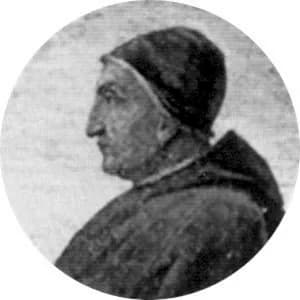
Sixtus IV
The Franciscan who built the Sistine Chapel, founded the Vatican Library, licensed the Spanish Inquisition, and made nepotism a system.
Pope no. 2121471-1484
Francesco della Rovere entered the Franciscans as a boy from a poor Ligurian family, became a celebrated theologian at Padua and Bologna, rose to be the order's minister general in 1464, and had been a cardinal for only four years when the conclave elected him on 9 August 1471. Within months he had made two nephews cardinals, the dissolute Pietro Riario and the tough Giuliano della Rovere, and over thirteen years he would elevate six of his kin, marry others into the ruling houses of Italy, and carve a state for Girolamo Riario out of Imola and Forlì.
The politics were bloody. His pursuit of Riario's ambitions in Tuscany entangled him in the Pazzi conspiracy of April 1478, in which Giuliano de' Medici was murdered at Mass in Florence's cathedral; Sixtus had sanctioned the overthrow of the Medici while insisting he wanted no killing, and when the plot failed he excommunicated Lorenzo and launched a two-year war on Florence. Later he turned on Ferrara and then on his ally Venice, placing the republic under interdict in 1483. Rome's finances, drained by wars and nephews, were rescued by selling offices in unprecedented quantities. On 1 November 1478 he granted Ferdinand and Isabella the right to appoint inquisitors in Castile, the founding charter of the Spanish Inquisition.
The builder is the man history sees. He formally founded the Vatican Library in 1475 and made Platina its first librarian, gave Rome its first new bridge since antiquity, the Ponte Sisto, for the Jubilee of that year, donated the ancient bronzes that began the Capitoline Museums, and between 1473 and 1481 raised the chapel that bears his name, its walls frescoed by Botticelli, Perugino, and Ghirlandaio. He approved the feast of the Immaculate Conception in 1476 and canonized Bonaventure in 1482. He died on 12 August 1484, and the Romans celebrated by looting his nephews' palaces.
A full essay on this pope is in preparation. The facts and summary above are complete and sourced.
Sources
- J. N. D. Kelly and Michael Walsh, The Oxford Dictionary of Popes (2010)
- Eamon Duffy, Saints and Sinners: A History of the Popes (2014)
- Charles L. Stinger, The Renaissance in Rome (1985)
- Further reading: Wikipedia