The Renaissance Papacy1447-1513
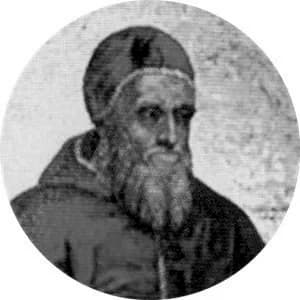
Julius II
The warrior pope who led armies in armor, grew a beard against the French, and laid the first stone of the church Luther would help pay for.
Pope no. 2161503-1513
Giuliano della Rovere had waited thirty-two years. Made a cardinal in 1471 by his uncle Sixtus IV, he had run Innocent VIII's pontificate, lost the conclave of 1492 to Rodrigo Borgia, spent a decade in French exile plotting against him, and on 1 November 1503, six weeks after Alexander's death, took the papacy in a conclave that lasted a few hours and was bought outright. His first substantive act, in 1506, was a bull declaring any future election obtained by simony null and void.
He was a soldier. He rode in armor at the head of his own troops to retake Perugia and Bologna in 1506, joined the League of Cambrai to strip Venice of its mainland cities in 1509, then reversed alliances and formed a Holy League to drive the French from Italy, vowing not to shave until they were gone: the beard he wore from 1510 to 1512 was the first on a pope in centuries. By 1512 the French had withdrawn, Bologna was recovered, the Papal States reached their greatest extent, and Europe called him il Papa Terribile, the formidable pope. When Louis XII backed a schismatic council at Pisa in 1511, Julius answered by summoning the Fifth Lateran Council, which opened in May 1512 and outlived him. He founded the Swiss Guard in January 1506.
That is the legacy that lasted. On 18 April 1506 he laid the foundation stone of the new Saint Peter's to Bramante's design, tearing down the eleven-hundred-year-old basilica of Constantine to do it. He dragged Michelangelo from the tomb he had commissioned for himself to the ceiling of his uncle's chapel, which changed Western art, and gave Raphael the Stanze to paint. He died on 21 February 1513, and Erasmus wrote a savage dialogue in which Saint Peter refuses to let him into heaven. The indulgence preached to pay for his basilica reached Saxony four years later.
A full essay on this pope is in preparation. The facts and summary above are complete and sourced.
Sources
- J. N. D. Kelly and Michael Walsh, The Oxford Dictionary of Popes (2010)
- Eamon Duffy, Saints and Sinners: A History of the Popes (2014)
- Christine Shaw, Julius II: The Warrior Pope (1993)
- Further reading: Wikipedia