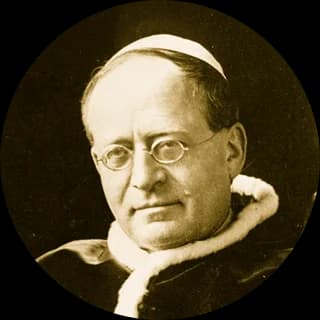
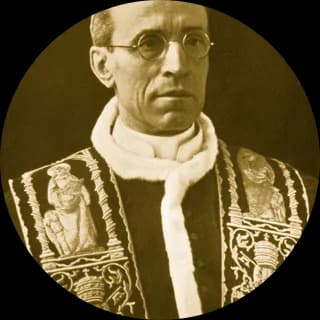
XIV1799-1958
The Age of Revolution
The papacy loses its state and finds its voice: from Napoleon's prisoner to prisoner of the Vatican to moral superpower.
Popes No. 251-260
In August 1799 the pope died a prisoner of the French Republic in a fortress at Valence, and the officials who registered the death wrote down his occupation as "pontiff" and added, for the record, that the office was now abolished. Rome was a republic; the Papal States had been dissolved; the ablest minds in Europe assumed the papacy would follow the Holy Roman Empire into the museum. A hundred and sixty years later Pius XII died at Castel Gandolfo as the most famous religious leader on earth, broadcast to every continent, sovereign of a state the size of a golf course, and heard by more people than any of the monarchs who had once bullied his predecessors. The story of the era is how the papacy lost nearly everything it had held for a thousand years and came out of the loss with more authority than it had ever exercised. It is not a story of triumph. It is a story of a fortress mentality that took a century to relax, and of the price paid, by Jews in the Roman ghetto, by scholars, by liberal Catholics, while it did.
Napoleon's prisoner
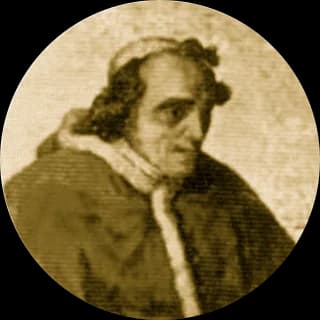
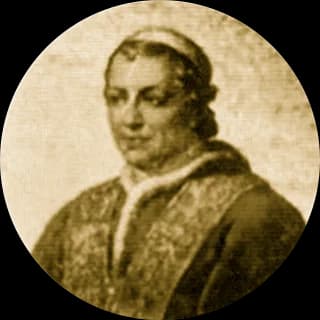
The cardinals who met in Venice under Austrian protection in the winter of 1799 chose a Benedictine, Pius VII, who as a bishop had preached that democracy and Christianity could live together. He needed every ounce of that flexibility. The Concordat of 1801 bought the restoration of Catholic worship in France at the price of accepting the revolution's confiscations and giving Napoleon a veto over bishops; the pope traveled to Paris in 1804 to consecrate an emperor who then took the crown from the altar and put it on his own head. It still was not enough. In 1809 Napoleon annexed the Papal States, the pope excommunicated him, and French gendarmes climbed into the Quirinal by night and carried the pope off to five years of captivity. What broke the emperor's design was not resistance but patience: an old monk who signed a surrender under duress at Fontainebleau and then, recovering himself, took it back. When Napoleon fell, Pius VII rode back into Rome to the acclaim of Europe, recovered his states at the Congress of Vienna through the genius of his secretary of state Consalvi, refounded the Jesuits, and gave the fallen emperor's family a home. The papacy had learned that it could survive the loss of everything except its independence.
The restoration that could not restore
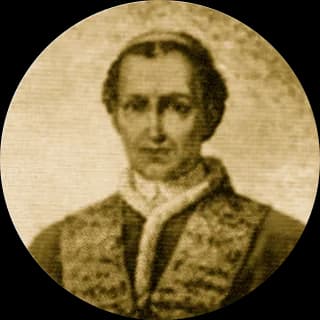
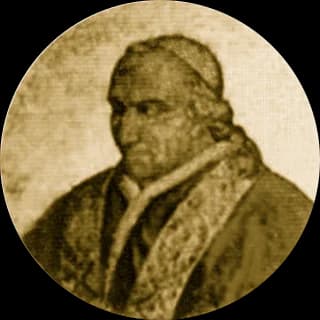
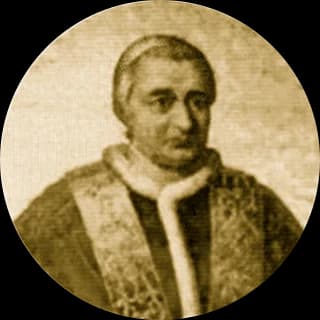
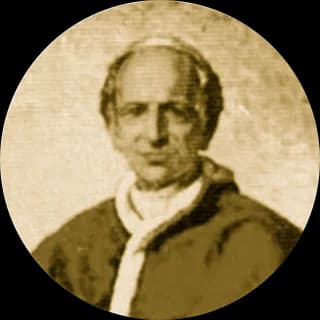
The lesson was misread by the next three popes. Leo XII, Pius VIII, and Gregory XVI, elected by the hard-line cardinals called zelanti, tried to run the Papal States as if 1789 had not happened: nobles' privileges restored, the Jews walled back into the ghetto, education under clerical control, secret societies hunted by cardinal-inquisitors, revolts in Bologna put down by Austrian troops in 1831 and again in 1832. Gregory XVI refused railways and gas lighting and, in Mirari vos (1832), condemned freedom of the press and of conscience as absurd and erroneous. The same pope condemned the Atlantic slave trade in 1839 and presided over a vast expansion of missions in Asia and Africa. The contradiction was the age's: a church that could see injustice clearly abroad and could not see that its own state had become the worst governed in Europe.
Meanwhile something new was forming beneath the reaction. Deprived of the protection of Catholic kings, who had either fallen or turned into bureaucratic masters, Catholics across Europe looked to Rome instead. Ultramontanism, the elevation of papal authority above every local and national church, grew from the ground up in the 1830s and 1840s, fed by a romantic longing for order and by newspapers that made the pope a household presence for the first time. The papacy's temporal weakness was making it spiritually central.
The longest reign and the lost city
Pius IX, elected in 1846 amid hopes that a liberal pope had finally arrived, made the transition personally and painfully. He granted amnesties and a constitution, refused to lead Italy's war against Austria, watched his prime minister murdered, fled Rome in disguise in November 1848, and returned two years later behind French troops a changed man. From then on he built the modern papacy's spiritual monarchy while its earthly one collapsed around him. He defined the Immaculate Conception in 1854 on his own authority, issued the Syllabus of Errors in 1864, and summoned the First Vatican Council, which on 18 July 1870 declared the pope infallible when defining doctrine for the whole church. Nine weeks later Italian troops came through the Porta Pia and the Papal States, after eleven centuries, were gone. Pius refused every settlement, forbade Catholics to vote in Italian elections, and never left the Vatican again. His thirty-two years remain the longest verified reign in papal history, and the mob that tried to throw his coffin into the Tiber in 1881 measured how completely the pope and the Italian nation had parted.
The prisoner's pulpit
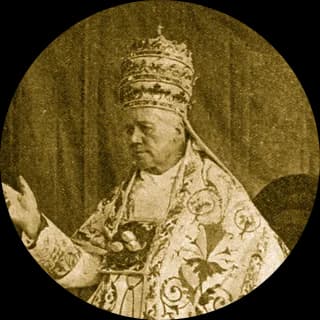
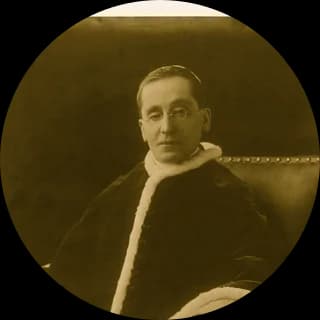
His successors discovered that a prisoner with a printing press has a peculiar kind of freedom. Leo XIII, elected in 1878 as a stopgap, reigned twenty-five years and issued eighty-six encyclicals, one of which, Rerum novarum in 1891, invented Catholic social teaching by defending both private property and the rights of workers to a just wage and a union. He revived Thomas Aquinas, opened the Vatican archives to historians, made peace with Bismarck and with the French Republic, and became the first pope to be filmed. Pius X, a village postman's son, turned inward and downward: communion for children, chant, a reformed curia, a code of canon law, and a ferocious campaign against the theological Modernism he believed was hollowing out the faith, complete with an oath and a network of informers. Benedict XV, elected a month into the First World War, called it the suicide of civilized Europe, proposed a peace that both sides rejected, and spent the Vatican into near bankruptcy on prisoners and refugees. Nobody listened to him and everybody, afterward, wished they had.
Concordats with dictators
The Roman Question was finally answered by a dictator. In the Lateran Treaty of 1929 Pius XI accepted the loss of the Papal States in exchange for the sovereign State of Vatican City, forty-four hectares that guaranteed the independence Pius VII had gone to prison for. The bargain with Mussolini, and a second with Hitler in 1933, defined the decade: the church secured its schools, its associations, and its legal standing, and then watched both regimes violate every clause. Pius XI's answer came in 1937 with Mit brennender Sorge, condemning the Nazi cult of race, and Divini Redemptoris, condemning communism, within a single week. He died in 1939 with a speech against Fascism unspoken on his desk.
His secretary of state succeeded him as Pius XII and governed through the war that followed. The record is the most contested in modern papal history: a pope who kept the Holy See impartial, spoke of the persecuted in general terms, said nothing publicly when Rome's Jews were deported from under his windows in October 1943, and whose convents and villas hid thousands of them. After the war he became the Cold War's most visible anticommunist, defined the Assumption of Mary in 1950, opened the door to modern biblical scholarship, and ruled a church that was, beneath his aristocratic reserve, quietly preparing the questions the next era would ask aloud. When he died in October 1958 the papacy had no army, no territory worth the name, and more moral capital than at any time since the Middle Ages. The cardinals then elected an old man to keep things quiet, and he called a council.
The world at the time
- 1804
politicalNapoleon crowns himself
At Notre-Dame, with Pius VII looking on, Napoleon places the crown on his own head; within five years he will annex the Papal States and jail the pope.
- 1830
politicalThe revolutions of 1830
The July Revolution topples the Bourbons in France and sets off the risings that leave the Papal States dependent on Austrian bayonets.
- 1848
politicalThe revolutions of 1848
Europe's year of revolutions drives Pius IX from Rome in disguise and cures him of liberalism for good.
- 1869
councilFirst Vatican Council
Vatican I defines papal infallibility just before the pope's temporal kingdom disappears.
- 1870
politicalThe Capture of Rome
Italian troops breach the Porta Pia; eleven centuries of Papal States end and the popes retreat behind Vatican walls.
- 1891
culturalThe industrial working class
Steel, rail, and factory cities have made an industrial proletariat; Rerum novarum gives the church an answer to the social question.
- 1914
politicalThe First World War
The suicide of civilized Europe, in Benedict XV's phrase; every belligerent rejects the Holy See's peace proposals.
- 1929
politicalThe Lateran Treaty
Italy and the Holy See settle the Roman Question, creating Vatican City as the world's smallest sovereign state.
- 1933
politicalHitler takes power
The Holy See signs a concordat with the new German government within months and spends the decade watching it broken.
- 1939
politicalThe Second World War
Pius XII steers the Holy See through occupation and genocide, a record still debated document by document.