The Age of Revolution1799-1958
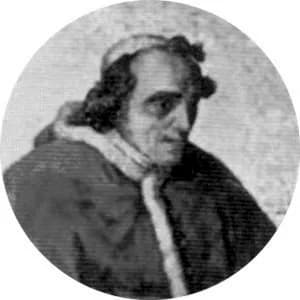
Pius VII
The Benedictine monk who was kidnapped by Napoleon, outlasted him, and then gave his family shelter in Rome.
Pope no. 2511800-1823
Barnaba Chiaramonti became pope at the papacy's lowest ebb in a thousand years. His predecessor had died a French prisoner; Rome was occupied; the conclave met under Austrian protection in a Benedictine monastery on an island in Venice and took three and a half months to choose, on 14 March 1800, a gentle Benedictine monk who as bishop of Imola had preached that democracy and the Gospel were not enemies. That flexibility defined him. In 1801 he signed a Concordat with Napoleon that restored public Catholic worship in France at the price of accepting the revolution's confiscations, and in December 1804 he traveled to Paris to consecrate an emperor who then crowned himself. Nothing he conceded was enough. French troops occupied Rome in 1808, Napoleon annexed the Papal States in May 1809, and when the pope answered with a bull of excommunication, General Radet's men climbed into the Quirinal by night on 6 July 1809 and carried him off.
For five years he was a prisoner, at Savona and then at Fontainebleau, cut off from his advisers and pressed to surrender the papacy's independence. Worn down and ill, he signed a humiliating draft concordat in January 1813 and then, recovering his nerve within weeks, publicly retracted it. Napoleon's collapse freed him, and on 24 May 1814 he re-entered Rome to a welcome no pope had received in living memory. His last decade was a restoration conducted with unexpected grace: the Society of Jesus, suppressed in 1773, was refounded in August 1814; the Papal States came back nearly whole from the Congress of Vienna thanks to his secretary of state, Ercole Consalvi; and Napoleon's mother and brothers, refugees now, were given a home in Rome by the man their kinsman had jailed. He died on 20 August 1823 after a fall, at eighty-one, having turned the papacy's captivity into its moral capital.
A full essay on this pope is in preparation. The facts and summary above are complete and sourced.
Sources
- J. N. D. Kelly and Michael Walsh, The Oxford Dictionary of Popes (2010)
- Eamon Duffy, Saints and Sinners: A History of the Popes (2014)
- E. E. Y. Hales, Revolution and Papacy, 1769-1846 (1960)
- Further reading: Wikipedia