The Age of Revolution1799-1958
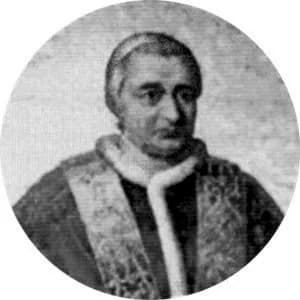
Gregory XVI
The Camaldolese monk who condemned the slave trade and the railway in the same decade, and left the Papal States ungovernable.
Pope no. 2541831-1846
Bartolomeo Cappellari was a Camaldolese monk and theologian whose 1799 book, The Triumph of the Holy See, had argued for papal infallibility and independence at a moment when the papacy seemed about to disappear. Elected on 2 February 1831 after a fifty-day conclave, he was the last pope chosen before being consecrated a bishop, and within days the Papal States rose in revolt from Bologna to the Marche. Austrian troops put the rising down, and again in 1832, and the pattern of the reign was set: a monk-pope governing a bankrupt, resentful state through foreign bayonets and the police of his secretary of state, Cardinal Lambruschini, while the great powers lectured him on reforms he refused.
His response to the age was doctrinal. Mirari vos (August 1832) condemned liberalism, freedom of the press, freedom of conscience, and the separation of church and state, and rebuked without naming him the French priest Félicité de Lamennais, who had tried to reconcile Catholicism with democracy; Singulari nos (1834) named him. Gregory distrusted every innovation, refusing railways in his territories and gas lighting in Rome, remarks about the "road to hell" being attributed to him with more relish than evidence. Yet the same pope issued In supremo apostolatus (December 1839), the papacy's most forceful condemnation of the slave trade, and as former prefect of Propaganda Fide he presided over an extraordinary expansion of the missions: some seventy new dioceses and vicariates, and a policy of building up native clergy that his successors would take a century to honor. He founded the Vatican's Etruscan and Egyptian museums and sheltered scholars while suppressing newspapers.
He died on 1 June 1846, leaving a treasury in deficit, a police state in the Legations, and a successor who would try, for two years, the opposite approach.
A full essay on this pope is in preparation. The facts and summary above are complete and sourced.
Sources
- J. N. D. Kelly and Michael Walsh, The Oxford Dictionary of Popes (2010)
- Eamon Duffy, Saints and Sinners: A History of the Popes (2014)
- Owen Chadwick, A History of the Popes, 1830-1914 (1998)
- Further reading: Wikipedia