XV1958-present
The Global Papacy
From the Second Vatican Council to the first American pope: the office goes worldwide in person and in reach.
Popes No. 261-267
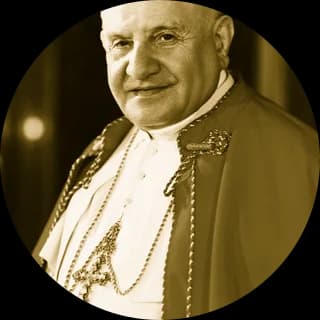
On 28 October 1958 the cardinals elected a genial seventy-six-year-old diplomat as a pause between two long pontificates, and got instead the most consequential decision of the modern papacy. John XXIII's council reset the church's posture toward a world it had spent a century denouncing, and everything since has been an argument about how far that reset goes. Seven very different men have conducted the argument, across a period in which the office itself changed shape: from a Roman monarch who never left Italy to a figure who flies to Manila and Luanda, fills stadiums, publishes on social media, and can resign. This is the era in which the papacy went global in person, and in which the church's center of gravity slid from Europe toward the continents Europe once evangelized.
The council
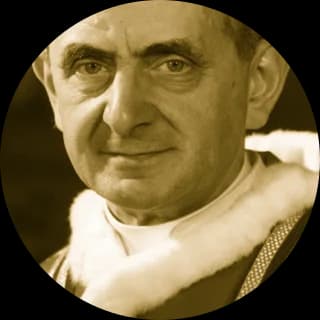
John XXIII announced the Second Vatican Council ninety days into his reign and opened it on 11 October 1962 with a speech rebuking the "prophets of doom." He died eight months later. His successor, the curial veteran Paul VI, held the council's two thousand bishops together through three more sessions and closed it on 8 December 1965 with sixteen documents. Between them they turned the altar around and the Mass into the vernacular, declared religious liberty a human right, repudiated the charge of collective Jewish guilt for the crucifixion, embraced ecumenism, and described the church as the whole people of God rather than a clerical pyramid. Measured against four centuries of Tridentine fixity, it was a revolution conducted by consensus.
The reception was not consensual. Paul VI implemented the reforms faithfully, promulgating the new Roman Missal in 1969, and watched the church divide over them: a traditionalist minority, gathered by Archbishop Marcel Lefebvre, rejected the new Mass outright, while a progressive wing treated the council as a beginning rather than a settlement. Humanae vitae (1968), which reaffirmed the ban on artificial contraception against the advice of the pope's own commission, produced open dissent from bishops' conferences and a collapse of deference that never reversed. Tens of thousands of priests left. Paul, the first pope to fly, took the office to Jerusalem, Bombay, the United Nations, and Manila, and died in 1978 a sorrowful man.
The year of three popes
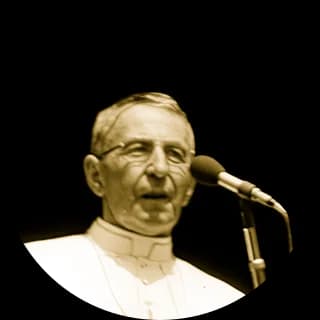
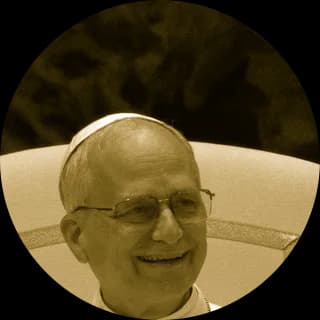
The year 1978 gave the church three popes in as many months. Paul VI died in August; Albino Luciani, the smiling John Paul I, reigned thirty-three days and died in his bed; and on 16 October the cardinals reached outside Italy for the first time since 1522 and chose Karol Wojtyła, the fifty-eight-year-old archbishop of Kraków, a former actor and quarry laborer who had lived his entire adult life under Nazi or communist rule.
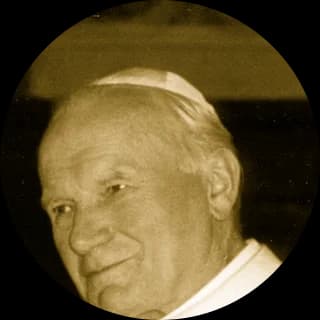
John Paul II made the papacy a global stage. He visited 129 countries on 104 foreign journeys, spoke to more people in person than anyone in history, and invented the mass papal event: World Youth Days, stadium Masses, the airport tarmac kissed on arrival. His first visit to Poland in June 1979 drew a third of the nation into the streets, and the Solidarity movement that followed a year later began the unraveling of the Soviet bloc, a process he encouraged from Rome for a decade and lived to see completed in 1989. He survived an assassin's bullets in Saint Peter's Square in 1981, wrote fourteen encyclicals, issued a universal Catechism, canonized more saints than all his predecessors since the modern process began, prayed at the Western Wall, entered a mosque, and apologized in 2000 for the church's historic sins. He also governed as a centralizer, disciplining theologians, appointing bishops in his own image, and closing questions his predecessors had left open. His slow public dying from Parkinson's disease, ending on 2 April 2005, was the most watched death of the century.
The scholar and the resignation
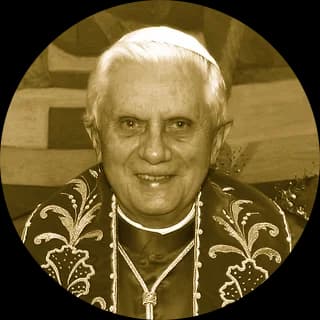
The cardinals replaced him with his closest collaborator. Joseph Ratzinger, prefect of the doctrinal office for twenty-three years and the most accomplished theologian to hold the papacy in centuries, took the name Benedict XVI. His pontificate produced luminous encyclicals on love and hope, restored permission for the old Latin Mass, and lectured Europe on the rationality of faith. It was also overtaken by the crisis that had begun to surface in his predecessor's last years: the sexual abuse of children by clergy and its concealment by bishops. Benedict laicized hundreds of priests, met victims, and wrote a letter of apology to the Catholics of Ireland in 2010, but the scandal's scale, and the revelation that trusted figures had been protected for decades, corroded the church's moral authority in its historic heartlands.
Then, on 11 February 2013, he did what no pope had done freely in more than seven centuries: he announced his resignation, citing age and declining strength. He lived on in a monastery inside the Vatican for nearly ten years as pope emeritus, a title the church had to invent, and died on 31 December 2022. The precedent he set is the era's structural innovation: the papacy is now an office one can leave.
From the ends of the earth
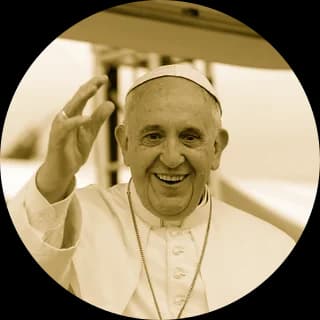
The 2013 conclave went further afield still. Jorge Mario Bergoglio of Buenos Aires was the first pope from the Americas, the first Jesuit, and the first to take the name Francis. He moved out of the Apostolic Palace, made his first journey to Lampedusa to mourn drowned migrants, wrote an encyclical on the environment, Laudato si', that entered secular politics, and pressed a "synodal" church in which bishops and laity deliberate together. He also reopened the council's unfinished arguments: on communion for the divorced and remarried, on blessings for same-sex couples, on the Latin Mass, which he restricted in 2021. Conservatives who had spent thirty-five years as the papacy's loyalists found themselves in opposition; progressives who had spent them in the wilderness found the pope did not go as far as they hoped. During the pandemic of 2020 he prayed alone in an empty, rain-soaked Saint Peter's Square, an image that summed up his pontificate's instinct for the gesture. He died on Easter Monday, 21 April 2025, and was buried, at his own wish, in Santa Maria Maggiore rather than beneath Saint Peter's.
Two shores
On 8 May 2025, after four ballots, the cardinals elected Robert Francis Prevost: born in Chicago, a naturalized Peruvian after two decades as a missionary and bishop there, an Augustinian friar and canon lawyer whom Francis had brought to Rome to choose the world's bishops. The first American pope took the name Leo XIV in deliberate homage to Leo XIII, whose Rerum novarum had answered the first industrial revolution; the new Leo said the church now faced another one, in artificial intelligence. His first words from the loggia were "Peace be with you all."
The first year confirmed the reading. He traveled to Turkey for the 1,700th anniversary of the Council of Nicaea and to Lebanon, then to four African countries and to Spain, where he inaugurated the tallest church tower in the world at the Sagrada Família. He completed Francis's unfinished exhortation on the poor, Dilexi te, in October 2025, and issued his own first encyclical, Magnifica humanitas, in May 2026, on safeguarding the human person in the age of intelligent machines. And when the Society of Saint Pius X consecrated four bishops without papal mandate on 1 July 2026, he declared the schism that his predecessors had spent forty years trying to avoid. Two months short of the era's seventieth year, the questions the council opened remain open, argued now by a church of some 1.4 billion whose future lies in Africa, Asia, and Latin America, under a pope from both of the Americas at once.
The world at the time
- 1962
councilSecond Vatican Council
John XXIII's council opens the windows: vernacular liturgy, religious freedom, and a new posture toward the modern world.
- 1962
politicalCuban missile crisis
Thirteen days at the edge of nuclear war; John XXIII's radio appeal for peace runs on the front page of Pravda.
- 1968
culturalThe year 1968
Student revolt from Paris to Mexico City, the Prague Spring crushed, and a sexual revolution that makes Humanae vitae the most contested papal text of the century.
- 1989
politicalFall of the Berlin Wall
Communism collapses in Europe, with John Paul II's Poland as the first domino and the pope as a protagonist.
- 2001
politicalSeptember 11 attacks
Al-Qaeda's attacks on New York and Washington open two decades of war and turn interreligious dialogue from a courtesy into a necessity.
- 2020
culturalCOVID-19 pandemic
A pandemic empties the world's squares; Francis prays alone in the rain before a deserted Saint Peter's for a locked-down planet.
- 2022
culturalGenerative AI goes public
Chatbots and image models reach hundreds of millions of users within months and reopen the question of what is human; the next pope takes his name with it in mind.