Reformation and Counter-Reformation1513-1605
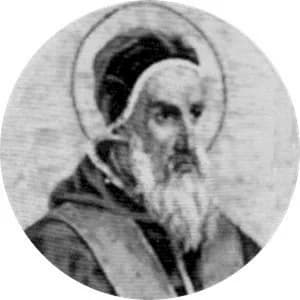
Saint Pius V
The Dominican inquisitor who made Trent real, standardized the Mass for four centuries, and forged the fleet that won Lepanto.
Pope no. 2251566-1572
The shepherd boy from Bosco Marengo entered the Dominicans at fourteen and never, in any meaningful sense, left. As Pope Pius V he wore the friar's white habit beneath the papal robes (the reason, tradition says, popes have dressed in white ever since), walked barefoot in penitential processions, and governed the church as he had once governed heresy trials: with total conviction and no interest in being liked. In six years he turned the Council of Trent's paper decrees into working institutions, gave the Roman rite the form it kept for four hundred years, and assembled the alliance that broke Ottoman sea power at Lepanto. He is the only pope of his century canonized, and the most complete embodiment of the Counter-Reformation the office ever produced.
The inquisitor
Antonio Ghislieri's early career was the reform movement's hard edge in person. A poor family, a Dominican formation, and a talent for theology brought him to the attention of Gian Pietro Carafa, who as head of the Roman Inquisition made Ghislieri its commissary general, and as Pope Paul IV made him a cardinal and Grand Inquisitor. Ghislieri was severe but not lawless; he showed a scruple for procedure his patron lacked, and under the genial Pius IV his rigor fell so far out of fashion that he lost influence at court. That exile turned out to be his qualification. When Pius IV died, Charles Borromeo threw the reforming votes behind the austere Dominican, and on 7 January 1566 the cardinals elected a man whose entire adult life had been the machinery of doctrinal enforcement.
Rome braced for another Carafa. It got something stranger: the same severity, aimed first at Rome itself. The new pope emptied the papal court of its entertainers, cut the household to a friary's budget, forced bishops loitering in Rome back to their dioceses, criminalized the sale of offices within his reach, and applied the Inquisition and the Index without respect for rank. Roman wits complained the city had been turned into a monastery. That was, more or less, the design.
Trent made real
Pius V's central achievement looks bureaucratic and was revolutionary: he executed a council. Trent had adjourned in 1563 leaving its hardest work as assignments, and Pius delivered them in sequence: the Roman Catechism in 1566, a preacher's summa for parish clergy; the reformed Breviary in 1568; and in 1570 the Roman Missal, which standardized the Mass across the Latin church, sweeping away a jungle of local uses. The "Tridentine Mass" celebrated into the 1960s, and still celebrated in traditional communities, is in essence the book Pius promulgated. He enforced seminaries, residence, and visitation with a stream of legislation, made Thomas Aquinas a Doctor of the Church in 1567, and commissioned the definitive edition of his works: the Dominican pope installing his order's master as the church's default philosopher, where he remained into the twentieth century.
The same enforcement had its shadows. The Inquisition burned its notable victims, among them the humanist Pietro Carnesecchi; the Roman Jews, briefly relieved under Pius IV, were expelled from the Papal States outside Rome and Ancona in 1569. Sanctity, in Pius V's register, meant rigor toward everyone, beginning with himself and radiating outward with the temperature dropping as it went.
The excommunication that backfired
In February 1570 Pius issued Regnans in Excelsis, declaring Elizabeth I of England a heretic, deposed, and her subjects released from allegiance. It was the last time a pope formally deposed a reigning monarch, and it was a strategic disaster on every axis. No Catholic power was positioned to enforce it; Philip II and the emperor, who had not been consulted, were furious; and England's Catholics, who had mostly practiced a quiet loyalty to both queen and faith, were converted overnight into presumptive traitors. The penal laws tightened, the missionary priests who followed died as traitors rather than heretics, and English Catholicism entered two centuries of catacombs. Historians who admire everything else about Pius V stop admiring here: it was the act of a man who believed the thirteenth century's instruments still worked, aimed at the seventeenth century's first modern state.
Lepanto
Against Islam's advance, by contrast, the medieval instinct produced the era's most spectacular success. The Ottoman assault on Venetian Cyprus in 1570 found Christendom characteristically divided: Venice and Spain despised each other's aims, France preferred the Turks to the Habsburgs, and the smaller states waited. Pius spent eighteen months hammering a Holy League out of this material, financing it with papal revenues, refereeing the allies' quarrels, and insisting the fleet actually seek battle. On 7 October 1571, off Lepanto at the mouth of the Gulf of Patras, the League's galleys under Don Juan of Austria annihilated the Ottoman fleet in the largest galley battle ever fought: some two hundred Ottoman vessels lost, tens of thousands of casualties, and the myth of Ottoman invincibility at sea broken permanently.
Legend has the pope rising from a meeting at the hour of victory, opening a window, and announcing that the League had won, weeks before couriers could confirm it. Verified or not, his own verdict was liturgical: he attributed the victory to the rosary confraternities' prayers and instituted the feast of Our Lady of Victory, kept ever since as Our Lady of the Rosary on 7 October. Strategically the league dissolved within two years and the Ottomans rebuilt their fleet, but the psychological line held: the sixteenth-century Mediterranean stopped being an Ottoman lake.
The saint
Pius V died on 1 May 1572, of the stone, refusing opiates so that his mind would be clear at the end. The reforms held: unlike most papal programs, his did not die with him, because he had written them into books, courts, and appointments rather than personalities. Clement X beatified him in 1672; Clement XI canonized him in 1712, the only pope so honored between Celestine V (1313) and Pius X (1954). The modern verdict is necessarily double. He is the pope who made the Counter-Reformation permanent, the rare reformer whose institutions outlived their politics, and also the clearest demonstration of that reform's costs: a church made disciplined, uniform, and suspicious, magnificent in its certainties and merciless at its edges. Both halves are the truth, and both halves are why his six years shaped four centuries.
Sources
- J. N. D. Kelly and Michael Walsh, The Oxford Dictionary of Popes (2010)
- Eamon Duffy, Saints and Sinners: A History of the Popes (2014)
- Ludwig von Pastor, The History of the Popes from the Close of the Middle Ages, vols. 17-18 (1929)
- Roger Crowley, Empires of the Sea: The Siege of Malta, the Battle of Lepanto, and the Contest for the Center of the World (2008)
- Further reading: Wikipedia