Reformation and Counter-Reformation1513-1605
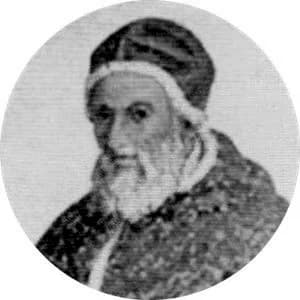
Gregory XIII
The lawyer pope who gave the world its calendar, Europe its Jesuit colleges, and the missions their global reach.
Pope no. 2261572-1585
Ugo Boncompagni was a Bolognese law professor who had fathered a son in his unreformed youth, served at Trent as a drafting expert, and reached the papacy at seventy with the energy of a man half his age. His instinct was institutional: where Pius V enforced, Gregory built. He founded or refounded the great Roman colleges, above all the Collegio Romano (today's Gregorian University), the German, English, Greek, and Hungarian colleges, and seeded Jesuit schools across Europe: a machine for producing educated clergy that did more to stabilize Catholicism than any decree. His nuncios became permanent instruments of policy, and his support pushed the missions outward; in 1585 he received the first Japanese embassy ever to reach Europe, an emblem of a church going global just as it lost half its home continent.
His name is on the calendar because he finished what centuries of astronomers had urged: in October 1582 the bull Inter gravissimas deleted ten days, refined the leap-year rule, and gave the world the system it still lives by, adopted immediately in Catholic lands and, grudgingly, by everyone else over the next three and a half centuries. The reign's stain is equally famous: when news of the St. Bartholomew's Day massacre of French Protestants arrived in 1572, Gregory ordered a Te Deum and a commemorative medal, celebrating what he understood as deliverance from a Huguenot coup, a judgment posterity has refused to share. His last years were weaker: financing colleges by confiscating feudal estates filled the Papal States with dispossessed bandits, a chaos he bequeathed, along with the debts, to the ferocious successor who would resolve both.
A full essay on this pope is in preparation. The facts and summary above are complete and sourced.
Sources
- J. N. D. Kelly and Michael Walsh, The Oxford Dictionary of Popes (2010)
- Eamon Duffy, Saints and Sinners: A History of the Popes (2014)
- Further reading: Wikipedia