Reformation and Counter-Reformation1513-1605
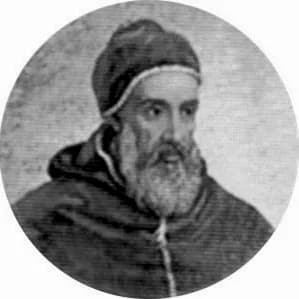
Paul IV
Reform as inquisition: the Index, the ghetto, and a Rome so cowed it rioted with joy the day he died.
Pope no. 2231555-1559
Gian Pietro Carafa had spent a lifetime as reform's angriest voice: co-founder of the austere Theatine order, architect of the Roman Inquisition under Paul III, and a man who reportedly said he would gather the wood to burn his own father for heresy. Elected at seventy-eight, he governed exactly as advertised. The Inquisition became his personal instrument, aimed not only at Protestants but at cardinals of the reconciling school; Cardinal Morone went into Castel Sant'Angelo on suspicion of heresy, and Pole, legate of the English restoration, was recalled under a cloud. In 1559 came the first papal Index of Forbidden Books, so sweeping it banned Erasmus entire and, briefly, made owning a vernacular Bible a matter for the Holy Office.
His cruelest legacy was the bull Cum nimis absurdum of 1555, which walled the Jews of Rome into a ghetto, forced the yellow badge upon them, and set restrictions that endured, with pauses, until 1870. His politics were as violent as his piety: a Neapolitan's hatred of Spain drove him into a ruinous war against Philip II that ended with Alba's army at Rome's gates, and his trust in his own nephews, made cardinals and commanders, ended when even he discovered their corruption and expelled them. When he died in August 1559, Rome rose in riot, smashed the Inquisition's palace, freed its prisoners, and toppled his statue, dragging its head through the streets. The next conclave took four months, largely to ensure it elected his opposite.
A full essay on this pope is in preparation. The facts and summary above are complete and sourced.
Sources
- J. N. D. Kelly and Michael Walsh, The Oxford Dictionary of Popes (2010)
- Eamon Duffy, Saints and Sinners: A History of the Popes (2014)
- Further reading: Wikipedia