Reformation and Counter-Reformation1513-1605
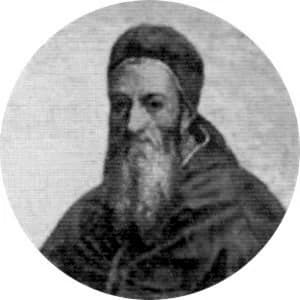
Julius III
He reopened Trent and restored England to Rome for a moment, then retreated to his villa and let the momentum die.
Pope no. 2211550-1555
Giovanni del Monte was the compromise that ended the longest conclave of the century, ten weeks of deadlock between imperial and French factions, and he had genuine credentials: he had been the senior co-president at the Council of Trent's opening in 1545. As pope he honored that past for a while. He reopened Trent in 1551 for its second period, which produced the decree on the Eucharist and heard, remarkably, Protestant delegations; he confirmed the Jesuits' privileges and founded the Collegium Germanicum to train clergy for the lost German lands; and when Mary Tudor took the English throne, his legate Reginald Pole formally absolved the kingdom in 1554 and restored it, briefly, to Roman obedience. Trent suspended again in 1552 when a princes' revolt nearly captured the council city, and that setback seemed to break his appetite for the work.
The rest is the reason his name survives mostly in guidebooks and scandal. He poured his energy into the Villa Giulia, the exquisite pleasure palace on Rome's edge, with Vasari, Vignola, and Michelangelo consulting, and into banquets, hunts, and the theater. Above all there was Innocenzo, a teenage street boy taken up by the pope, loaded with the family name and a cardinal's hat at about seventeen, a promotion that scandalized even a hardened curia and handed Protestant polemic its easiest target of the decade; the whispers about the relationship's nature have never been resolvable, but the judgment they passed on his judgment has stood. Julius III is the Counter-Reformation's cautionary interlude: proof that the machinery Paul III built could idle, and that the era's momentum depended entirely on who sat in the chair.
A full essay on this pope is in preparation. The facts and summary above are complete and sourced.
Sources
- J. N. D. Kelly and Michael Walsh, The Oxford Dictionary of Popes (2010)
- Eamon Duffy, Saints and Sinners: A History of the Popes (2014)
- Further reading: Wikipedia