Reformation and Counter-Reformation1513-1605
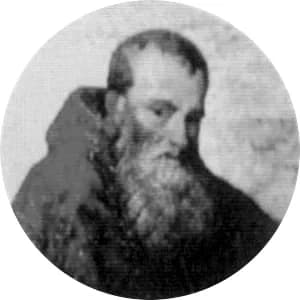
Paul III
The last Renaissance pope and the first Counter-Reformation one: he approved the Jesuits and finally opened Trent.
Pope no. 2201534-1549
Alessandro Farnese owed his red hat to the Borgia court where his sister was the pope's mistress, fathered four children as a cardinal, and died four hundred years later reputed the man who saved the papacy. The paradox is the point: Paul III was a creature of the old, corrupt system who understood exactly why it had to end, and he possessed the political genius to begin ending it without being destroyed. He gave the Counter-Reformation its three great engines, a reformed college of cardinals, the Society of Jesus, and the Council of Trent, while simultaneously carving a duchy out of church lands for his son. Both facts are true, and his pontificate is the education in how institutions actually turn.
The cardinal who grew up
Born in 1468 to minor Latium nobility, Alessandro was educated in Lorenzo de' Medici's Florence and made cardinal-deacon at twenty-five by Alexander VI, a promotion Rome attributed entirely to his sister Giulia Farnese's place in the pope's bed; the nickname "the petticoat cardinal" followed him for decades. He lived accordingly: a palace, a mistress, four children, and a connoisseur's income. Yet unlike most of his generation he was also formidably able, and something shifted in midlife. Around 1513 he was ordained priest, reformed his household, broke with his mistress, and began the slow conversion from ornament to statesman. By the 1520s he was the college's indispensable senior figure, papabile in every conclave, and in October 1534, after Clement VII's disasters, the cardinals elected him almost by acclamation: a sixty-six-year-old Roman insider whom everyone assumed would be a short, safe caretaker. He reigned fifteen years and remade the office.
Reform with a Farnese face
Paul understood that reform would be judged by appointments, and his first years delivered a revolution in the college of cardinals. Alongside the customary family hats (two teenage grandsons, which even sympathetic contemporaries winced at) he named the most serious men in Catholic Europe: Contarini, Sadoleto, Pole, Fisher (already in Henry VIII's Tower), and the fierce Neapolitan reformer Carafa, the future Paul IV. In 1536 he commissioned nine of them to report frankly on what was broken, and the resulting Consilium de emendanda ecclesia of 1537 said in an official document what Luther had said in pamphlets: the papacy's own venality, its sale of offices, dispensations, and benefices, had caused the catastrophe. The report leaked, and Lutherans gleefully printed it. Paul let it stand. The diagnosis was now on the record, in Rome's own hand.
He matched the diagnosis with instruments. In 1540 he approved Ignatius of Loyola's Society of Jesus, a new kind of order vowed directly to papal mission, which would carry Catholicism into Asia and the Americas and staff the classrooms of Europe. In 1542, after the last serious attempt at reunion talks with the Protestants collapsed at Regensburg, he founded the Roman Inquisition at Carafa's urging: reform's iron other hand. Both decisions outlived him by centuries.
Trent, at last
The council was the labor of his life. Every party in Europe claimed to want one, and every party feared it: emperors wanted reform without doctrine, popes doctrine without conciliarism, France no council at all if it strengthened the emperor. Paul summoned it to Mantua in 1537 and to Vicenza in 1538, and watched wars and vetoes strangle both attempts. He simply kept summoning. On 13 December 1545, in the imperial-Italian border town of Trent, the council finally opened with a few dozen bishops, and in its first period (1545 to 1547, before plague scares and imperial politics suspended it) it fixed the method and settled the foundations: scripture and tradition, original sin, and the decree on justification that answered Luther's central doctrine with a precision Catholic theology still uses.
Paul did not live to see Trent's completion; the council would need two more periods and eighteen more years. But every later session sat on the tracks he laid, and the disciplinary decrees that eventually rebuilt the Catholic clergy began from his commission's honest inventory of 1537.
The prince, undiminished
None of this made Paul a saint, and he never pretended otherwise. He was the last pope to govern in the full Renaissance style: he pushed Michelangelo to finish the Last Judgment, unveiled in 1541, set him over the fabric of St. Peter's in 1546 (the dome is the result), redesigned the Capitoline hill, and built the Farnese palace that still bears the family name. He also detached Parma and Piacenza from the Papal States in 1545 as a duchy for his son Pier Luigi, an act of nepotism spectacular even by the era's standards. It ended in blood: Pier Luigi was assassinated in 1547 with imperial connivance, and the pope's last years were consumed by the wreckage, including a final quarrel in which his own grandsons defied him over the duchy. Contemporaries said the humiliation killed him; he died on 10 November 1549, at eighty-one, with the family fight unresolved.
The turn
Judged by the standards he was elected under, Paul III failed charmingly: he neither crushed Protestantism nor reformed himself. Judged by consequences, he is the hinge on which the papacy turned. He took an office that had answered Luther with bulls and pageantry and left it with a council in session, a militant new order in the field, a college seeded with reformers, and an admission of guilt on file. The men who completed the Counter-Reformation, Paul IV's severity, Pius V's sanctity, were all his appointments. Institutions rarely choose their reformers wisely; the papacy, in 1534, chose a compromised old prince who knew where all the bodies were buried, and it turned out that was exactly the qualification the moment required.
Sources
- J. N. D. Kelly and Michael Walsh, The Oxford Dictionary of Popes (2010)
- Eamon Duffy, Saints and Sinners: A History of the Popes (2014)
- Ludwig von Pastor, The History of the Popes from the Close of the Middle Ages, vols. 11-12 (1912)
- John W. O'Malley, Trent: What Happened at the Council (2013)
- Further reading: Wikipedia